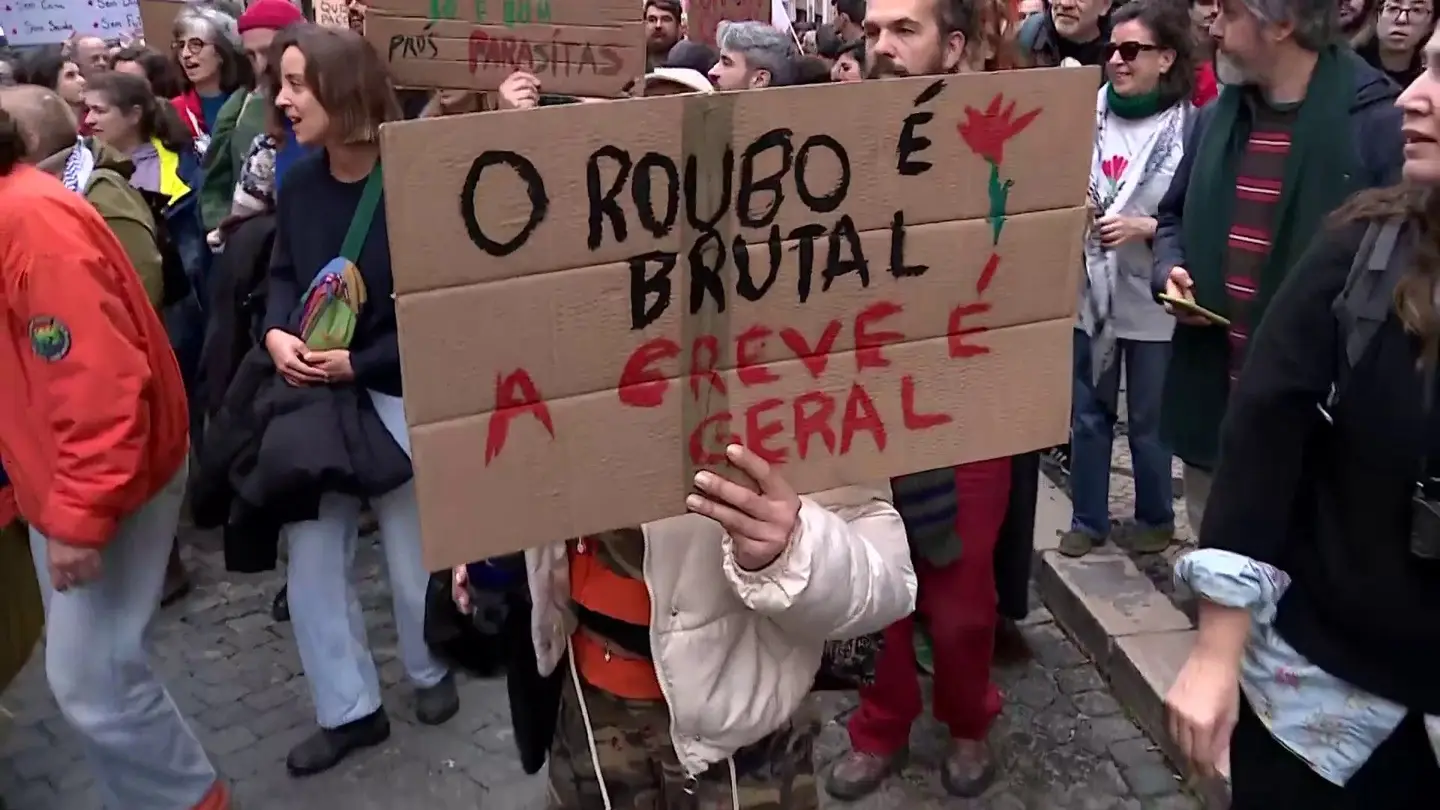
With the media describing a country with multiple sectors off-work today, the government is saying quite the opposite – suggesting the “mass adhesion” reported by syndicates is more like a paltry 0-10%.
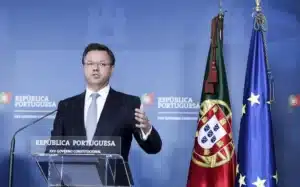
Minister for the Presidency António Leitão Amaro has given a press conference to say that the “crushing majority of the country is working”. This is much more like a strike of the public sector; “a partial strike of some sectors of the public sector (…) The level of adhesion in the country as a whole to the general strike is inexpressive. In the private and public sectors, the report that exists is that adhesions to the strike are between 0-10%.”
Leitão Amaro – the prime minister’s right hand man – spoke exceptionally slowly as he said these words, almost as if he hoped that he could hypnotize his audience into believing them. Images coming through all day have shown a very different picture. Perhaps the truth is ‘somewhere in between’ (which would still point to at least 50% of the country on a major go-slow). Only a final analysis will be able to confirm the reality – and this may well have to take into account strike action scheduled for tomorrow.
A detail in Leitão Amaro’s explanations may give a clue on why the government has come to such a different interpretation of the level of strike action today. He pointed to “transactions of SIBS (the ATM platform) and traffic on the two bridges into the capital.
“At the moment, transactions of SIBS are showing a reduction of 7% compared with normal activity” and “traffic on the bridges from the south into Lisbon has fallen by 5%.”
Yes, there have been people unable to get to work because of the lack of public transports but “the country chose to work,” Leitão Amaro insisted.
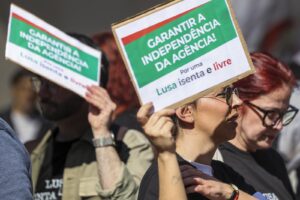
Emerging from a meeting of the Council of Ministers in Lisbon, the prime minister had a similar message – which he was unable to convey through state media channel Lusa as this was ‘on strike’. Lusa’s message to those accessing its website was: “The Lusa agency service was interrupted at 00:01 today due to the general strike. The service may be restored if conditions allow” (which had not happened by early evening).
Commentators yesterday and today have described “an excess of confidence which could bring bad results” for the government.
On the eve of the strike, the prime minister told reporters that “Portugal is at the top of Europe and of the world. Portugal is a country where salaries are growing, where the young have more opportunities today than they had some years ago, where investment perspectives are high and where credibility and reputation are high.”
As political journalist Miguel Santos Carrapatoso remarked, this kind of talk on the eve of a rare general strike in a democracy “is a sign that could be dangerous.
“On the one hand we have a prime minister who openly criticises the UGT (one of the syndicates behind the strike), then appeals for negotiations and receives the syndicate – and then, on the eve of a general strike, says that Portugal is at the top of Europe and the world. This seems to me to be an excess of confidence that could bring the government bad results. It was important, at very least, to come down to reality and understand that decisions have costs.”
For now we are ‘where we are’: multiple sources appearing on running news bulletins to say the strike is affecting the entire system: private and public – and the government saying “nothing to see here”.
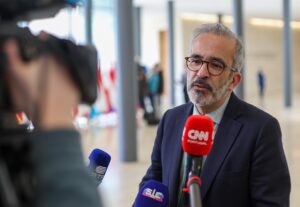
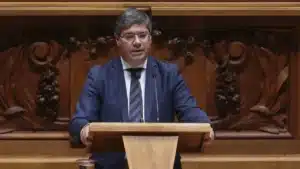
UPDATE FRIDAY (as certain sectors maintain strike action) and the reaction to the government’s stance is predictably scathing, Socialist MP Eurico Brilhante Dias (the man who had the equivalent of Leitão Amaro’s job in the last Socialist government) likened his performance to “a propaganda minister in Iraq during the Gulf War”. Presidential candidate António Filipe (PCP) suggested Leitão Amaro was in a state of denial, while fellow candidate Jorge Pinto (LIVRE) said his whitewashing of the strike was “offensive”.
Leader writers were equally damning, suggesting the only ‘inexpressive’ factor yesterday was the worth/ validity of the Minister for the Presidency.
Source: SIC Notícias