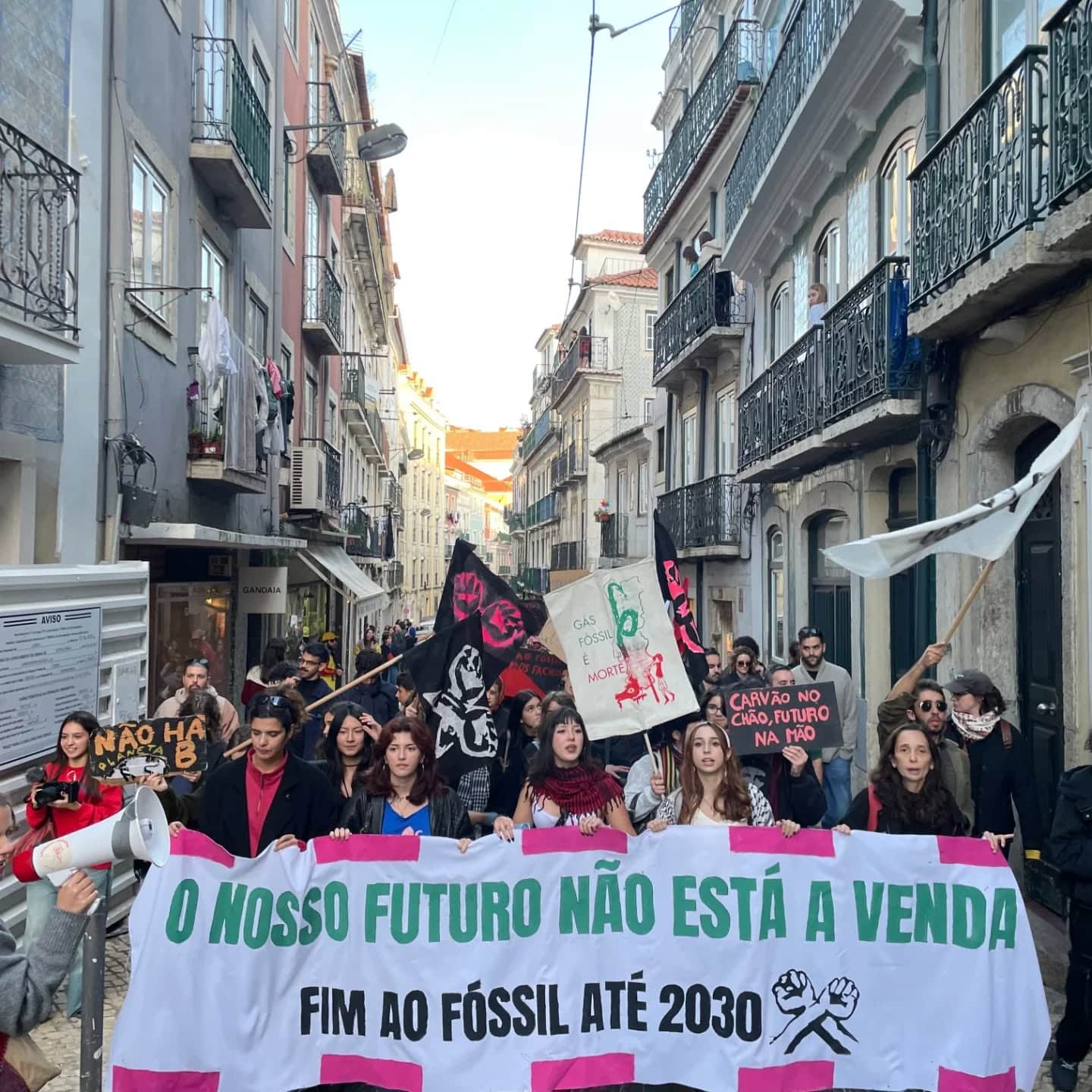
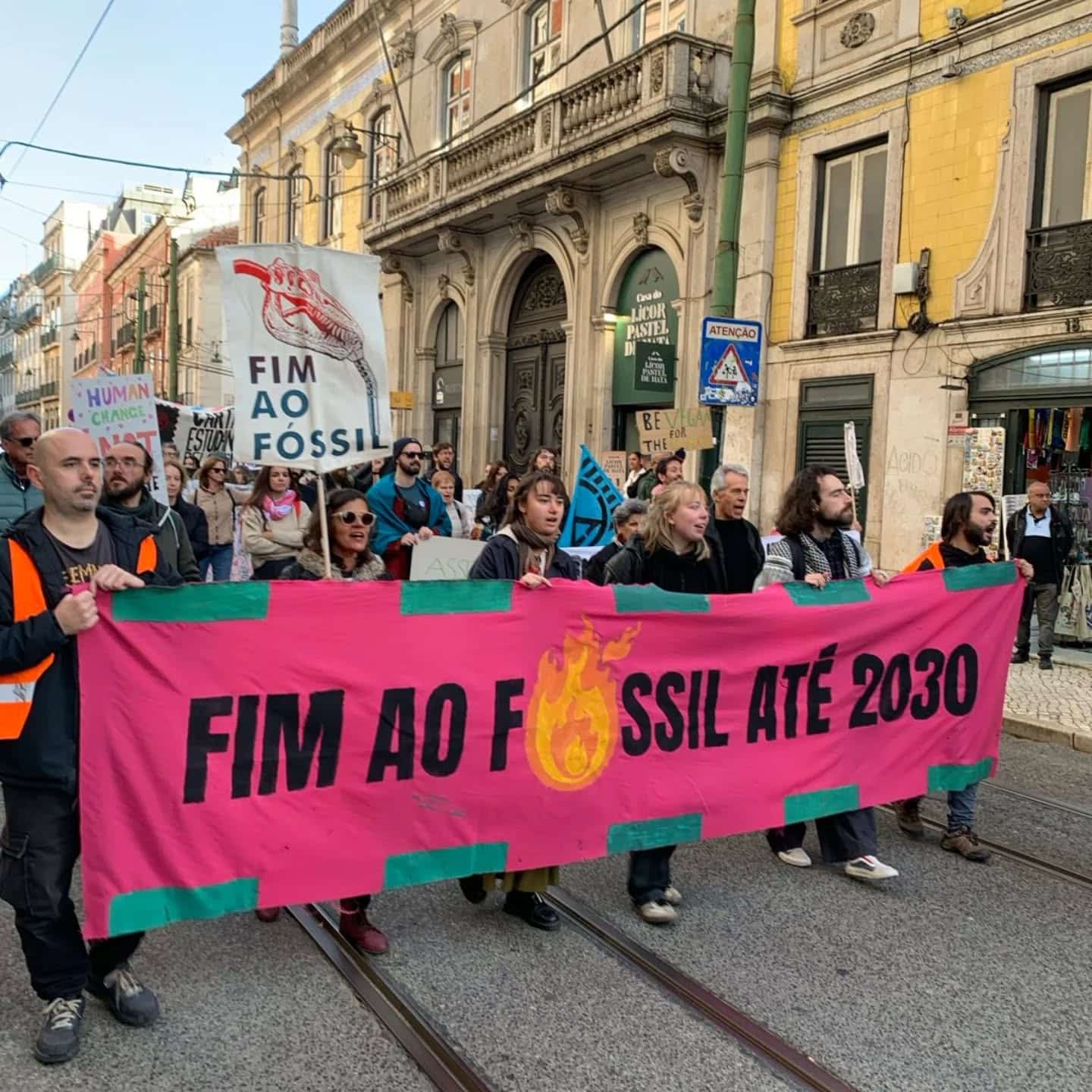
Two different marches have taken place today: one in Lisbon – powered by movements Climáximo and Greve Climática Estudantil (students in climate crisis) – to reiterate demands for an end of (the use of) fossil fuels by 2030, another in the Margem Sul (coast south of Lisbon) “in defence of the SNS health service”.
The latter was powered by the ongoing crisis in the state health service: the lack of family GPs and the dearth of reliable obstetric and pregnancy support.
Protestors marched in Barreiro, while rallies were held at the Feijo health centre and Setúbal Hospital.
The protests were organised by the Setúbal Trade Union Confederation and the region’s user committees – and feed into the general ‘union dissatisfaction’ that is fuelling support for next month’s general strike.
The Lisbon march attracted many more demonstrators, dozens of them young people, and took place against the backdrop of one of the least effective COP climate conferences in memory.
In the words of the Financial Times, “the unwieldy nature of COP decision-making means 30 years of these meetings have failed to produce anything like a framework for how and when to wean nations off (fossil) fuels”, and thus future generations are mightily frustrated.
Today’s protest march is ‘just the start’ of a new campaign of actions (still to be decided) by the two groups.
Catarina Bio, representing organisers, told SIC that all COPs this far have been “a farce” and that young people who weren’t even born when these initiatives started “cannot consent” to governments making no efforts to assure their futures.
SIC recalls that it is a year since the student movement ‘Fim ao Fossil’ delivered a letter to the government ‘demanding that it presented a plan on how it means to end the use of fossil fuels in Portugal by 2030, through a just transition’ – and yet here has been no answer.
“We are fighting for our future”, was the slogan today: “We want to live in a just world, without fear and with well-being, on a habitable planet.
Says SIC, the marchers see the government’s dilatory approach to the climate crisis as “a direct attack on people and life”.
The ‘tragedy’ is that Brazil’s COP managed to cobble together ‘an agreement’, but it shied away completely from even mentioning the use of fossil fuels – thus a 2030 deadline is almost certainly ambitious.
The BBC has reported today, “There is nothing clear or obvious about a move away from fossil fuels. There is nothing much about stopping deforestation. There is some commitment of money for poorer countries to cope with climate impacts, but it’s the equivalent of “the cheque’s in the post.”
Sources: SIC/ BBC/ Financial Times