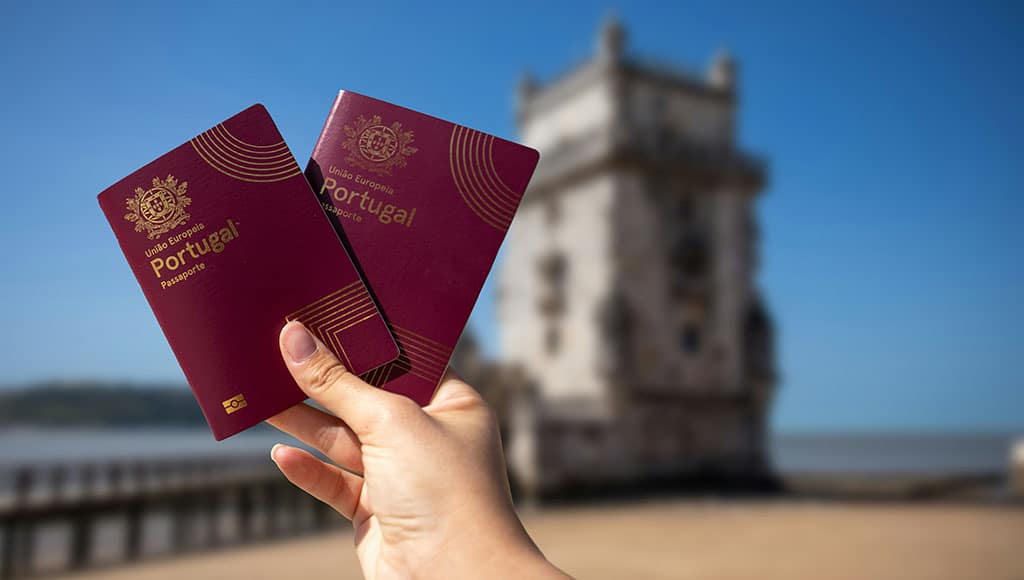
And for those choosing Portugal for retirement or economic advantage, the fact that we do so will most likely be a known and not unusual tactic in our country of origin.
Looking at the UK and US in particular, the countries with whose people I deal with most often, leaving is ‘no biggie’, as increasing numbers prove – departing quite readily as economic and political realities become unbearable. “It’s not unusual,” to quote Tom Jones, we might say, noticing as well the relish with which these and other nationalities depart their homeland, with top notes of righteous retaliation.
The Portuguese on the other hand, though no strangers to emigration, do so, it seems, with less revenge and delight, albeit with some similar, usually economic reasons, for leaving. But with nowhere near the same level of pleasure, I’d say, when the passport is in hand and foreign shores are beckoning. It’s a difference, and a stark and moving one, I had not noticed until only a few days ago, which I can say made me appreciate this country, and its people, even more than I did already.
The scene was an online panel I host every fortnight where a line-up of migration professionals, all Portuguese, answer questions live on Zoom and YouTube on just about every aspect of moving to Portugal, depending on the current needs and anxieties of the eager audience. Catching up, as we began that last evening, with lawyer Daniel Reis on matters constitutional and presidential, he happened to suggest he might himself emigrate should André Ventura be voted in as President in the January election.
This, I heard as I think intended, an idle threat, but it got me wondering (as an aside to my hosting duties): where would a Portuguese choose to go, should their motherland become intolerable for this kind of reason; an outcome presumably unimaginable only a couple of years ago? The session continued with questions coming from the virtual floor that would enable the enquirers to ease their passage here, but that thought of (and shock about) outward migration, from and not to Portugal, stayed on my mind.
And it was as the ‘Town Hall’, as it’s known, drew to a close that I would revisit the idea, somewhat nervously, in the palette-cleansing climax of the evening, where I traditionally ask the ‘Dream Team’ a cultural question, intended to further edify our audience.
“If you had to choose another country…” I began to ask them, carefully prefacing my nosiness saying: “I think Portuguese people leave Portugal under duress, because they have to for work prospects, or maybe as a younger person to go on an Erasmus scheme to get some experience.”
“Portuguese people really aren’t the same as us fickle Brits and perhaps United States people,” I continued, acknowledging that they (of Portugal) were very loyal to the country. Very patriotic and would ideally want to be here. Not like us Brits or Americans, for example, who jump ship without anticipating the Saudade, our hosts grew up with, even enveloped in.
When pressed, Daniel reminded me that he had lived in the UK for almost two years (but that was to study law) and had Australia on his radar, rejecting Canada (for which he already has a passport) as “too cold”. “I would probably go where the economy is good and an English-speaking country,” he concluded, proving my theory, I thought.
Next on the panel, migration specialist Gilda (“one year in France, the worst of my life”) Pereira was keen to share that she was part of an association formed of ‘Luso descendants’, the Portuguese diaspora, if you like. Among foreign generations the world over, she proudly shared, it is those of Portuguese roots that most want to “come home” and whose dream is to “return to Portugal one day” – a sentiment I do not reflect with my UK-based ‘origin story’, I realised with some surprise and a little sadness.
Half-Spanish Nuno Mendes, our steady influence from the world of insurance, understandably selected Spain as his ‘Plan B’, also mentioning Bhutan on account of its commitment to its inhabitants’ wellbeing. Clearly ‘quality of life’ for this ‘bi-berian’, the thing so many of us foreigners love Portugal for.
“It would be Italy,” said Madalena, up next with her alternative pick, but only because “it’s the most similar” she added hilariously, an Évora-born patriot, before giving way to motoring specialist João Amaral, who seeking a little heat, thought Malta might be nice, but only for a few days, he admitted.
Taxation specialist Pedro Franco thought Spain, like colleague Nuno, but again partly on account of its similarities with Galicia in the north of Portugal, preferring Madrid over Lisbon I might also add, but being a resident of tripe-eating Porto will quickly account for that preference.
Still giggling, and glad I’d popped this question, I thanked my correspondents for their candour, honesty and loyalty and realised how taken I was about how much Portuguese people love their country and culture. And I love them for that. How many of us, probably glad to have got away from our birthplaces, feel this same attachment and resulting ‘saudadic’ pain? We can relate, but can we, will we, ever feel the same sweet and bitter connection?
Given the chance, we choose to live here. And so do the Portuguese. Which I think says as much about our hosts, and the culture we mutually enjoy, as it does about our good fortune to be here.

Read more Carl Munson’s articles: Can Muslims integrate in Portugal? | Part 2, Can Muslims integrate in Portugal? | Part 1 or Portugal owes us nothing but gives us so much