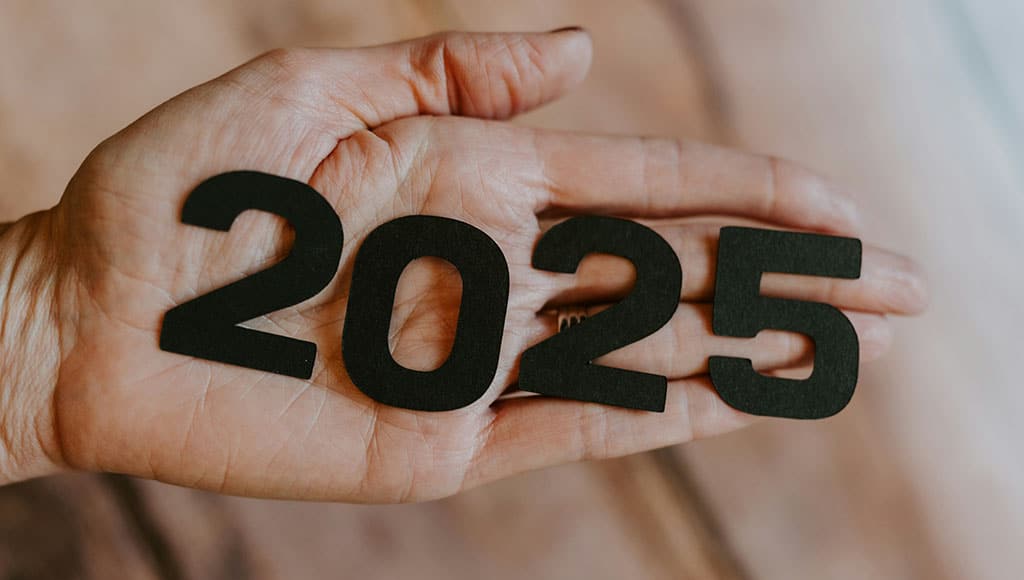
As the year known as 2025 draws to a close, it’s probably not a bad time to have a look at where we’ve got to, and in what condition we enter the next year, one I personally feel will be a turbulent prelude to the second half of a game-changing decade: A telling ten-year chunk that began with the Covid pandemic and, based on what we found out about each other then, will determine the quality of a brave new world that has AI, socio-economic upheaval and geo-politics as its dominant themes. No pressure then.
As we get started with an attempt at a reality check, and a state of this nation within its global context, let’s do a quick recap on the year that’s been, and see if we can recognise any patterns, identify behaviours we’d like to carry forward, and locate any influences from 2025 that we’d be better off without.
Grok’s ‘10 Most Significant Events in Portugal in 2025’, (my prompt), apparently “captured Portugal’s blend of resilience and challenge, from democratic introspection to athletic highs and infrastructural lows” – putting the AI in f-ai-r assessment, and placing the ‘Iberian Peninsula Blackout’ (April 28), first in its list. The Apagão, incidentally Portugal’s 2025 ‘word of the year’ too, was indeed year-in-review royalty, a national episode for the avoid list of snog, marry or avoid? ratings, which we all suspect will happen again, despite our collective incredulity.
Talking of political incompetence, remember those snap elections of May 18? Our third national election in less than four years, and the first of a gruelling set of elections, of every kind, in the subsequent nine months that will conclude with the Presidentials next month, saw CHEGA! romp into second place of the parliamentary power play. Far from being an election to clear doubt and galvanise a productive mandate, it looks like the process only added fuel to already glowing embers of public resentment.
As ever, some dramatic football action gave us circus whenever bread was short in supply, seeing a thrilling 5-3 penalty shootout victory over Spain in the UEFA Nations League final (June 8), following a semifinal win over Germany. Cristiano CR7’s leadership was memorably pivotal in the summer, which is more than can be said for his World Cup qualifier temperament. That said, the year-end sees the national squad comfortably drawn for next year’s global title in the Americas.
A year after every Carnation Revolution anniversary, comes a November 25 commemoration, something I’ve learnt more about as the years have passed here, the contemplation of a ‘military intervention’ that some argue tempered the worst ‘far-left’ potential of its predecessor. This year was, therefore, its 50th such observation, with ceremonies that understandably drew political controversy, but were nonetheless, for some, a worthwhile reminder of the need for moderation in revolutionary times.
Not widely reported or recalled perhaps, this year also saw a summer spike of excess deaths blamed on the ‘European heatwave’, that also played its part in more horrific blazes for the country, the worst since 2017, an uncomfortable reminder of that year’s terrible death toll and wake-up call, which apparently got ‘snooze buttoned’.
And who, especially in our community of foreigners, can forget the abrupt reformation of nationality and immigration laws, which all kicked off only a few months ago? The carefree days of easy-going integration and existence were overshadowed this year, as a previously permissive and laid-back atmosphere gave way to a different vibe of increased and understandable discontent from fed-up natives, as well as resulting uneasiness among estrangeiros. Residency and citizenship, which should be precious, were, and, in part, remain under review, and of course have provided much political capital on all sides. A notable totem from that part of the year and its upset, was the ‘burqa ban’ in public spaces, a law swiftly passed in October.
Lisbon’s Funicular tragedy and the seemingly constant visitation of storms hallmarked the year with a great sense, for me at least, of aged complacency and precarious uncertainty, which I fear are not behind us.
I don’t know about you, but this backward glance makes for an exhausting and not entirely resolved catalogue of events and changes that might have taken a decade to arrive in earlier epochs. But here we are. And standing, bracing even, on the expectant precipice of a new year and second-half-decade where themes hitherto mentioned will no doubt continue to assert themselves. It doesn’t feel like much of what I have mentioned can be filed permanently under ‘good riddance’.
As I look ahead, the themes of institutional instability, environmental concern and political-economic chaos are certainties, relieved occasionally I’m guessing, as is our way, with sport and entertainment. But where, when football and Fado are represented symbolically as Portugal’s distractions, is Fátima and the sense, more broadly, of spiritual comfort and a possible Saviour, in these troubled times?
The blackout, which Portugal’s journalists described as the “Portuguese event of 2025”, may prove to be a hugely profound omen for us, and such an accurate representation of the shape of things to come. Until that day, we may have had a different, more trusting relationship to the institutions that design, produce and protect the energy that increasingly underwrites and supports our lives – personally and professionally, individually and collectively.
After it, more of us realised that such a reliance and complacency might be misplaced, and worse still, it applied not only to electricity, but to all the foundations and pillars of our daily lives, including health, education, politics and economic progress (as other developments throughout the year, or the lack of, in those fields continued to prove). And I will contest here and now, as we move towards 2026, that this awakening, this jarring realisation, will continue.
The year’s top two Google searches corroborate my review showing the greatest interest in football and the April blackout, as discussed here, with matters electoral filling the third and fourth positions. Searches about the new Pope were fifth, and connect us, at least in some tenuous way, back to Fátima, and the spiritual succour we might soon find increasingly useful.
The reality, at least in the geo-political and socio-economic terms set out above, looks pretty grim. It is through these lenses that we can easily be left feeling like victims with much of what we experience seemingly heading our way as a fait-accompli, manipulated by the minds and hands of others, whose vision for us we can only hope and pray is kind.
So turn we should, in my view, to a more inspiring and nourishing context for evaluating and planning for the future. We need a perspective more in the realms and aspirations of Fátima – actually and figuratively – where we might reclaim our power, the power to enjoy and enrich our lives with faith, with hope and a charitable attitude for self and others.
It is through the psycho-spiritual scope that I will look at the new year, next week; offering, I trust, a complement to the materialistic and rational blinkers that have in recent times made life so lifeless and desperate. A perspective that puts us more at cause – not just experiencing the effects of others, and determining better our own futures as a self-fulfilling prophecy, not a literal ‘given’.
When the future looks other than bright, we must find the light within, which I will endeavour share with you in my next outing – a beacon, should you need it for o nosso próximo ano…
Read more Carl Munson’s articles: Where would the Portuguese (not) emigrate? or Can Muslims integrate in Portugal? | Part 2, Can Muslims integrate in Portugal? | Part 1