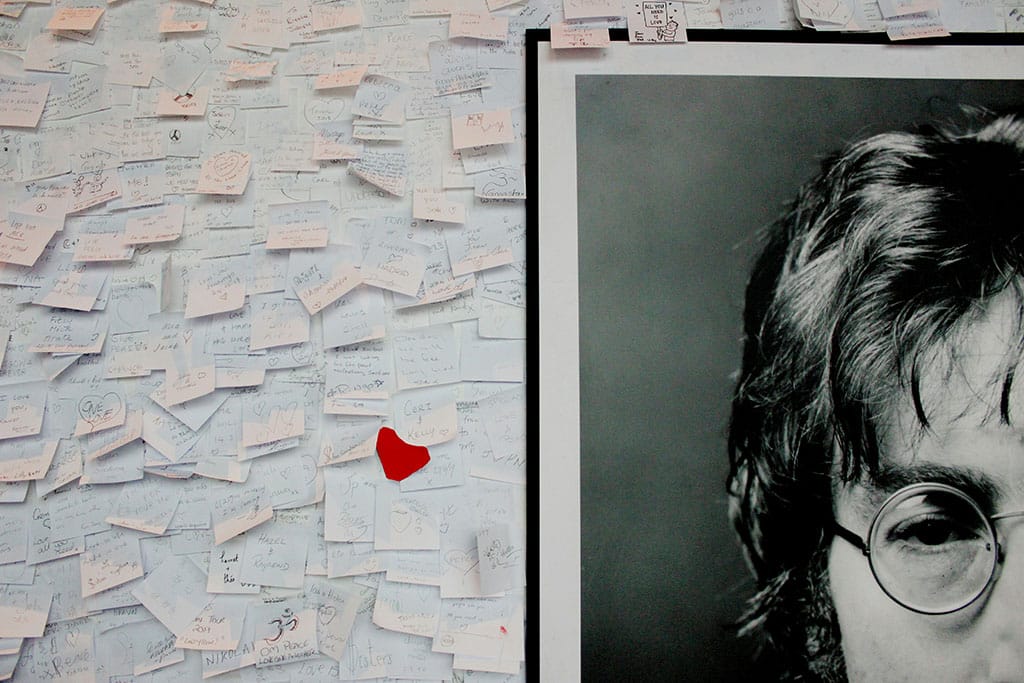
I remember waking up on a cold November morning in 1980, gathered with my family around the kitchen table in Liverpool, listening to BBC Radio 2 as the news broke: John Lennon had been murdered in New York City. That announcement sent shock waves of grief across the world. Do you remember where you were when you heard that news? Then there are once-in-a-generation events, and whether we choose to remember them or try to forget.
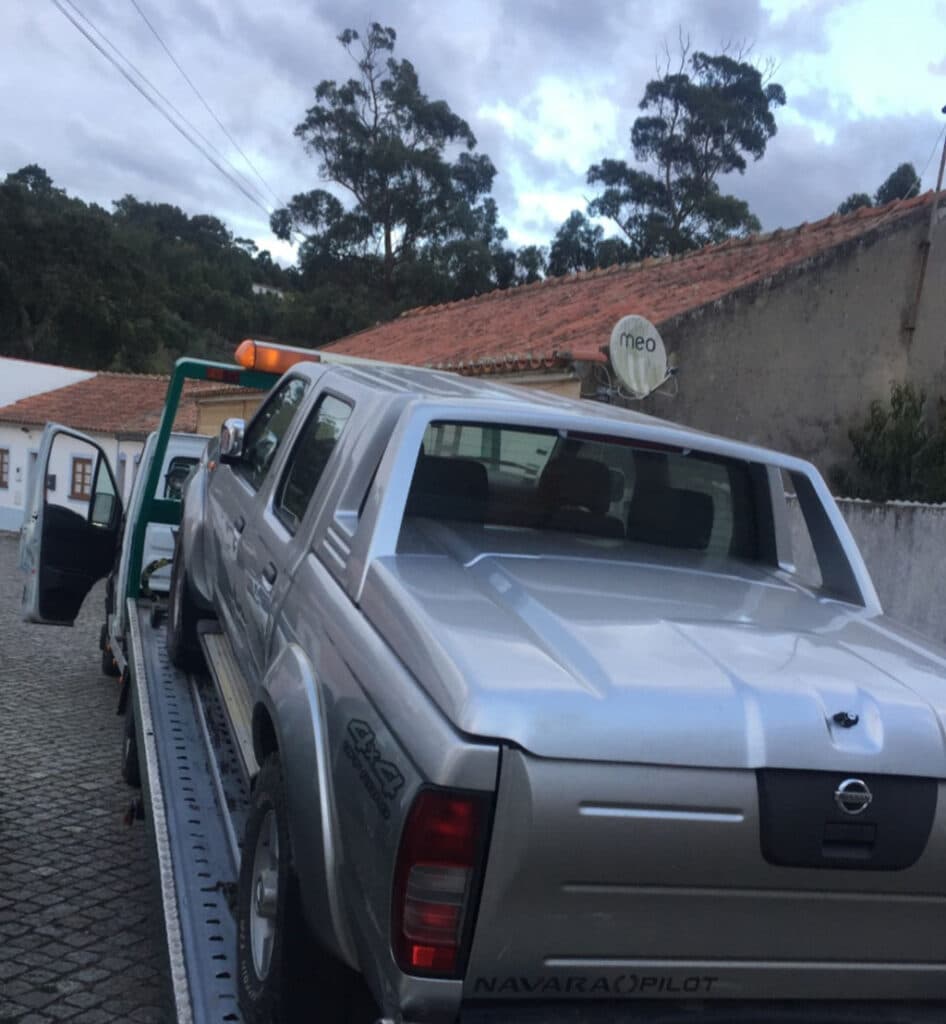
Back to Portugal, the month began with a long ‘To-do list’ and ended with a much shorter ‘What-can-I-do list?’ At the top of the list was the Nissan Navara, ‘truck from hell’, which needed to pass its Inspeção Periódica Obrigatória (IPO, or MOT).
I chose to have the vehicle serviced at the Nissan main dealership in Portimão. Upon arrival at the service centre, two mechanics conducted an initial inspection and exchanged a few words in Portuguese. They then turned to me and said, “We’re sorry, but we can’t proceed with a service for this vehicle.” I thought ‘strange’ and left with a feeling of uneasiness.
The next morning, I was awakened by the relentless drumming of torrential rain against the farmhouse windows. Not long after, the phone rang; my friend Caroline was calling to invite me out to lunch. Ordinarily, I avoid leaving the farmhouse in the rain or at night, and with good reason. The road to Monchique is a perilous journey, marked by precarious and precipitous terrain. Every time my father visited, he’d remark, “This road is worse than driving the Amalfi Coast in Italy!”
Driving eastward brings most danger, as consecutive hairpin bends make your hair stand on end, as you see the ravines below with no road guards to protect you from a fall to likely death. Driving westward brings slight safety, as you can compel your vehicle to hug the mountainside to the right.
Having made the journey to Monchique and enjoyed lunch with Caroline, I began the journey home. Travelling eastbound, the weather became monsoon-like, and for the sake of safety, the Nissan Navara crept along the road with the windscreen wipers dancing like a tango in the rain.
As I approached the most menacing bend in the road, I hugged the steering wheel close to my chest and looked ahead, where the road was about to twist abruptly. It was as if, at that point, the road disappeared. Then the turn came without mercy. At first out of sight, and then in an instant, a vehicle without warning, plunged directly towards me in the wrong lane!
Tires screamed against the sudden curve, and what was then inevitable: the collision. As the impact took hold, the steering wheel jerked as my vehicle hooked violently to the left, then slid towards the verge of the road and the unguarded precipice of the ravine below. And then, with less than one metre of the verge remaining, the Nissan Navara came to a halt. I was saved.
The other vehicle rested on the inner lane, albeit on the wrong side of the road; it was the right side for those passengers. Two men appeared from the car and made their way towards me. As you can imagine, my first question was “Why were you on the wrong side of the road?” They replied, “Because we were scared to be on the ravine side of the road with no guard rails.” I thought to myself, ‘Well, that’s honest’.
Then one said, “We will take full responsibility for the accident.” Then the other, after a pause, added, “You seem very calm about what we did,” to which I replied, “That’s because I’m glad to be alive!”
It transpired that the men were French tourists in a hire car, so I explained to them that, as they had accepted responsibility, we needed to complete a car accident self-report form (Declaração Amigável de Acidente Automóvel) to report the incident to our insurance companies. As the rain was incessant, and we needed to complete the form together, we returned to the farmhouse to avoid wet paper and runny ink.
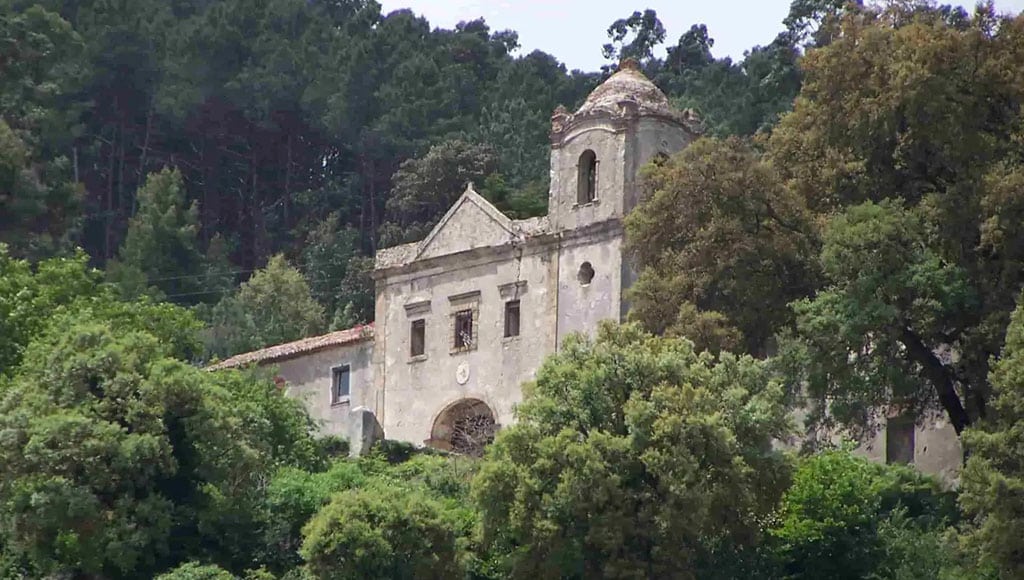
Having completed the form, we chatted over coffee, and I asked, “Why are you visiting Monchique?” They replied, “We want to visit the ruins of ‘Convento de Nossa Senhora do Desterro’. I quipped, “When you get there, please say a prayer for my Nissan Navara!”
As we looked out of the farmhouse window, we could see that the night was drawing in and the weather had deteriorated further; we were now in the clouds. So, I said to them, “Would you like to stay overnight?” (Note to reader: Now I know what you may be thinking. What a kind and considerate offer to make to strangers and to inconvenience myself in this way. All I can say in response is that having two handsome French men stay overnight at my home was a cross that I was willing to bear!) Unfortunately, they declined; it was, as in the movie, a ‘Brief Encounter’.
The next day, who you gonna call? Carlos! The ‘Man from Monchique’ was called upon again to help in the hour of need. The ‘truck from hell’ crawled to the local garage where Carlos and the mechanic awaited. The chassis number was required to complete the car accident self-report form and an estimate for the repairs.
The two men conducted an initial inspection and exchanged a few words in Portuguese. They then turned to me and asked, “Which chassis number do you want?” I thought ‘strange’, and with a feeling of uneasiness, I asked, “What exactly do you mean?”
It was then that the mechanic showed me how the vehicle had two halves and pointed out the welding where they had been joined together. Carlos then quipped, “You bought two cars for the price of one!” He had originally advised me not to buy the vehicle, and I could tell he was taking slight satisfaction at this latest development. The mechanic then turned the engine on, and a creaking, crashing sound came about.
Following another inspection, the mechanic advised that there had been an oil leak, likely caused by the collision, and the engine had seized. The diagnosis was that to get the vehicle back on the road would require rebuilding or replacing the entire engine. In that moment, I decided, ‘The truck from hell can go to hell!’ So, I replied, “Can we scrap it for salvage?” Carlos responded, “Wise decision!” And just like that, the deal was done for €2,000. (Note to reader: I won’t share how much I paid for the vehicle, so as to avoid any tears.)
The following week, on March 18, 2020, I awoke to an unusually warm day. Sitting alone at the kitchen table, the news broke: The President of Portugal, Marcelo Rebelo de Sousa, had declared a state of emergency, and the first Covid-19 lockdown had begun. That announcement sent shock waves across the country. Do you remember where you were when you heard that news? It was to become a once-in-a-generation event. I wonder whether you choose to remember what happened during that time or try to forget. I also wonder how it affected you personally.
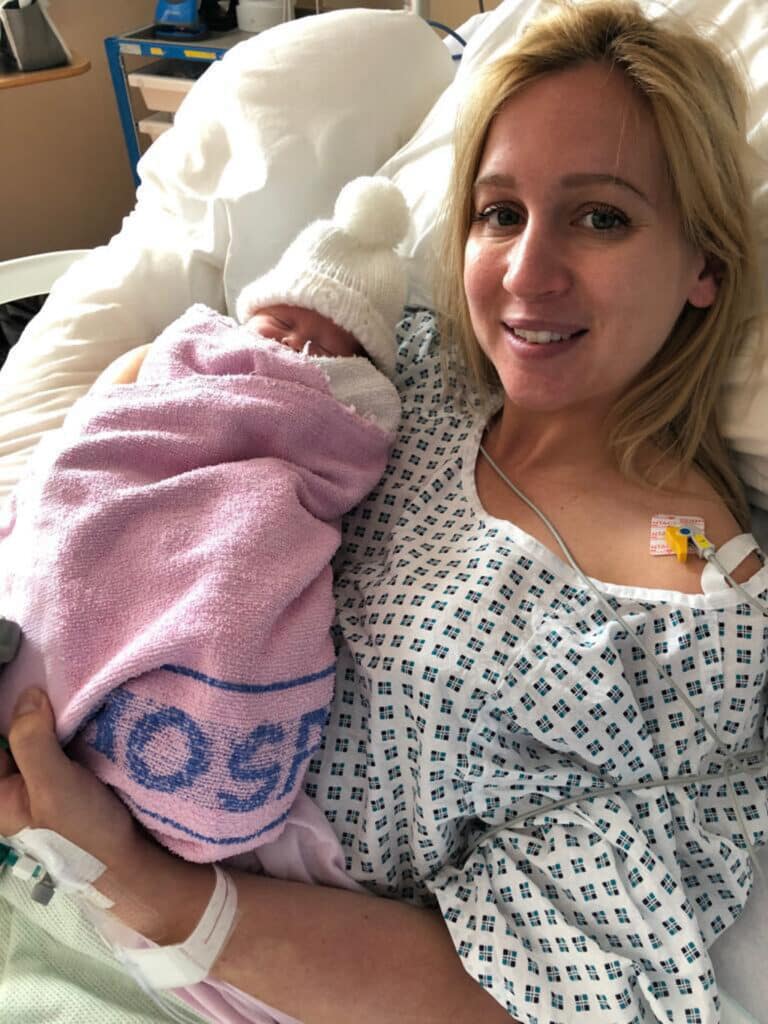
Month by month, time went by, and I became angry at spending a year alone, isolated on a mountain. Angry that my parents, in their twilight years, couldn’t make their planned visits to Portugal. Angry that my niece Amy was alone in a hospital giving birth to her first child, Orla. Angry that the students I taught were deprived of the education they deserved during their most formative years. And most of all, I was deeply saddened for those who lost their lives. So, I try to forget, but I can’t help but remember.
Not long before, reflecting on my first year in Monchique, my beloved sister Carole had made a biblical joke: “You’ve had a wildfire and a flood; what next, a plague?” She had spoken too soon!
Note: The following 12 months were a time that most of us would probably choose to forget. So, the next column of ‘A Year in Monchique 3’ will restart one year later in April 2021.
Also Read Derek Hughes article A Year in Monchique 3 – The Valleys – February 2020