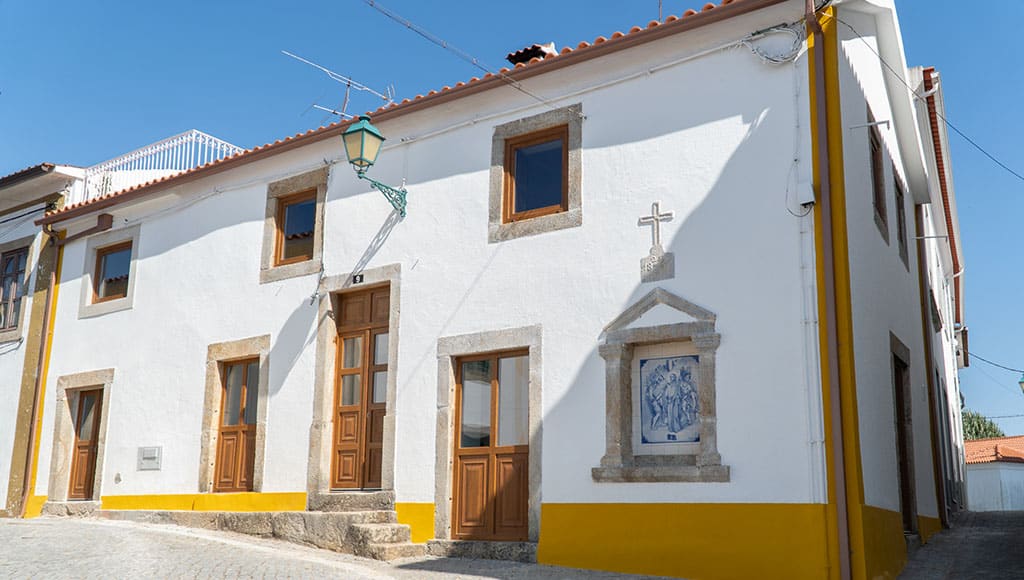
We start in the middle of the last century when a townhouse overlooking the old market square in Pedrógão Pequeno was home to the town’s nurse and her family.
For 40 years, Adelina, or more properly ‘Nurse Adelina Nunes Patrocínio’, lived in the heart of her community, tending to the medical needs of generations of locals while bringing up her own family and playing her vital part in local life.
Well respected and admired by all, Adelina passed away in 2004 after a long retirement, her husband having predeceased her and her children moved away.
Adelina’s place in the cemetery is a simple grave with an iron railing marking the plot. The tomb of the powerful Vidigal family, which donated the land for the cemetery, stands proudly in the same row as Adelina’s, as does the monument to Casimiro Freire (1843-1918), the noted educationalist and founder of Escolas Móveis whose mission to fund mobile schools travelling to remote villages drained his energies and funds to the extent that his Lisbon-based fruit business went bust.
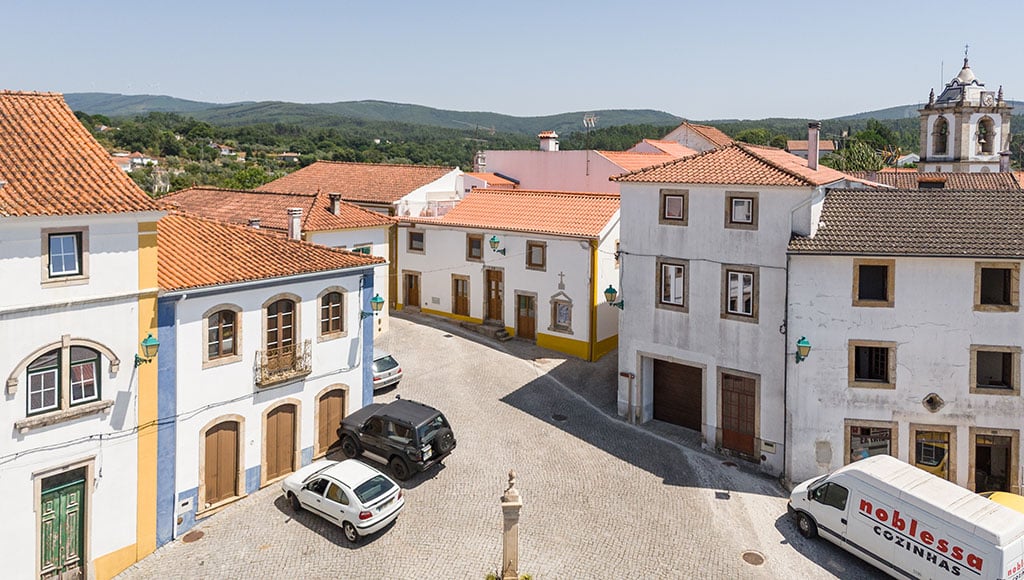
I first enquired about Casa Adelina in 2021 while buying provisions in Paula’s shop on the old market square. The property’s then owner, one of Adelina’s distant relatives, was in the store at the same time and assured me the house was not for sale.
Some years later, it was for sale, and investors were quickly found to fund the purchase and renovation of the property to halt the degradation of the house after 20 years of zero maintenance. The roof tiling had come loose in a few places and the steady drip, drip, drip of rainwater had caused irreparable damage to parts of the interior wooden structure. No house appreciates being left empty, but houses with leaks degrade surprisingly fast.
As work began, it was clear that the townhouse, built in the early to mid-1800s, had been extended over the years but part of the fun is playing detective to see what was added when.
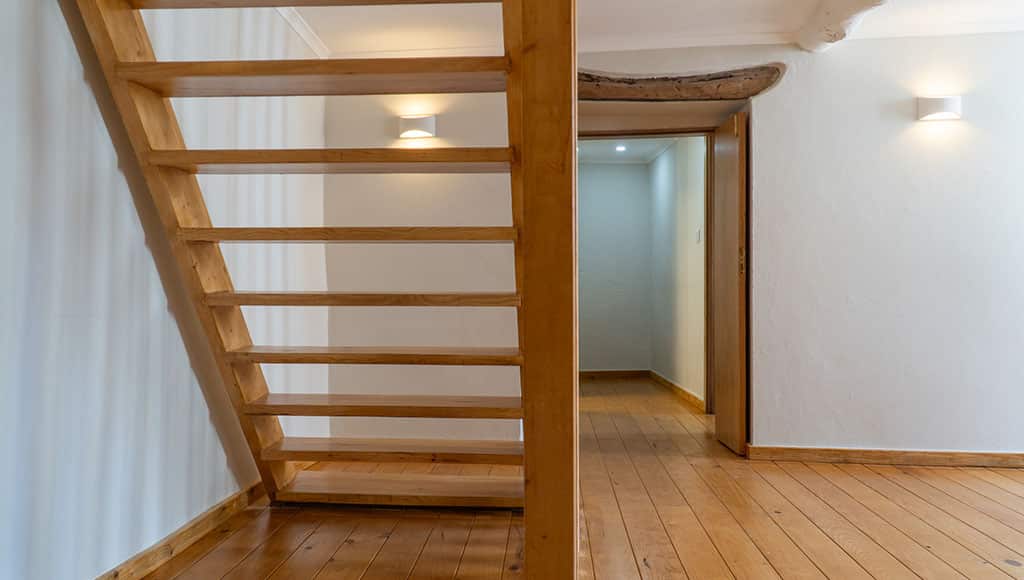
The untouched interior of Casa Adelina was a jumble of corridors and small rooms with low wooden ceilings, sloping floors where the original beams had decayed and dropped, a main stairway that was more a hinderance than a functional structure and aluminium windows and doors that had been fitted in the 1980s, modern at the time but now without aesthetic.
The house clearly had been cared for with family pictures propped up on every available surface and covered in a thick layer of dust. The nurse’s storage draws were packed with neatly arranged bandages, rolls of gauze, syringes and sheets. Casa Adelina seemed marked by the same fastidious nature that had made her occupant such an efficient nurse; everything has a place, no mess, no uncleanliness.
From a business point of view, a new layout clearly was needed to optimise the interior, so a new floor plan was developed with additional changes made along the way. The Rural Properties’ renovation business is surprisingly organic, able to respond to uncovered surprises such as the discovery of an underground water tank at Adelina which has been cleared out and plastered for future use as a wine cellar.
Casa Adelina is a townhouse, and, like many townhouses, there is no garden, so no worry about weeding, watering and maintenance. The outside space now is a sizable roof terrace with work surface and an old stone sink.
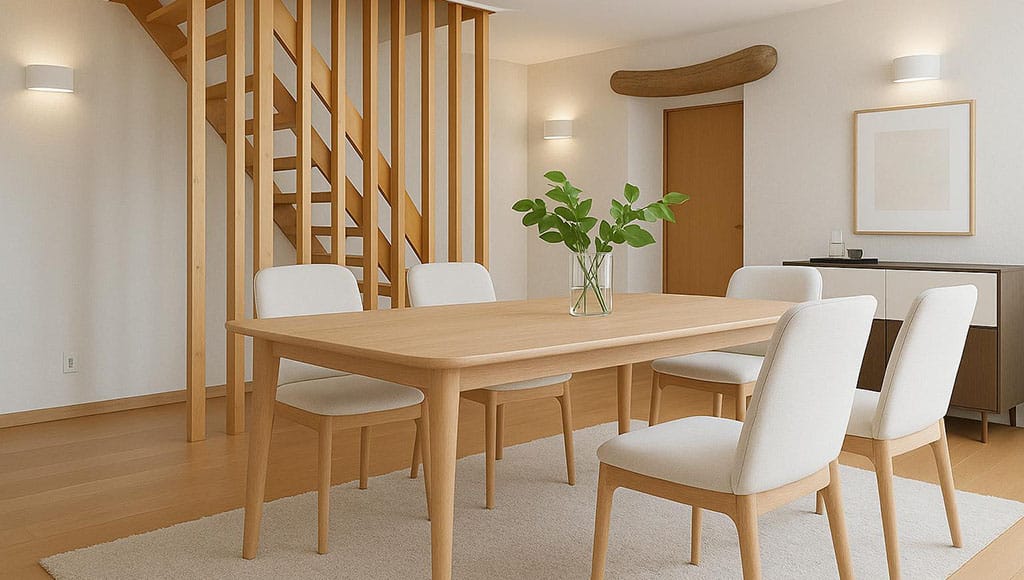
On closer inspection, and as suspected, the 1960s rooftiles on the 1840s frame both had less than a decade of life left in them, so a replacement roof was installed, giving the lounge below a height of nearly four metres.
The original wooden shutters were stripped of seven layers of paint and treated to show the original grain to best effect; a wooden lintel remains above a ground floor doorway, and many of the replastered interior walls retain their original curves and irregularities.
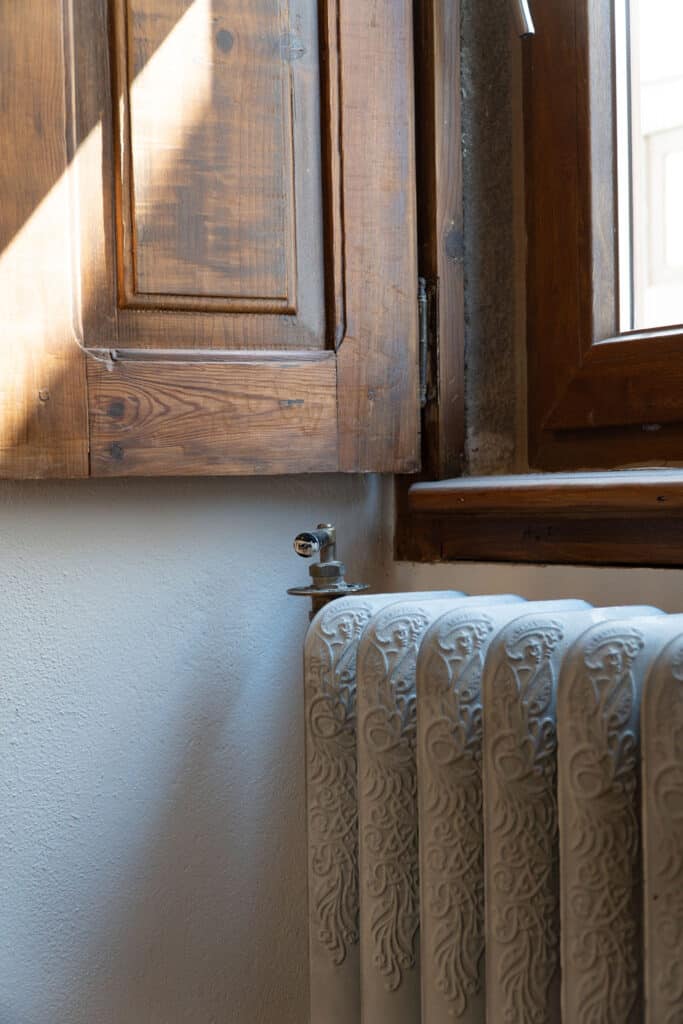
For hot water, an efficient heat-pump was installed to heat the cast-iron radiators in each room. With central heating, new doors, double-glazed windows and a fully insulated roof, this house will be warm in winter and naturally cool in the current summer temperatures.
Opting to lay wooden floors throughout the house was a labour of love. Their installation, sanding, treatment, re-sanding, retreatment and several layers of specially mixed preservative and stain has created flooring that now is in keeping with the original floorboards which could not be saved.
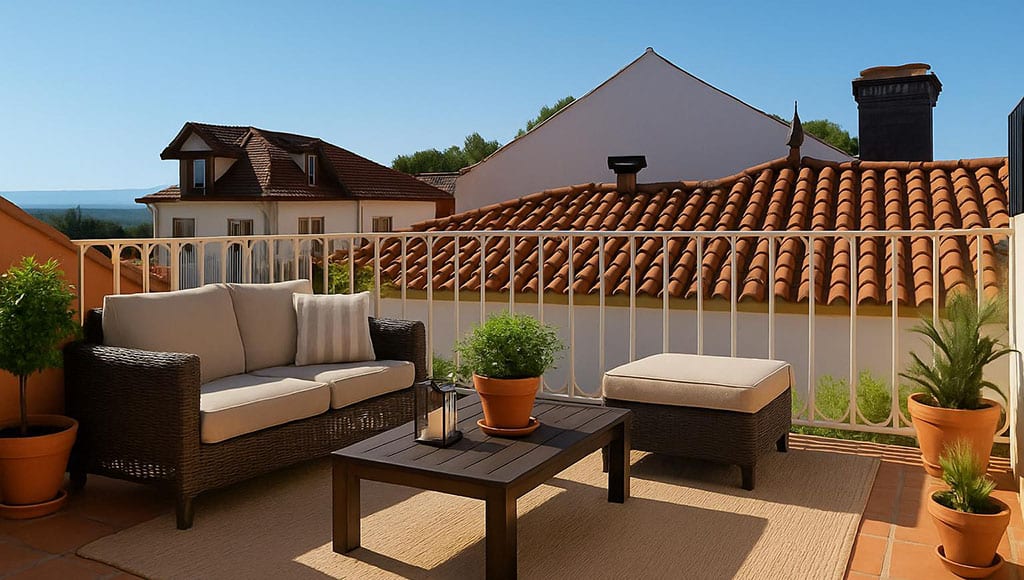
Casa Adelina has been completely renovated to provide an energy-efficient three-bedroom, three-bathroom townhouse in a truly charming and welcoming Portuguese town. This is what many current buyers are looking for and appreciate; an old house with history, updated, where everything works and they can move in right away.
Inspired by Casa Adelina and the satisfaction of bringing a long-derelict house back to life, Rural Properties now is developing and selling several historic homes, each with their own story.
Every step at Adelina’s house has been made with her looking over my shoulder. I would like to think that she would be proud that her house and her name live on.