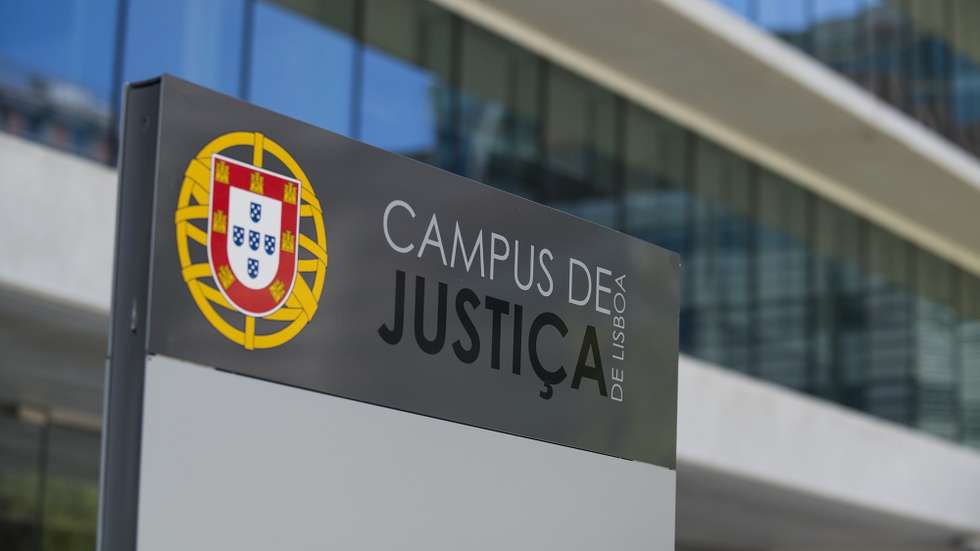
The legal representative of the Portuguese company contracted by Carris – Lisbon’s public transport operator – to provide maintenance services on the fated Gloria funicular (and other similar modes of passenger transport) will be heard today at DIAP, the Department of Investigation and Penal Action in Lisbon.
According to a judicial source, the legal representative of MNTC Serviços Técnicos de Engenharia (MAIN) will be questioned as a witness by the public prosecutor’s office as part of the criminal investigation launched after the funicular tragedy on September 3, which killed 16 people (Portuguese and foreigners), and injured more than 20 others.
Questioning began this morning, three days after GPIAAF, the Office for the Prevention and Investigation of Aircraft and Railway Accidents, released its worrying preliminary report which pointed to maintenance faults and omissions, as well as a lack of training for employees and supervision of work carried out.
Yesterday, Carris president Pedro de Brito Bogas and his entire board of directors resigned.
In a statement, Lisbon city council said mayor, Carlos Moedas (PSD), “understands and accepts the reasons given” in the resignation, “considering it essential to appoint a new management team, which will be presented in due course, for a new mandate”.
The preliminary GPIAAF report revealed that the cable connecting the two cabins of the Glória funicular – which broke at its attachment point to the carriage that catastrophically derailed – did not comply with Carris’ specifications and was not certified for use in passenger transport.
“The use of cables that were multiple non-compliant with specifications and restrictions on use was due to several accumulated failures in their procurement, acceptance and application by CCFL (Carris), whose organisational internal control mechanisms were not sufficient or adequate to prevent and detect such failures,” the investigation maintains.
The report states that Carris, in the process of purchasing cables for the Glória funicular, sent potential suppliers cable specifications for the Santa Justa lift, ‘which are different, failing to detect the error or explain the mistake’.
According to GPIAAF, “for a reason that Carris was unable to explain to the investigation, and for which no documentary evidence could be found in consultation with suppliers, the specification provided by Carris’s Electrical Maintenance Department (DME) was adopted for the two additional items, corresponding to the cables for the Glória and Lavra funiculars, for the specification provided” by Carris’ Electrical Maintenance Department (DME) “for one of the cables for the Santa Justa lift, changing only the diameter”.
As to faults and omissions in overall maintenance, and the perceived lack of training of employees/ supervision of the work carried out, GPIAAF says, for example, that inspections scheduled for the day of the accident “are recorded as having been carried out, although it has evidence that they were not carried out at the time indicated on the corresponding record sheet”.
The report also indicates that mechanisms, such as the Glória and Lavra funiculars in Lisbon, as well as Carris trams, are not supervised by the Institute for Mobility and Transport (IMT) – but are only inspected by the management company itself.
GPIAAF recommends that Carris should not reactivate the lifts in Lisbon “without a reassessment by a specialised entity” and that IMT should implement an appropriate regulatory framework. All this now appears to be in hand, as ordered by the government.
Publishing GPIAAF’s findings earlier this week, tabloid Correio da Manhã also reported that no-one seems able to remember any point where tests were done on the funicular’s emergency brake (which failed to engage in spite of desperate attempts by brakeman André Marques who was one of the people who died in the tragedy).
Source material: LUSA