Portugal’s airports – already in the public eye for all the wrong reasons – have a new potential upset on the horizon: a Spanish consortium has won the new tender for handling licences, meaning SPdH, jointly held by British company Menzies and TAP, could well be shown the door.
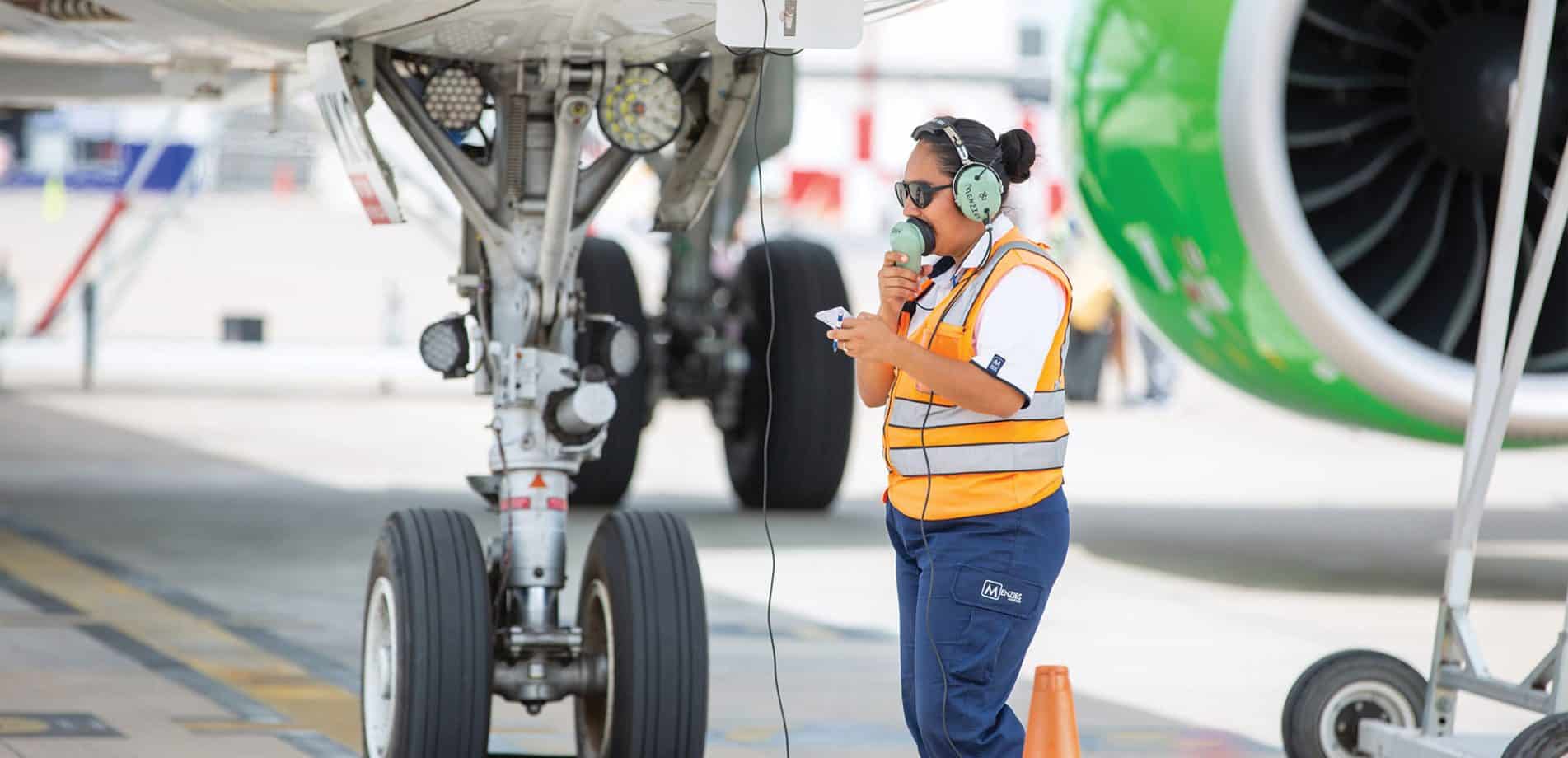
Menzies (which actually runs handling at the country’s airports) has had its share of problems with its labour force. But the fact that the incoming consortium has not reacted positively to a proposal to hire SPdH workers on their current salaries is adding fat to the already simmering fire.
Today, Lusa reports that Menzies has filed for an injunction at the Lisbon Administrative and Tax Court to challenge the tender, won by the Clece/South consortium (Clece being a services company owned by a group led by Florentino Pérez – president of Real Madrid football club – and South being owned by the IAG aviation group) – on the basis that it “does not adequately reflect” the operational scale, complexity and safety requirements inherent in ground handling activities at Portugal’s busiest airports.
The process, too, has failed to establish “a realistic, sufficiently robust transition framework between operators, including appropriate provisions for the transfer of staff, operational knowledge and critical resources, aligned with recognised principles of employment protection”.
“Without an adequate transition between operators, there is a real risk of disruption to airport operations, particularly when the sector is approaching the summer season”, warns Menzies.
The ground handling company stresses the fact that Portuguese airports face high levels of operational pressure: “any failure could have significant consequences for passengers, airlines, workers and Portugal’s reputation as a leading tourist destination”.
As Lusa goes on: “the company insists that ground handling is “an essential component” of aviation, tourism, the national economy, arguing that the tender decision “must be based on a rigorous and robust technical assessment” that ensures the safety and continuity of operations.
In Menzies Aviation’s view, the proposal submitted by Clece/ South “raises doubts as to its viability under real operating conditions, particularly during periods of peak traffic”, which have already become infamous for major bottlenecks.
A note released by Menzies today insists that “the plan does not clearly demonstrate how resources would be allocated when flights overlap or when traffic reaches its peaks (…) without this information, it is not possible to objectively assess whether there are sufficient human resources and equipment to manage simultaneous flights, nor whether the proposed aircraft turnaround times are achievable in practice”.
Menzies also expresses concern that commitments made by Clece/ South may not be “realistically met” in terms of the proposed staffing levels and equipment, warning that any shortfall “could result in delays, longer waiting times, baggage issues, a deterioration in the departure and arrival experience, undermining confidence in the airport system”.
And finally, the British handling company points out that the selected consortium is a new entrant to the market – that operating at Portugal’s main airports, particularly Lisbon Airport, with high traffic volumes and structural limitations, and “requires extensive experience, operational robustness and particularly rigorous technical scrutiny”.
“Any disruption or poorly managed transition could create uncertainty regarding employment, put pressure on a highly specialised workforce that underpins the Portuguese aviation system,” Menzies concludes.
This time, unions are right behind Menzies, saying “it is absolutely disgraceful” that the government even allowed for a tender process to be launched on such open-ended terms, “without a transfer of the business, without a company-wide agreement, and driven purely by ideology and free-market principles”.
SITAVA (the syndicate of aviation and airports workers) has said that they, like Menzies, may well resort to taking out an injunction to preserve the collective interests of the many workers currently employed at Portugal’s mainland airports.
Source material: LUSA/ ECO online