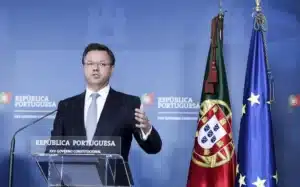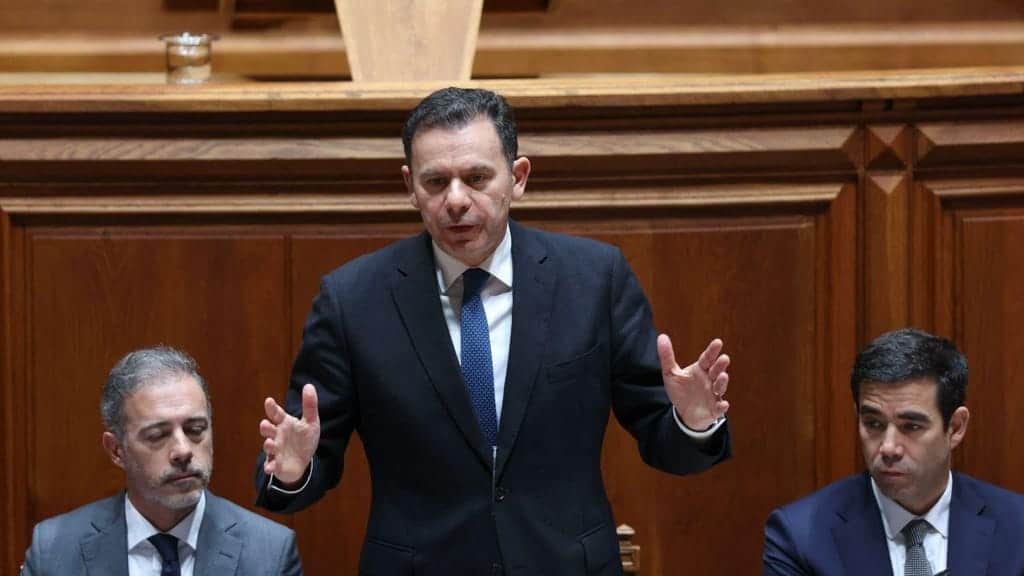
Prime Minister Luís Montenegro will appear before the Standing Committee of the Assembly of the Republic today to debate the coordination of firefighting in Portugal, after opposition parties have unanimously criticised the government’s actions.
The debate, requested by Chega and PCP communists, is scheduled for 3pm and will last approximately one hour – beginning with a six-minute intervention by the government, followed by interventions of the same duration by all parties, in order of parliamentary representation, with the government once again closing the debate, for a 10-minute intervention.
This will be a highly-charged session given that the government is being accused of lack of preparation, failure to activate the European Civil Protection Mechanism ‘at the right time’ and for not declaring a state of calamity.
Parties will also refer to the catastrophic decision by the government to ‘go full steam ahead’ with Festa do Pontal in the Algarve, when the north and centre were under a form of wildfire siege.
The PM has already addressed criticisms, in his own way – suggesting they were unjustified, admitting “not everything went well” – but none of his comments will have assuaged parties’ anger.
In the meantime, a number of parties have proposed parliamentary inquiries: CHEGA’s being the most ‘audacious’, in that party leader André Ventura wants to get to the bottom of what he calls “the interests behind these fires that take place every year”. Government figures have dismissed CHEGA’s proposal, but Mr Ventura means to press ahead with it, under ‘potestative rules’.
PS Socialists have also called for a technical commission to investigate what they consider to have been a “lack of political leadership” in the awful weeks where wildfires were so intense they could be seen from space.
At an extraordinary meeting of the Council of Ministers last week, the government approved support measures for populations affected by the fires – which have since been promulgated by the President of the Republic – and an intervention plan for forests until 2050, which will be submitted to parliament in due course, and which the prime minister says wants to become the basis for a pact in forest management and territorial protection.
None of this however appears to be falling on very fertile ground. More will become clear following today’s debate.
Provisional data held by SGIFR (the integrated management system for rural fires) points to fire damages so far this year being equivalent to 25 cities the size of Lisbon. In hectares, this translates in 250,000 km2, and data published yesterday by Eurostat has fanned flames of discontent by showing that Portugal is the third country in the European Union that invests ‘the least’ in protection against fires – just 0.3% of government expenses.
Source material: LUSA