Portugal is once again in the crosshairs of geopolitical tensions due to its long-standing agreement with the United States over use of Azores military airbase at Lajes, on Terceira Island.
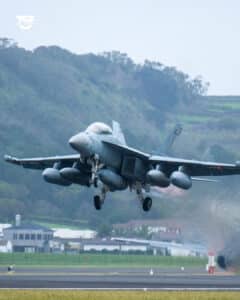
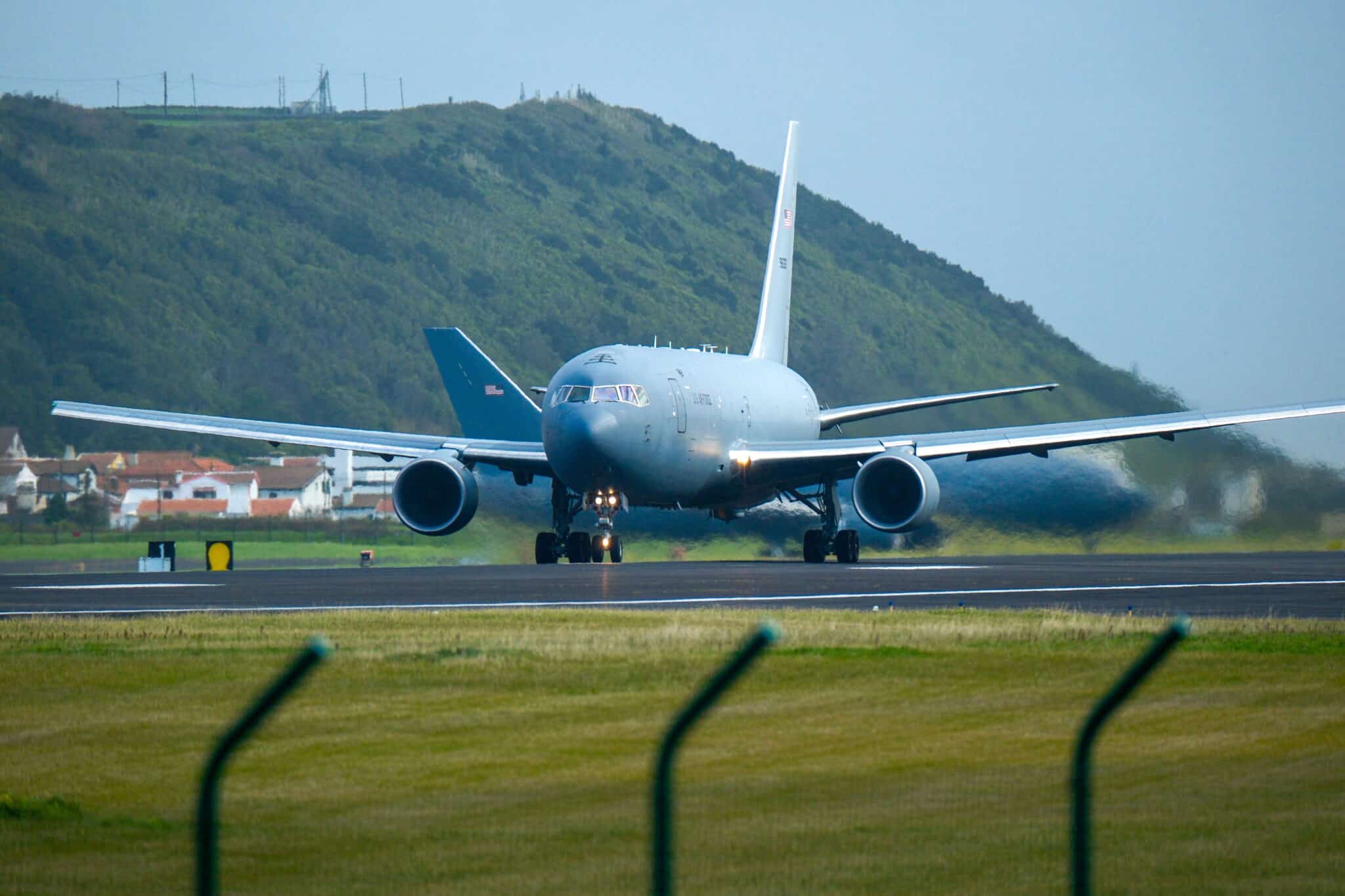
Almost two weeks before the United States and Israel launched last weekend’s ‘Epic Fury’ attack on Iran, Lajes was seeing the arrival of US fighter jets, refuelling planes and transport planes reminiscent of the military build-up that happened last June, ahead of the United States’ attacks on Iran’s nuclear bases.
Since ‘Epic Fury’ began, US military activity at Lajes air base has intensified – with refuelling planes flying in and out on a regular basis.
With the conflict extending to other territories and nations within the Middle East – and with Portugal’s own neighbour Spain refusing the United States permission to use its air bases – questions at home are centring on how much of a target Portugal has allowed itself to become.
Certain news channels stress the fact that, nationally, our air defences are limited. They can protect “sensitive points against planes and low altitude drones”, but the country “does not have total autonomy to intercept long-range ballistic missiles or advanced hypersonic threats”, explains TV7dias – recalling that the government has “reinforced investment” intentions for this year designed to “plug the gaps in medium- and long-range defences to guarantee greater sovereignty”.
For the time being, however, those gaps remain.
Left-wing parties are hot on the heels of the government, criticising what they see as a capitulation to the United States – when justifications for this conflict ‘being unleashed at this point in time’ are constantly changing, and when collateral damage is seen to be mounting.

Monday thus saw Minister of Foreign Affairs, Paulo Rangel, making statements to the fact that “no military means involved in the North American operation (in Iran) left from the Azores” air base, and describing ‘three conditions’ to the continued use of the base ‘imposed by Portugal’ (see below).
The affirmation about military means (not having left the Azores) seemed as sweeping (and questionable) as the one given on the same day to Antena 1 by Majid Tafreshi, the Iranian ambassador to Portugal, who said he “didn’t think” his country would be targeting the Azores for a retaliatory attack (“because Portugal and Iran have very good relations, and up until now Portugal has not said that it supports the American attacks on Iran”). But nonetheless Iran considers all bases facilitating attacks by American and Israeli forces to be “legitimate targets”, Tafreshi told his interviewers.
With no apparent ‘end game’ in sight yet – and air space highly compromised over the Middle East, affecting dozens of airlines and hundreds of thousands of travellers – the government here has acknowledged that this is the kind of ‘external shock’ that may well require budgetary revision.
Rising prices will be the next ‘casualty’ as the cost of fuel and natural gas starts increasing.

Manuel Castro Almeida, Minister of the Economy and Territorial Cohesion, has stressed nonetheless that Portugal has “significant reserves”, which he hopes “will last beyond the announced timeframe and duration of this war”.
Castro Almeida also believes the country is “much better able to withstand increases in the price of oil than in the past.”
The government’s “obligation is to be vigilant in order to take appropriate measures at each moment to ensure that the economy functions, that people have decent living conditions, and that public finances remain balanced,” he said.
Portugal’s three conditions for US use of Lajes during ‘Epic Fury’
Minister of Foreign Affairs Paulo Rangel has stressed that the three conditions for US military to continue using Lajes in the context of the ‘Epic Fury’ attacks are:
- the base can only be used in response to an attack, in the sense of defence or retaliation
- any action must be necessary and proportional
- any action can only affect military targets
Questioned as to Spain’s decision to refuse the United States authorisation to use its air bases, Rangel’s response was that Portugal historically has a “structural Atlantic relationship” distinct from that of Madrid.