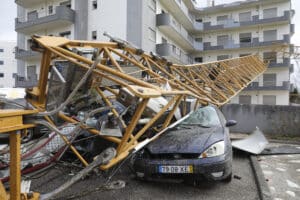
In spite of all the promises, the process of getting money into the hands of people whose homes were partially destroyed by Storm Kristin (and the other depressions that followed shortly afterwards) is much too slow.
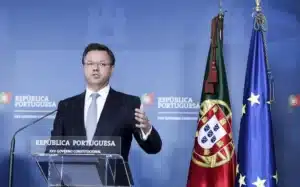
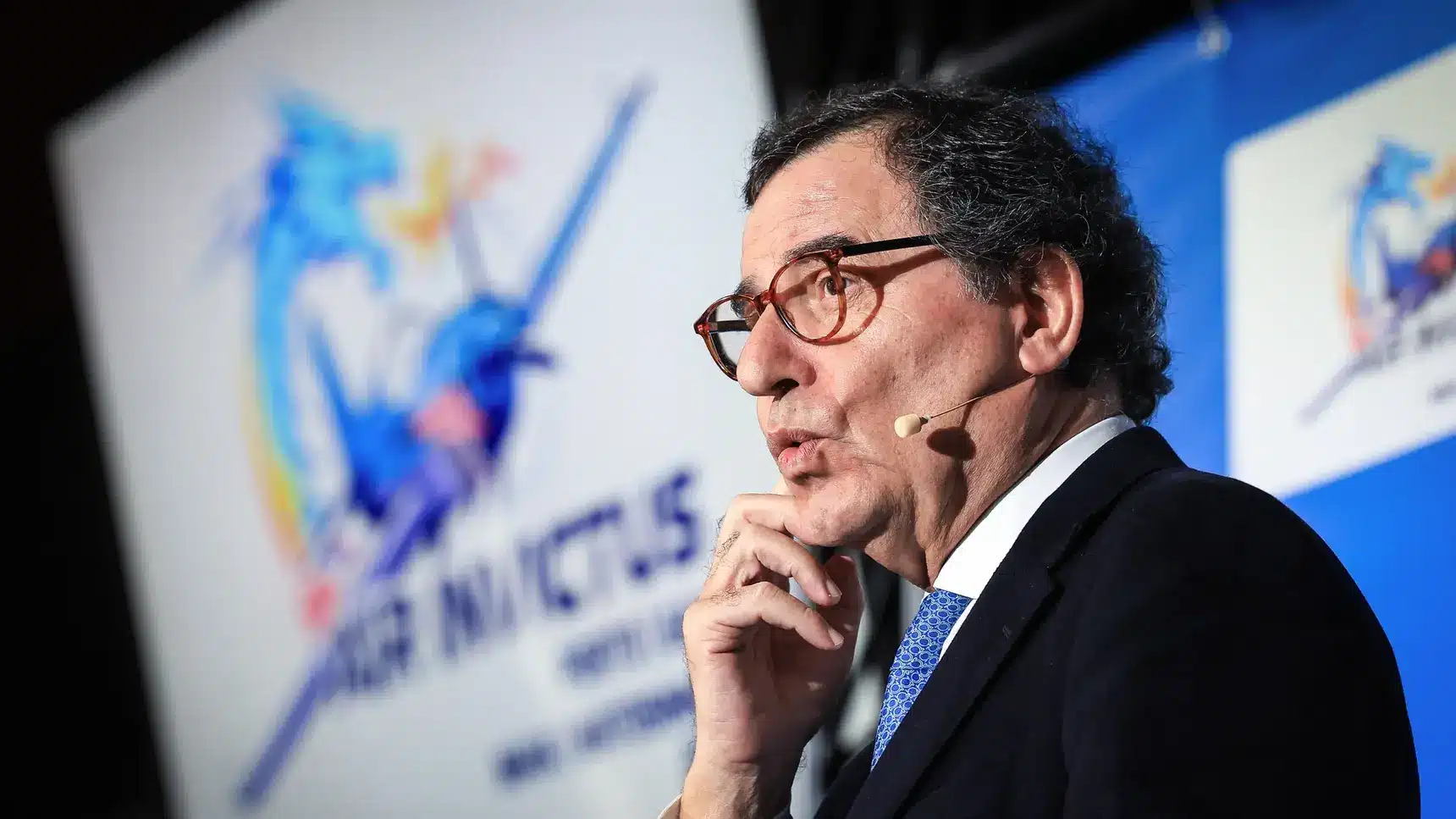
Minister for the economy and social cohesion, Manuel Castro Almeida, has recognised the short-comings, admitting that the initiative “is not going well”.
Speaking today at a PSD party evening on the PTRR (the Portugal ‘transformation, recovery and resilience plan), the minister absolved his own government of any blame – suggesting it was much more down to local municipalities.
This stance will infuriate local authorities: their arguments almost certain to be along the lines of Leiria mayor Gonçalo Lopes (who told Lusa two weeks ago that they have been swamped by applications for help, and simply do not have the necessary manpower to deal with everything).
Castro Almeida however was not speaking in the presence of mayors and council chiefs. He had the floor very much to himself. Thus his opinion is being ‘broadcast’ by Lusa.
“We have 25,000 applications for support, coming to a total of €143 million – but the money getting into people’s hands is still very little. The process of evaluating (applications) in the hands of municipal councils is taking time,” he told his audience – stressing that the government “is doing all that it can – and that payment, when information from local authorities arrives, is rapid (…) The same day or the next, the money is paid. No process lasts more than 24-hours in the CCDR (regional commission’s for coordination and development, to which councils send applications once they have been ‘verified’).
Castro Almeida conceded that none of the delay is down to ‘lack of will’ of local authorities (“I understand that technicians are very busy…) but equally it is not the fault of the government.
“We are doing everything in our power,” he said, adding that the government has contracted 700 technicians to support councils in these endeavours.
As to other areas of support (aimed at helping businesses recover), these are going “very well”, the minister emphasised: 3,725 firms already have money in their bank accounts, and another 4,995 are in the process of getting it.
In all, business support is running to a total of €1.141 billion.
Regarding the consultation process for the PTRR, the minister said “it is being very broad (…) It will have to be done quickly, but not rushed”. And he admitted to being “afraid” that “there will be criticism that this was done too quickly.
“We will have to take clear and very firm measures on the issue of insurance, particularly for disasters. In any country, people look to insurance, (but) in Portugal they look to the state,’ he criticised.
And on the government’s response, generally, since the carousel of storms changed the face of many areas in the centre of the country, he challenged people to ‘say how it could have been different’. “They give the impression that the government was late, which is not true. It was very quick…”
In the same speech, Castro Almeida defended the need to manage the nation’s forests, suggesting “there is ill will against certain trees” and that as a result there are “paper factories stopping for days because there is not enough eucalyptus in Portugal.”
That last sentence on its own is enough to start a major wildfire of opinions. Past governments have tried to encourage initiatives to reduce the enormous quantity of wild eucalyptus that has been seen in the past to contribute to the country being a comparative ‘powder keg’ during the wildfire season.
Source material: LUSA