With the war in the Middle East sending fuel prices rocketing, Portugal – like almost every other country in the world – has started working on contingency measures “to protect the most vulnerable”, as well as the economy as a whole.
As Portugal’s Prime Minister Luís Montenegro stressed when the seriousness of this conflict started hitting home: “We want a country that is socially just and economically vibrant.” That requires something of a juggling act. These are the solutions this far:
Tax cuts
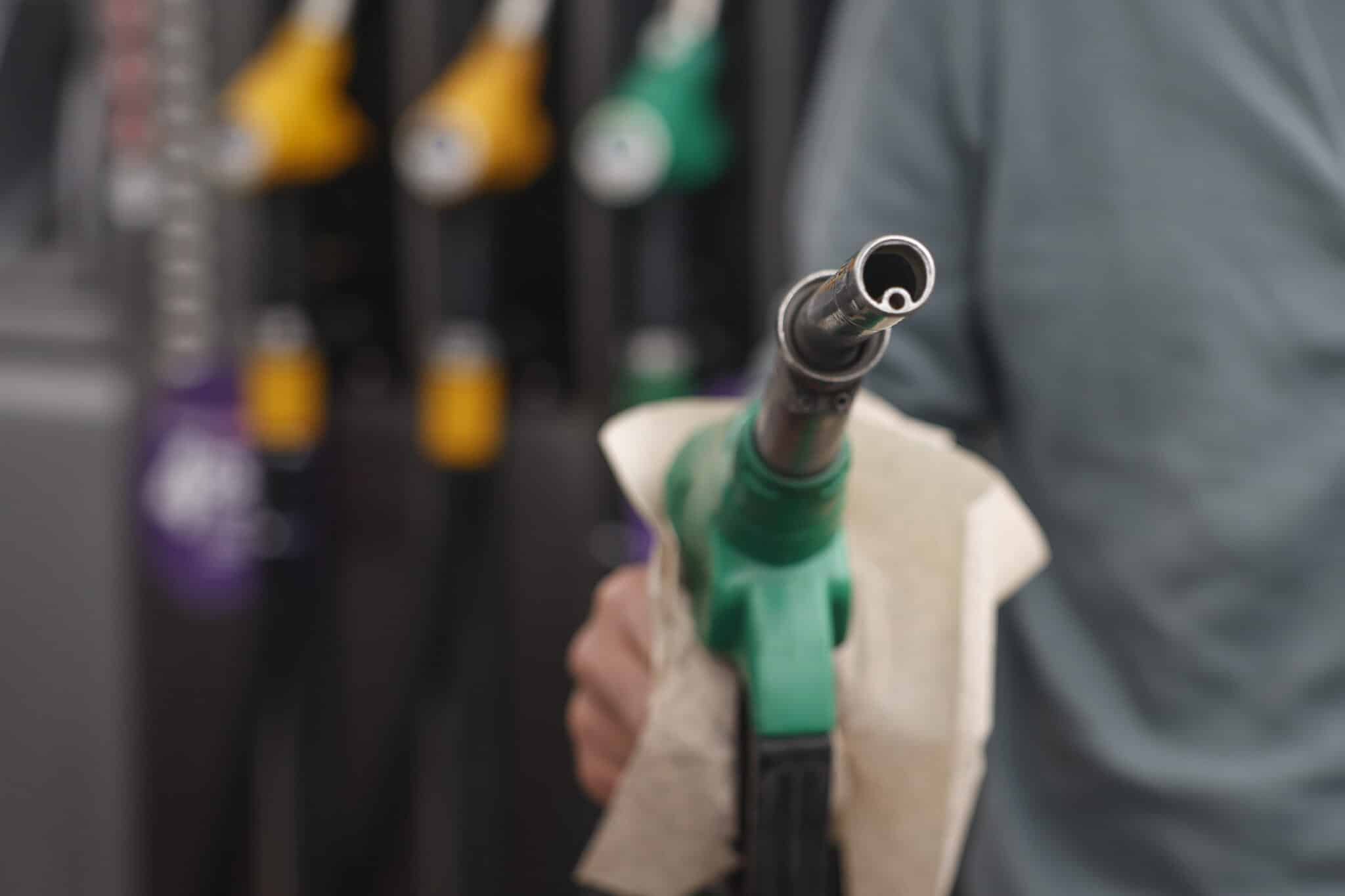
- ISP – the tax on fuel products (that Brussels only recently insisted the government starts charging ‘in full’) is now being reduced in line with increases at the pumps. The reductions are not cushioning drivers from shockingly steep price rises (only this week diesel rose by another 12 cents per litre, petrol by seven), but they are taking at least some of the edge off them. The formula is to reduce the tax whenever the price of fuel increases by over 10 cents per litre as per average prices charged in the week that ended on March 6.
- Commercial diesel (for hauliers, taxi drivers, firefighters, etc.): fleets being given ‘financial support’ to the tune of an extra 10 cents per litre. The ‘extraordinary mechanism’ is valid for three months, and only for a limit of 15,000 litres of fuel per vehicle. It effectively means that from March 16, the level of state support for professional diesel rose to 15.5 cents per litre.
- Gas bottles for families already receiving benefits for gas: these are now €10 cheaper as the government’s contribution has increased from €15 per bottle to €25 over the next three months.
Declaration of energy crisis
On Thursday last week, Minister of the Presidency António Leitão Amaro explained that if and when an ‘energy crisis’ was declared, measures would be brought in to support domestic consumers and businesses by fixing the price for energy “below the cost price”.
The differential would be supported by the state – and would have to be “recovered later”.
The cap on energy prices will also have to be accompanied by energy efficiency measures: households will have to reduce their consumption to 80% of what they consumed in the previous year, and businesses to 70% of the previous year’s consumption.
According to the minister, this new mechanism will only be used in the event of an energy crisis being declared, “which will happen if prices continue to rise”, but which, he said at the time, was still “a long way off”.
Less than 24 hours later, Minister for Energy and the Environment Maria da Graça Carvalho admitted the country was “close to the criteria where we can declare an energy crisis – and then, this week in Australia, President of the European Commission Ursula Von der Leyen has confirmed ‘the worst’: “The situation is critical for (…) energy supplies worldwide. We are all feeling the knock-on effects on gas and oil prices,” she admitted – once again appealing for the countries involved in conflict to come to a speedy solution.
In the event that this does not happen as quickly as the world hopes, Portugal’s contingency measures extend to further ways to protect consumers:
- energy suppliers are to offer fixed-price contracts with a one-year term, in regions with more than 200,000 inhabitants, should prices rise further – and they will also be obliged to accept payment plans with longer terms, tailored to households’ financial circumstances. In the event of non-payment, there will have to be “a minimum supply guarantee” for households, which will operate by reducing consumption capacity to 1.5 kVA.
- Renewables boost: The final concrete measure announced last week refers to renewable energy projects: the government is simplifying licensing for these – waiving it entirely for self-production up to 800 watts, and promoting the production of biomethane and green hydrogen from renewable sources.
As might be expected, reactions from political parties, from hauliers, firefighters, and taxi drivers came quickly: the measures are not enough. Firefighters are threatening to reduce the number of ‘non-essential’ transport services they provide (taking the most vulnerable usually to hospital appointments); hauliers and taxi drivers are warning businesses could fold.
It has not helped that neighbouring Spain has come up with a €5 billion package of tax cuts, and more, that are seen to be much more ambitious in trying to mitigate some of the financial pain.
In parliament, parties have been baying for much larger tax cuts – particularly when it comes to IVA (which both the left and the right want to see reduced to 6% on gas bottles and on essential foods, if not done away with altogether. CHEGA is also calling for elimination of the carbon tax).
Listening to the various political proposals, the reality of just how many taxes Portuguese consumers bear comes sharply to the fore.
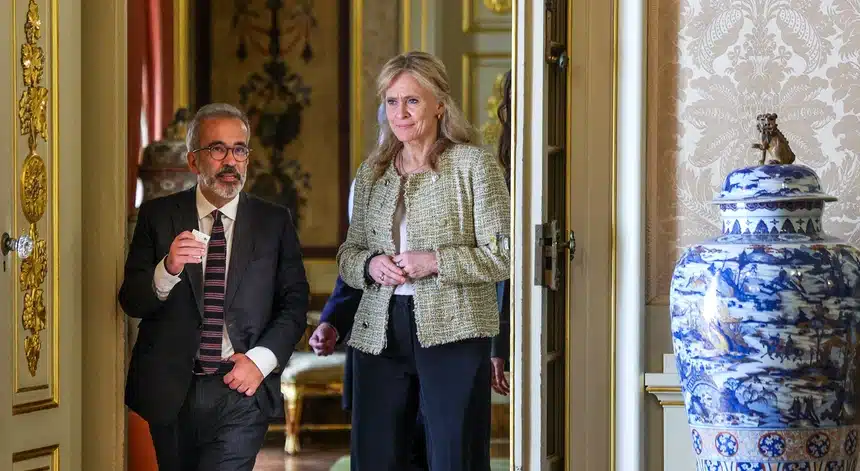
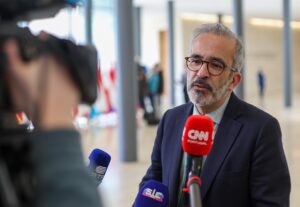
This week in Lisbon, in the context of a visit from the foreign minister of Iceland, Portugal’s head of diplomacy Paulo Rangel conceded that ‘structural measures’ may well be needed if the war doesn’t end soon (which looks very possible).
The overall objective, he said, is to “ensure that growth and investment are not affected, as they would be without government intervention”.
If there is a relatively quick solution to the conflict, “I think we could easily accommodate the negative impact of these recent weeks, and return to a kind of normality,” Rangel ventured. “If this is not the case, naturally we will take some more concrete structural measures to alleviate the stress on families and businesses.”
Paulo Rangel did admit to being “very worried” about the direction of the conflict.
The government is analysing “the situation with a great deal of care, every day – sometimes twice a day – to understand what the best policies are to mitigate this situation,” he said, pointing to the “economic consequences”, which will have “an enormous impact not just in the transport sector, but in the whole chain of production and distribution”, as well as on agriculture – given that many of the fertilizers used globally pass through the Strait of Hormuz, which is still effectively blocked by Iran.
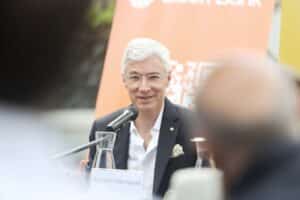
It was an interesting press conference in another way: the Icelandic minister, Þorgerður Katrín Gunnarsdóttir, explained that her island country is sustainable when it comes to energy. It has hydroelectric and geothermal power generation. But it has “the weakest currency in the world” and thus it too is feeling the impact from inflation.
The explanation served to underscore how destructive this conflict has become, even without Iranian missiles reaching Europe.
It also showed that Iceland shares Portugal’s view (and that of the majority of European countries): the Iranian regime is “a terrorist regime that has harmed its citizens, violating their rights to life and human rights. But, on the other hand, Iceland is also a country that underscores the importance of order based on rules and international law”, said Gunnarsdóttir, thus identifying how both these values have been absent from the approach taken by the United States and Israel.
Also read: Portugal joins group of 30 “ready to help reopen Strait of Hormuz”