To read from the start click here.
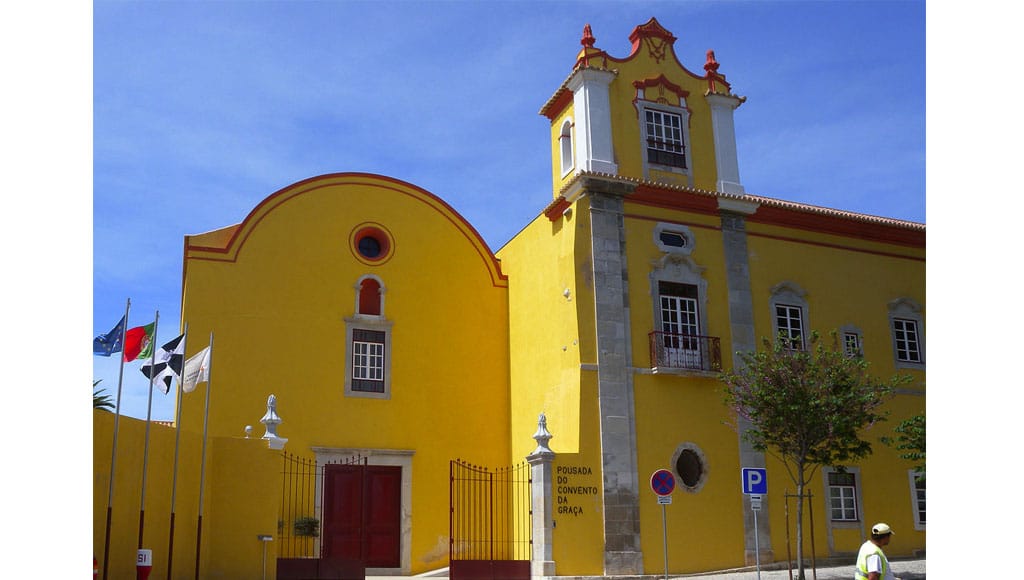
The original house for this order was in the Portuguese fortress of Azamor, on the coast of Morocco. When D. João III decided to abandon Azamor in 1541, the occupants of that house returned to establish a new home in Portugal.
This convento was founded by Frei Pedro de Vila Viçosa in 1542 on the site of the old judiaria(the Jewish quarter). In the late 15th century (1497), all Jews of Portugal had been forcibly converted to Christianity and, therefore, by definition, there were no Jews left in the country. The judiaria was consequently at the time unoccupied.
Building of the new conventodid not begin until 1569, and it was not completed until the mid 1600s. It is said that the large meeting room near the entrance used to be the synagogue before it was converted to the chapel of the new convent; it is in estilo chão, or plain style.
In 1748, the cloister was restored, and the dormitory on the upper storey was constructed in 1758. The architect for these alterations was Diogo Tavares de Ataíde, the Algarvian builder who worked on many of the churches in Tavira and Faro in the mid 18th century.
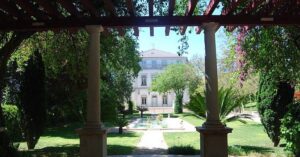
The cloister is a particularly fine example of his work. When the Pousada was inaugurated in 2006, the sculpture of the woman in the water feature in the centre of the cloister patio was also inaugurated. This statuary is known irreverently as “the floozie in the jacuzzi”.
Convento de Nossa Senhora da Graça was one of the richest houses in the Algarve and, after 1834, the auction of its possessions raised more money than any of the five other houses in Tavira.
Since the town barracks had not yet been completed, from 1837 to 1996, the buildings themselves were used for a barracks, and the old chapel was used as a storehouse and later a garage for military vehicles; and the army also established a shooting range in the grounds.
Around the year 2000, the convento was acquired by the Câmara (town hall) who entered into an agreement with Pousadas de Portugal to refurbish the buildings as a town centre luxury hotel.
The building process unearthed the remains of Almohad townhouses from the 12th century. The Câmara and Pousadas de Portugal came to an agreement that these remains should be conserved as a mini-museum in their original location underneath the hotel bar. This museum is open to any interested person during normal opening hours.
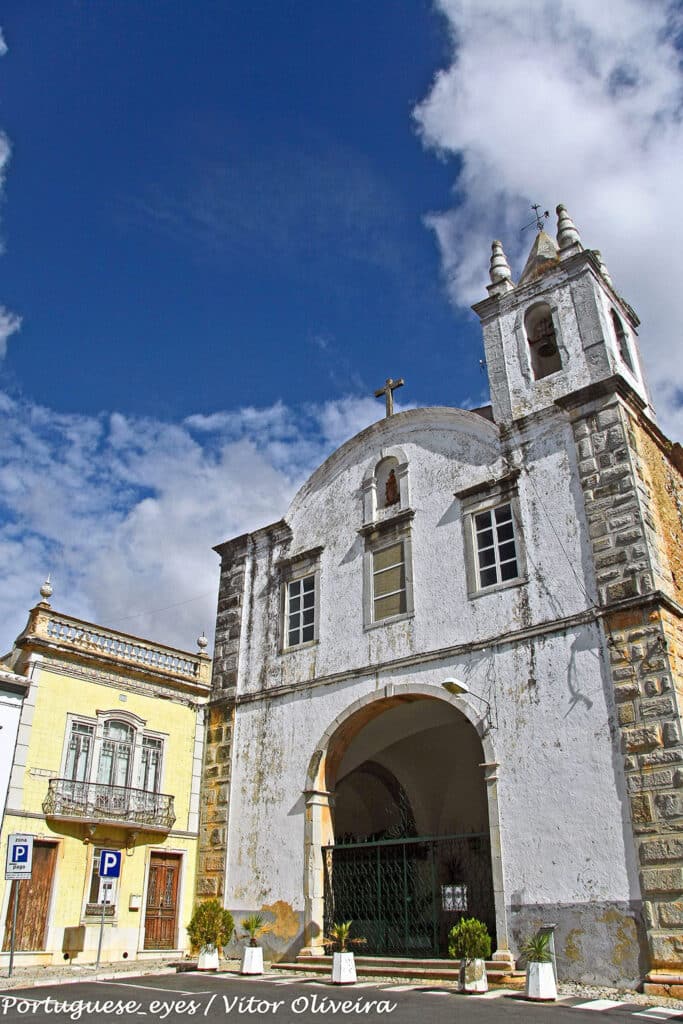
The fourth of the chapels from original convento buildings in Tavira is the Igreja de Nossa Senhora da Ajuda or Igreja de São Paulo, formerly the chapel of the Convento de São Paulo (1606-1834).
The Ordem dos Eremitas de São Paulo originally chose sites well away from human habitation, and its first local site was established in 1448 at São Marcos, outside the town. That chapel is now called Ermida de Nossa Senhora da Saúde.
In 1606, the friars decided to relocate closer to Tavira, and their new home was in the Praça da Alagoa (properly Praça Dr António Padinha and known to many foreign visitors as Bishop’s Square) to the north of the river, where they already had an older chapel dedicated to Nossa Senhora da Ajuda (Our Lady of Succour).
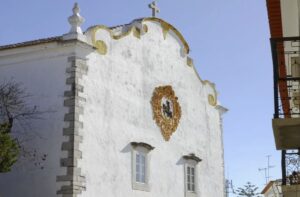
They used her name for their new foundation, and her image appears high up on the façade above the entrance to the porch, which also served as a galilee porch similar to that of the church of Santo António.
In the centre of the ceiling of the galilee porch, the ceiling boss in plasterwork shows an elderly St Paul together with a lion and a palm tree. In Christian iconography, the palm tree is often shown as the symbol of a hermit, and the lion represents Jesus Christ.
The architectural style of this church is estilo chão, and the interior of the church is similarly plain. The woodwork of the side chapels is dark and undecorated, an unusual condition among Tavira’s churches. The whole gives an impression of dark sobriety, in spite of the decorated altar and the white walls. The two dissimilar retables on either side of the chancel were rescued from other, probably different, institutions after the suppression of 1834.
When the religious orders were suppressed, this chapel was in the best condition of the conventual chapels and was acquired after 1834 by the Confraria de Nossa Senhora da Ajuda.
The remaining conventobuildings were sold and demolished, and of the whole foundation, only the chapel remains. Seen from the hill near the Capela Santa Ana, the rear of the Church of São Paulo looks unfinished.
It was from this side of the church that the old convento buildings were destroyed, and the wall of the church was left unrendered. The cloister and other buildings probably covered much of what is now a building site.
On two occasions, the brothers of St Paul made life easier for adherents of two other religious orders in the town. In the Great Earthquake of 1755, the Mosteiro de Nossa Senhora da Piedade was ruined, and the sisters were without a home while their own mosteiro was repaired.
The brothers of São Paulo moved out of their own convento, and allowed the sisters to live there until their own mosteiro was ready to receive them again.
Second, when the Third Order of Our Lady of Carmo was founded in 1714, it too had no home. Generously, the Paulines allowed the Third Order to base themselves in their chapel, and there is a tablet on the west wall of the nave to record this generosity.
The Third Order Carmelites were also allowed to dedicate one of the side chapels to Nossa Senhora do Carmo. This enormous surviving retable was built in 1730 and is much more imposing than those of the other side chapels.
To read part 5 click here.
Read more from Peter Booker about Tavira – a dog’s eye view or Three women, Tavira and the Carnation Revolution.