To read from the start click here.
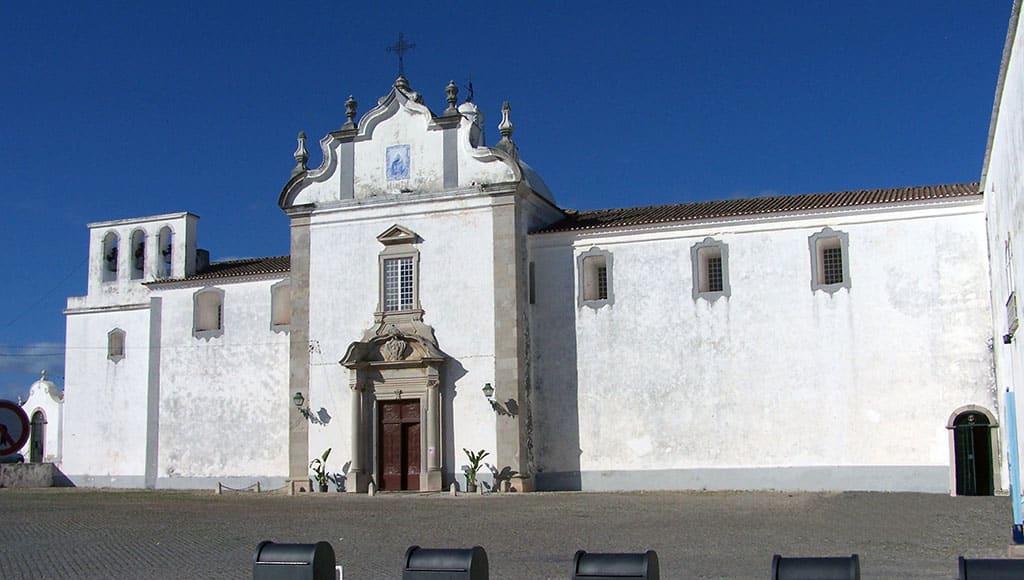
At the beginning of the 1600s, the only major town in the Algarve which did not have a Capuchin presence was Tavira.
This Order established itself in 1606 first in the ancient Ermida de Nossa Senhora da Esperança (Our Lady of Hope) on the plain at Atalaia. They chose this site instead of the alternative near the Ermida de São Brás because the Atalaia site was bare of trees, and it had a sea view.
One of the founding friars wrote “a espaçosa vista para o mar largo e para a terra fazem um sítio aprazível” (the expansive view to the wide sea and towards the countryside make this an agreeable location). The friars preferred a site away from the houses of the town and this location was an open public space.
Bishop Mascarenhas of the Algarve, who incidentally had lost his library in the raid on Faro by the Earl of Essex in 1596, gave a great deal of money towards the building costs of this convent, and building works began in 1612.
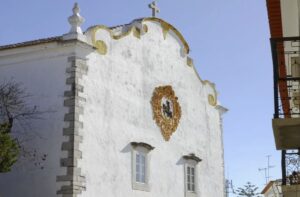
The chapel itself is of the typically plain rectangular design of the Capuchin Order, and the galilee porch contains the famous Trânsito de Santo António, a group of figures sculpted in clay and nearly life-sized. The scenario commemorates the journey made by St Anthony and his colleagues towards Padua, where he wished to be buried.
St Anthony had been born in Lisbon and, along with St Vincent, is a patron saint of the city. As he died on the journey on the evening of Friday, June 13, 1231, nowadays the annual festival on June 13 is important to the Capuchin friars in Padua, and the annual municipal holiday in Lisbon is also celebrated on June 13.
This church suffered in the Great Earthquake of 1755, and the main façade was rebuilt. After the suppression in 1834, the whole of the convent was bought in 1842 by a private individual; it was sold on in 1869 to another who turned the whole into a farm, and consequently, the old area of this convent remains in one piece.
Instead of being deconsecrated, the chapel was sold in 1856 to the Confraria de Santo António, who until that time had used a chapel in the Third Order Church of São Francisco. It was this brotherhood which arranged for the interior of the church to be painted as it is today.
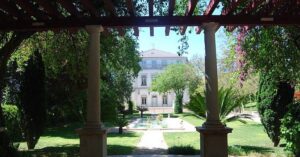
After rehabilitation in 1994, the cloister of this convent became a small Turismo de Habitação (tourist accommodation), while the church remains open for religious use. In the 1980s, the former open space of Atalaia was built over with large blocks of flats. It is ironic that the open area that formed its main attraction in 1612 no longer exists.
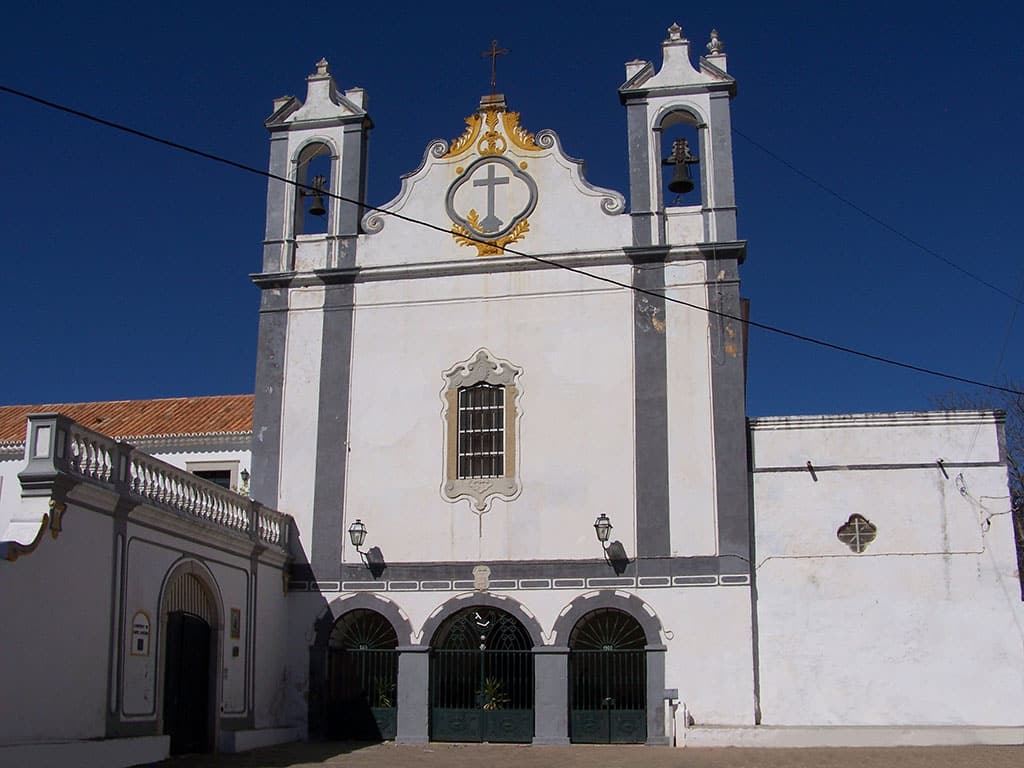
The sixth and last conventual church built in Tavira is the Church of the Convent of Our Lady of Mount Carmel (1745-1834), built for the Barefoot Carmelites. Few new convents were begun in Portugal in the 18th century, and the story behind the construction of this friaryis intriguing.
In the early 18th century, a number of Tavira men decided that they wished to establish in the town a Third Order devoted to Our Lady of Mount Carmel. There were two powerful objections to this plan. First, the town already possessed a Third Order foundation, that of the Brotherhood of São Francisco, who declared that the town could economically support only one Third Order. Secondly, the Franciscans advanced the argument that there was no First Order in the town dedicated to Our Lady of Mount Carmel; and so how could there be a Third Order?
Despite these objections, the Third Order of Our Lady of Mount Carmel (Ordem Terceira de Nossa Senhora do Monte do Carmo de Tavira) was temporarily established in the church of São Paulo, and the tablet on the wall of the nave of São Paulo commemorates this fact. The Third Order Carmelites even built a huge retable dedicated to Our Lady, and it is still a side altar in the church of São Paulo.
Such was the desire of this Third Order for its own church that the brotherhood decided to answer the second objection by establishing a convent dedicated to Our Lady of Mount Carmel, so that they could afterwards establish a Third Order church.
This convent was, therefore, founded in 1745 as the parent house for the Third Order foundation. Its chapel was finished in around 1800 (the date over the door shows 1792), but the residential part of this establishment was unfinished at the suppression of the religious orders in 1834. This set of buildings is, therefore, remarkable in that, although it was a friary, it was never occupied by friars. The chapel was connected to the Third Order church, which had been consecrated in 1789, and there is a small graveyard between the two.
Over-endowed with churches, Tavira struggled after the suppression to find a use for this handsome chapel, and it now houses Tavira’s Ciência Viva exhibition, and consequently none of its internal architectural features is now visible.
Although the residential buildings of the convent never served their original purpose, they have a varied history; they have been used as a school, an asylum for disadvantaged children and now the handsomely tiled first floor hosts the Red Cross, and the ground floor is used by a brass band. The small cloister courtyard hosts an outdoor film festival every summer.
Unfinished though it was, this convent was endowed with extensive estates and gardens in its immediate neighbourhood. This land passed through various hands before coming into the ownership of the Câmara who, after the Carnation Revolution, chose to erect a large estate of flats and housing there.
The predictions of the original objectors from the Third Order of São Francisco have unfortunately been proved correct. While the popular Third Order Carmo church has continued to prosper, its fellow Third Order Church of São Francisco today languishes in apparent disrepair, the number of its supporters dwindling and less able to maintain it.
To read part 6 click here.
Read more from Peter Booker about Tavira – a dog’s eye view or Three women, Tavira and the Carnation Revolution.