
Or you’re enjoying yourself and your Malbec, and then you go to immortalize the moment in a photo, and flash! You look like a vampire! Your mouth, teeth, and lips are purple, and it’s crazy and embarrassing! I’ve been there.
This is a phenomenon I’m very familiar with, especially after an Australian Syrah, rich Argentinian Malbec, or California Cabernet wine tasting. At least at these wine fairs, I’m not the only one and, most likely, in any of the circumstances you might have been in with purple fangs, you weren’t the only either.
Well, ‘tis the season for luscious, mouth-filling, hearty reds, and wine ‘staches, finally!
As we begin to feel a nip of cold in the air, a sign that winter is coming, we all naturally tend to gravitate toward red wines. Fuller-bodied red wines actually tend to be seasonal (higher alcohol = a warmer wine jacket), especially in our climate, even though they can be and are enjoyed all year round.
To me, hearty red wines signify digging in for the winter season, celebration, coming together around the fireplace or fire pit to share a delicious, often richer meal and wine with your bestest and closest. Or sitting back on a cold night on the sofa, fire roaring, and Netflix on the telly.
Then, there is the obvious reason to drink red – they go exceptionally well with red meat. Still, regardless of the occasion and more specifically the red wine, there is the possibility of going to bed with a Cabernet-powered, wine-tinged mouth.
So, why does this happen? What is it in the wine that creates that long-lasting, frightening beet-hued element? It is thanks to chromogens, the pigments in red wine. These chromogens are also found in coffee, tea, and berries, which are other culprits in staining your teeth and causing enamel erosion.
Dark pigment-producing substances, such as chromogens, bind to your teeth, causing staining, and the more there are, the deeper the stain. They also stick easily to plaque on your teeth, which can be why they affect everyone differently. Of course, color permeation gets more intense as you go from light red wine to full-bodied dark reds, as does the intensity of the staining, as you might have guessed.
It’s also due to how red wine is made: the length of maceration (the time the juice spends with the skins) and the nature and method of extracting tannin and color from the grapes during fermentation.
The intensity of staining can also be related to the prevalence and strength of the tannins in the wine (from the skins, stems, and barrique) and, of course, most importantly, which grapes are used. Most, and perhaps 95% of all red grapes, have white flesh, but there are a select few that are just red – red inside and out.
Some grapes have thicker skins and higher tannin levels, adding loads of color to wine, while others are irrefutable red-wine-mouth magnets. The red-mouth-magnet grapes I’m referring to are called teinturier grapes.
The name “teinturier” comes from the French word for “to dye or stain”. These rare grapes have red flesh, or pulp, and red skins and number fewer than 20 worldwide, out of more than 10,000 total grape varieties. Fortunately for us here in Portugal, we have three!
The crazy, red-fleshed grapes that call Portugal home are:
Tinta da Granada: A lesser-known teinturier grape native used in blends to add color from the Douro region.
Alicante Bouschet, the reddest noble grape with roots in the Alentejo. Consequently, the owner of Mouchão (considered the pioneer of the grape) recognized the grape for its potential and brought it to Portugal in the late 1800s. The grape Alicante Bouschet was born in 1866 after a man named Henri Bouschet crossed Petit Bouschet with Grenache. While it is planted in France, Spain and even California, it is now considered the star grape of the Alentejo and can be found singularly on its own or in deep magical blends.
Vinhão (Sousão), a “weird and wonderful,” distinctly Portuguese grape famous for its biting acidity and inky, deeply mouth-saturating opaque color. It is the most-planted grape in the Vinho Verde/Minho region. However, it is also planted in the Douro Valley and even here in the Algarve, where it goes by the name Souzão, helping to add freshness and color to the blends in these regions.
Now we have an idea of why and how the stains happen, but how do we get rid of them? Here is what the internet said when I asked:
- Brush regularly – I hope we are all doing that regardless of what wine we are drinking.
- Use a straw – OMG, I wouldn’t recommend this one, but I’ll admit it does kind of make sense if you just got your teeth bleached.
- Chew gum – great solution! Especially if it’s a tooth-whitening, sugar-free option.
- Brush your teeth before drinking – that’s curious, especially as I trust you readers have already had the experience of drinking wine right after you brush … yuck!
- Eat cheese – Yum! Hard cheeses offer the best protection since they usually contain more calcium. They also fill in tiny pores in the enamel, making your teeth more resistant.
- Munching on raw veggies – acts like a natural toothbrush and helps by producing extra saliva to scrub away the stains.
- Regular dental checkups – This is important because they help eliminate plaque buildup, which chromogens like to bind to.
- Rinse with water – Easy! Hydrate and clean.
- Use whitening toothpaste – Solid.
- Carbonated water – Easily on hand in most situations but probably not the most effective solution.
- Switch to white
Amongst sommeliers, I’d say the easiest, on-hand solutions we use are grabbing a glass of white wine (and swishing it around your mouth, if you can do so, privately or not), eating hard cheese, or taking a good rinse with water or sparkling water and swiping a napkin to rub against our teeth. For those of you intent on drinking red wines and keeping your pearly whites pearly, there are finger toothbrushes you can slip in your pocket or bag. Temu has pages and pages of options. I liked this option best: 26pcs Mixed Flavor [Five-In-One Portable Toothbrush] for just €5.46.
I hope I haven’t put you off drinking red wines, have I? I didn’t think so. So, let’s wear our crimson smiles with pride this season – grab a bottle of delicious, mouth-filling red wine and smile with pride!
Below, I’ve listed a few giant, gorgeous, and potent high-octane wines and estates to trust for the rich reds you may be craving that make getting that grape-stained grill worth it. Most of these wines can be found at Mosto, Baptista and Garrafeira Portos in the old town of Lagos, and if they’re not there, you can usually order online directly from the producer or an online wine distributor.

100% Alicante Bouschet
Herdade do Mouchão Tonel 3-4, Alentejo, Portugal – €242
Herdade do Rocim Grande Rocim Reserva, Alentejo, Portugal – €73
Luís Pato ‘Vinha Pan’ Tinto, Beiras, Portugal – €36
Herdade do Esporão ‘AB’ Alicante Bouschet, Alentejo, Portugal – €33
100% Vinhão/Sousão/Souzão
Anselmo Mendes, Vinho Verde
Aphros, Vinho Verde
Quinta das Arcas, Vinho Verde
Quinta de Linhares, Vinho Verde
Quinta da Raza, Vinho Verde
Quinta do Vallado, Douro
For rich big blends, look at any of the wines from:
Reynolds Wine Growers, Alentejo
Quinta do Zambujeiro, Alentejo
Brejinho, Alentejo
Herdade Papa Leite, Alentejo
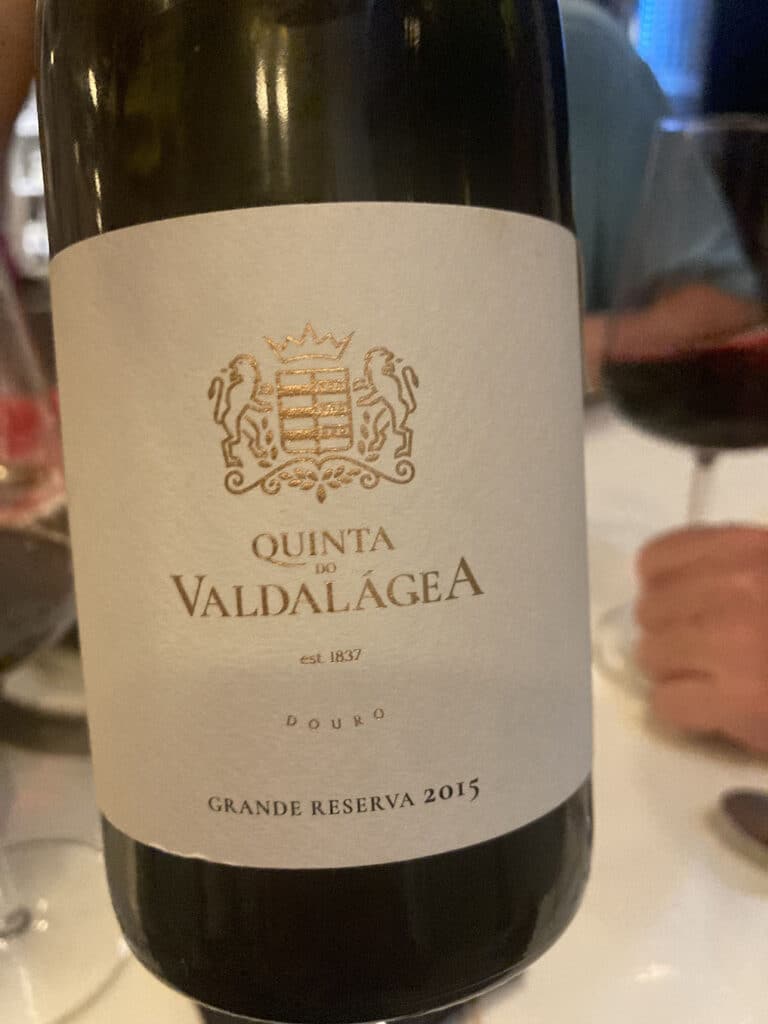
Quinta do Valdalágea, Douro
Colinas (Reserva Tinto), Bairrada
Quinta do Mouro, Alentejo
Quinta das Tecedeiras (Grande Reserva Tinto), Douro
Scylla, Douro
Yes, there is a theme here, if you head to the section of the aisle at the store that has Alentejo or Douro above it, you’re in the right place for bold heart and body warming reds!
Read Candace Olsen’s last article: Popping corks!