Environmental association Zero has today filed a complaint with the European Commission against the Portuguese state for allowing the illegal dumping of urban waste in 28 landfills, which “could result in a fine of hundreds of millions of euros”.
In a statement, Zero said that 28 landfills were identified for receiving urban waste without any prior treatment, “namely prior separation and stabilisation of organic waste”.
The association explains that Portugal is violating a European rule in force since 2014 and national legislation that prohibits the disposal of waste in landfills without prior treatment and stabilisation.
Zero also accuses the Portuguese authorities of “systematically ignoring” this ban and considers that Portugal may be “subject to infringement proceedings for violating EU legislation on landfills by allowing these practices”.
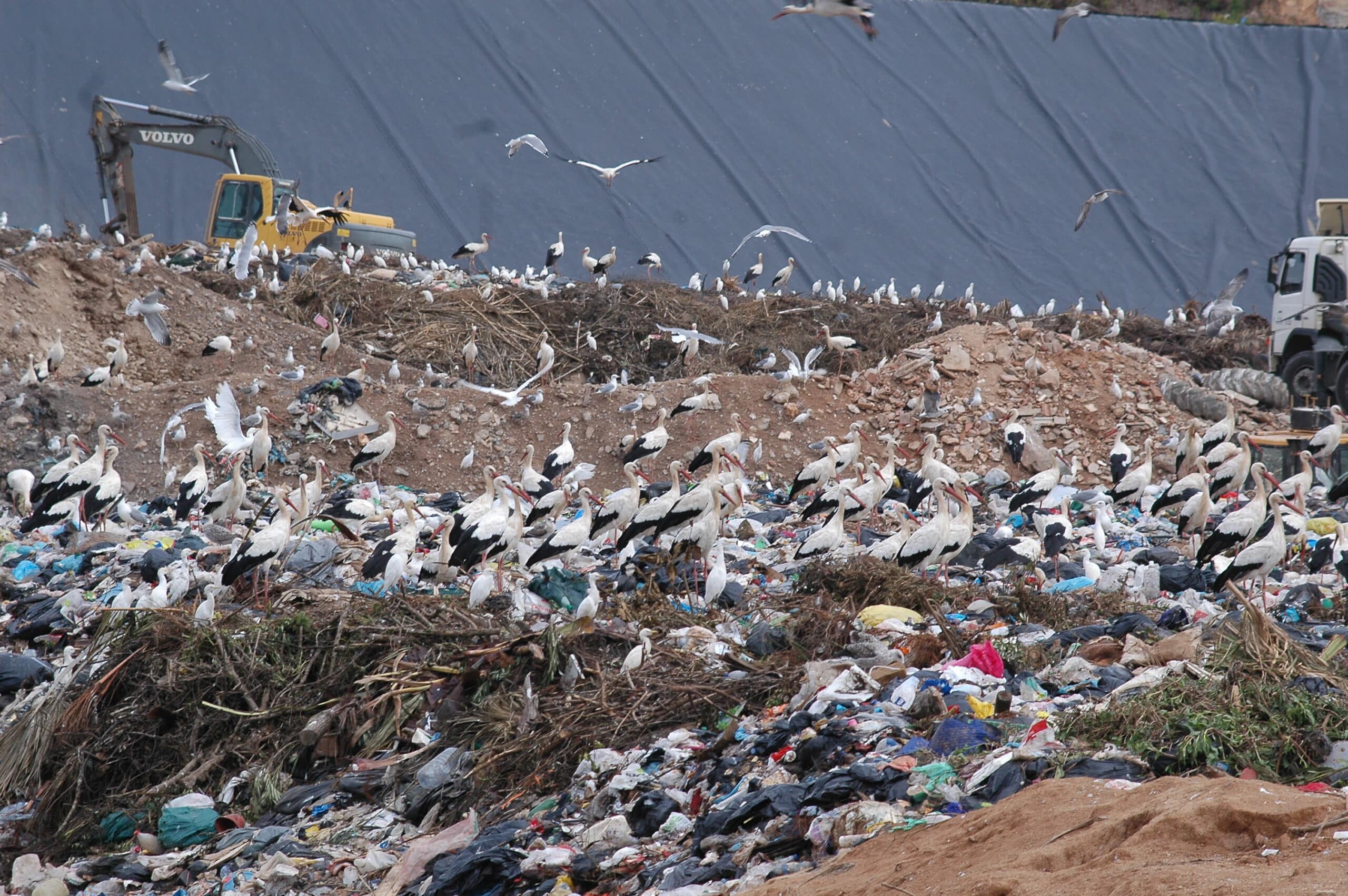
“Urban waste consists of around 40% organic waste, so depositing it in landfills without any prior treatment will lead to the release of odours, the proliferation of disease vectors such as insects, rodents or birds, and the production of highly polluting and difficult-to-treat wastewater,” said Zero.
Zero adds that placing this waste in landfills can also cause the release of methane, a powerful greenhouse gas that contributes to global warming.
Giving the Portimão landfill as an example, as reported in the Resident last month, Zero explains that “because it receives a lot of organic waste, the landfill in Portimão is responsible for 55% of the greenhouse gas emissions released in the Algarve region”.
As a solution, Zero argues that “there should be a commitment to the comprehensive treatment of urban waste before it is dumped in landfills, through Mechanical Biological Treatment (MBT), avoiding investment in incineration units which, in addition to being highly polluting, take a long time to install” and do not solve the problem of filling landfills in time.
The environmental association also points out that Portugal already has “state-of-the-art MBT units”, such as the one in the Resialentejo urban waste treatment plant, in Beja, which diverts around 70% of waste from landfill, “making it clear that increasing the number and efficiency of these units is essential to reduce pressure on landfills and enforce the law”.
Zero says it has already sent the identified cases for assessment to the General Inspectorate of Agriculture, Sea, Environment and Spatial Planning (IGAMAOT), and highlights the landfills of Ambisousa, in Lousada and Penafiel, and Ecolezíria, in Almeirim, as the “most problematic situations”.
“The only landfills where it has been possible to confirm that there is no discharge of untreated organic waste are those of Gesamb, in Évora, and Resialentejo, in Beja,” the association stressed.
Source: Lusa