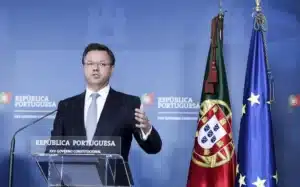
Environmental association ZERO has today classified the statements made by Minister of Agriculture and Fisheries José Manuel Fernandes regarding technicians of the Institute for Nature Conservation and Forests (ICNF) as an “unprecedented attack on the dignity of institutions”.
Público newspaper reported during the week that Fernandes sent a video to ICNF in which he appealed for proactivity and argued that, when legislation prevents the implementation of projects, one should question whether the law makes sense – reminding them that it can be changed, with a simple ‘portaria’ (order) or ‘decreto-lei’ (decree law).
Following Público’s news, the minister called over social media for the resignation of the officials responsible for releasing the video, accusing them of being “liars, cowards, and radicals”.
Yet, the statement – now published by Fernandes himself – shows every last word was true.
The video actually sees him asking the ICNF to ‘put themselves in the place of the other party’ (the company proposing whatever project it is that they are analysing) as it is the government’s ‘mission to perform in relation to the other’ (meaning, the government, in Fernandes’ eyes, appears to see its mission is in helping ‘investors’ realise projects, rather than worrying that the environment may suffer).
Today, in a statement, ZERO – Associação Sistema Terrestre Sustentável (ZERO – Association for a Sustainable Terrestrial System) considers that Fernandes’ statements “call into question the rule of law and violate the government’s Code of Conduct”.
“They represent an unprecedented attack on the dignity of nature conservation institutions. For ZERO, this behavior is not just a breach of protocol, but a direct attack on the technical autonomy of Public Administration and a violation of the rules governing the exercise of political office in Portugal,” the association states.
Regarding the minister’s statements in the video, ZERO also considers the principle that “if the law prevents projects from being approved, change the law” is “unacceptable” as a response to technical assessments and opinions that have led to the rejection of certain projects.
“ZERO recalls that the current government approved, through Resolution of the Council of Ministers No. 103/2025, a Code of Conduct that obliges its members to high ethical standards” – which is why it says that the statements of the Minister of Agriculture and Fisheries are “a direct and gross violation of the duties of the Principle of Civility.”
According to the association, by labeling ICNF leaders “radicals” and “cowards,” the minister is “attempting to politicise science and territorial management.”
“This stance reveals an unacceptable attempt to influence the actions of technicians whose mission it is to defend natural heritage – suggesting that compliance with legislation is an act of ‘radicalism’,” ZERO points out.
“At a time when Portugal faces critical climate and biodiversity challenges,” the country “needs a strong, independent, and respected ICNF (Institute for Nature Conservation and Forests) – and not a national authority for nature and biodiversity conservation humiliated by its own political oversight,” adds the statement.
The situation has already generated criticism from the Socialist Party (PS), which on Saturday accused the government of exerting “illegitimate pressure” on entities responsible for environmental impact assessments, such as the ICNF and APA – and requested an urgent hearing in parliament with Minister Fernandes.
This all comes as fears have been voiced that the government is indeed trying to ‘clip’ the ICNF’s wings when it comes to decision-making. The minister for the environment tried to calm waters last week, but her intervention showed that the government has been irked by the ‘large number of projects’ that have been rejected in certain regions.
Source: LUSA