The more cars I drive and as change settles in as the only constant in the auto industry right now, I find myself thinking “what is a good car?” more and more these days.
For example, I drove a Rolls-Royce Spectre this year. Is there a better car than that? In many ways, no – absolutely not. In many ways, the Spectre is the best car in the world. There is nothing else as refined; there is nothing else as comfortable; there is nothing else as bewitching as a completely silent Rolls-Royce. It glides on a cloud of honey while you sit in an ultra-luxury cocoon created by specialist artisans.
On the other hand, it’s not particularly exciting to drive. It’s really big and extremely heavy and range is not that great. Plus, it costs around half a million euros. None of that matters for a Spectre customer, obviously – but I am not one, therefore I can be more objective.
Take the BMW M340d as another good example. An amazing car. One of the best cars I have ever driven – not this year, but ever. Fast, frugal, good-looking, well-built, comfortable. But expensive for what it is and too old-school for today’s market (for all the wrong reasons, but that’s beside the point).
The M340d is a great car no one cares about. It’s not that relevant anymore. Singing its praises (like I always do when talking about it) feels like swimming against the current. That’s why I sometimes struggle to have the correct approach to cars today. What is a good car in the world we live in? A car that still answers to the questions I pose as a petrolhead? A car that still feels special and one I would still be proud to own? Or is it a car that embraces the changes the industry has been through and comes out swinging on the other side?
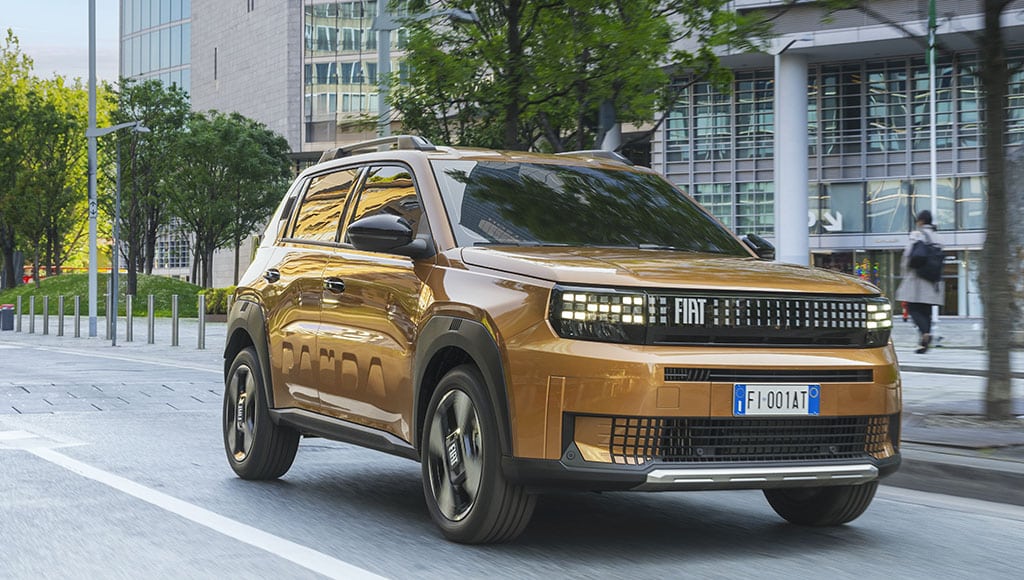
This is what I had in mind this year when writing about what I thought were the best cars I drove in the last 12 months. All things considered, namely those I mentioned a few lines ago, my favourite car of 2025 was the Fiat Grande Panda.
I must confess I was quite surprised by this. A small city car – really? A Fiat based on a Peugeot platform – really? A hybrid – really? But, somehow, the Grande Panda it is. One of those cars where the end result is more than the sum of its parts.
The Grande Panda is so called because the old Panda is still on the catalogue (it’s now called the Pandina – or small Panda) and a new Panda will apparently come in the future, to be positioned below the Grande. Thus, the new one is the big Panda.
Why have two Pandas for sale simultaneously? Well, the Pandina has been on sale since 2011, but even then it was really an evolution of the car Fiat launched in 2003. Yes, you read that right. The Panda(ina) is 22 years old. But that’s not the best part. The best part is that in 2025, almost 2026, the old Panda is still an amazing city car and completely up to the task.
The new Grande Panda has absolutely nothing to do with the old one though. And, as much as it saddens me to say, as someone who has had a lifelong love for Italian cars, the new Grande Panda is more French than I would have liked. This was always going to happen when the two companies merged back in January 2021, but as time passes and every new Fiat is based on a French platform, reality sinks in: the age of the peculiar, quirky and extremely lovable Italian car is over.
The Grande Panda is based on Stellantis’ Smart Car platform, which accepts pure electric, pure petrol and hybrid propulsion systems. I drove the Hybrid version, so I am focusing on that one. It comes with a 1.2 litre petrol engine aided by an electric motor mounted inside the six-speed dual-clutch gearbox. No manual transmission available here, obviously.
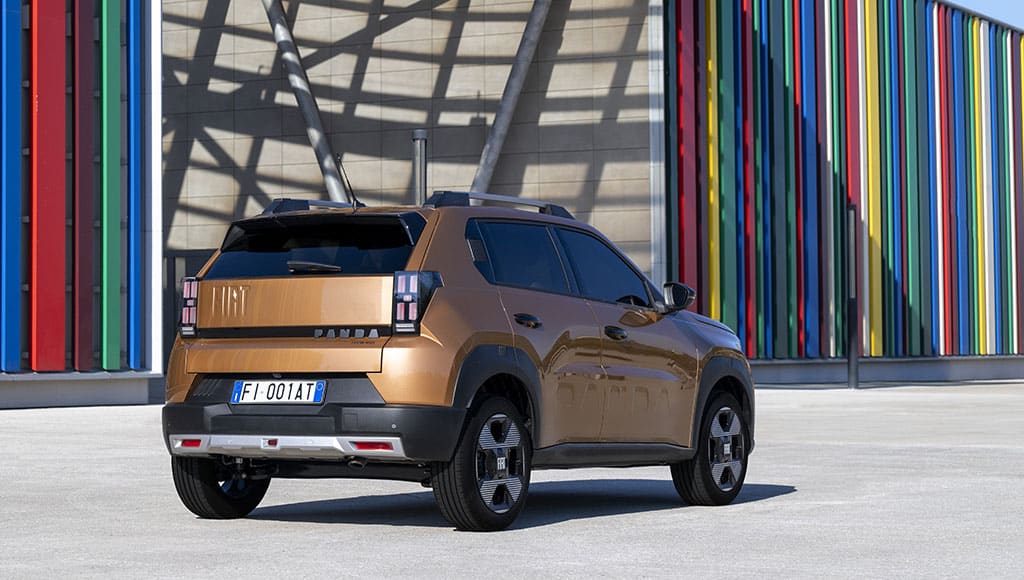
It looks a lot like the 1980 original model, penned by the greatest car designer in history, Giorgetto Giugiaro. I am not complaining, I am just stating the obvious. I think the Grande Panda looks great.
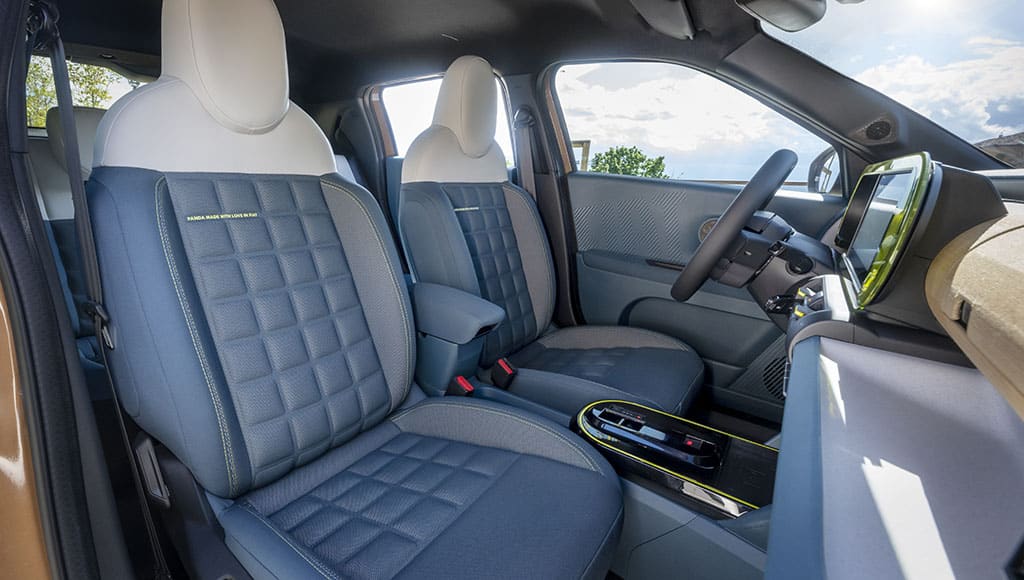
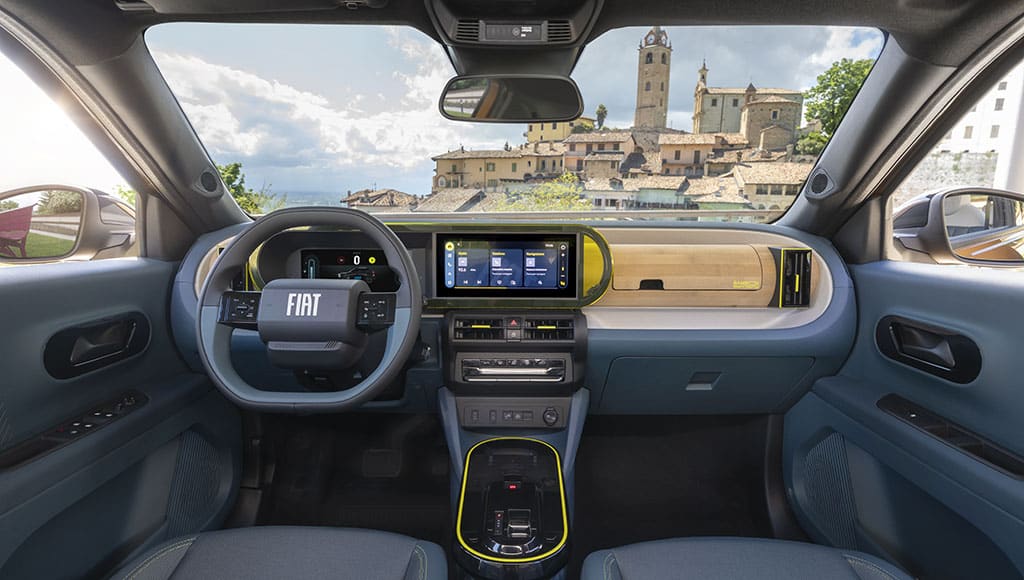
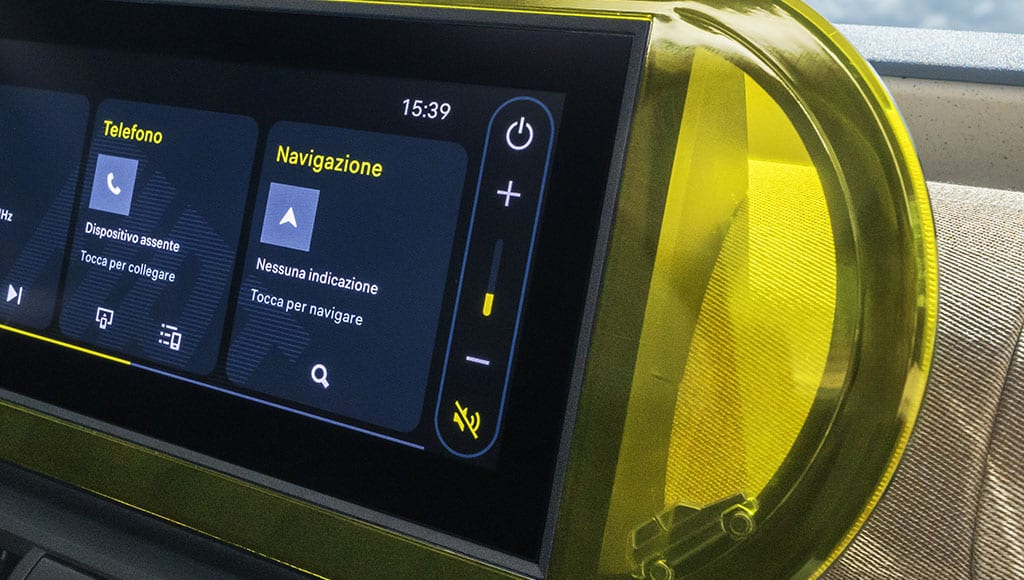
The pixel headlights, in particular, are very, very cool. Designed to evoke memories of 80’s video games, they have this amazing retro vibe. The stamped door panels with the word Panda and the old Fiat logo on the sides and at the back are a nod to models past. Add a small miniature of the original Panda on the dashboard and the tag Made with love by Fiat printed on the seats and a certain pattern emerges: Fiat really wants you to know this is, well, a Fiat (and not a Peugeot).
In other words, the Italians know this car is not exactly something they created from scratch and they were going to do everything they could to make it theirs as much as possible. To show the public that, although it is built on a French platform, the Grande Panda was developed in Italy, designed in Italy and sprinkled with all those special things that make it Italian by, well, Italians.
The car I drove was a La Prima, the top-of-the-line trim version with all the goodies. That’s the one you also should get if you can. The Hybrid comes with a 1.2 litre petrol engine making 110 hp and it never felt slow. In fact, it felt like the perfect city car for 2025. Small(ish), nimble, comfortable, practical and with a nice touch to the controls, I must say this French-Italian marriage was a big surprise.
The Grande Panda has been such a hit since it was launched that deliveries in Britain have been delayed until March. Demand in LHD markets is so high the factory does not want to change the production line to RHD just yet. In fact, the Grande Panda has completely offset the disappearance of the old petrol 500 from the catalogue and Fiat sales have actually increased this year. With the new petrol 500 (built on the electric 500e platform!) also arriving at the market, 2026 is looking good for the Italian outfit.
Prices for the Hybrid start at just over €21,000, whereas the La Primas are more around €24,000, but worth it. The electric option is €23,500 and the pure petrol version an unbeatable €16,850 before options. I promise you will love either one.
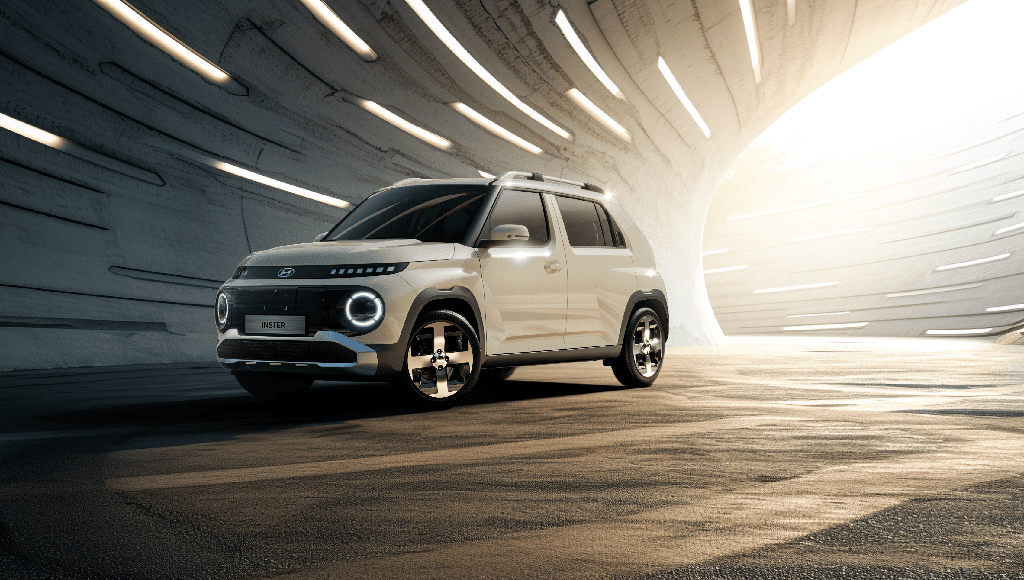
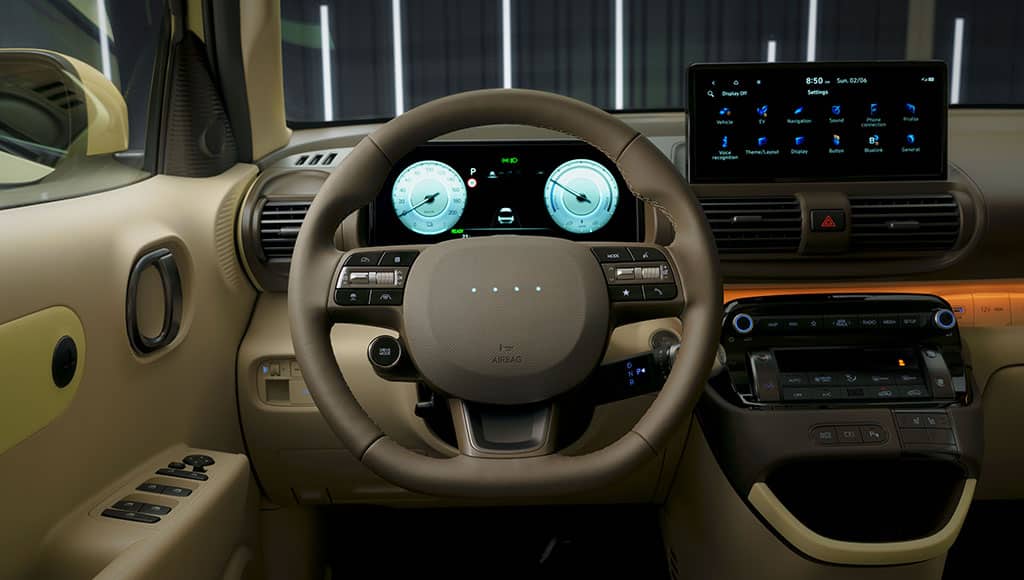
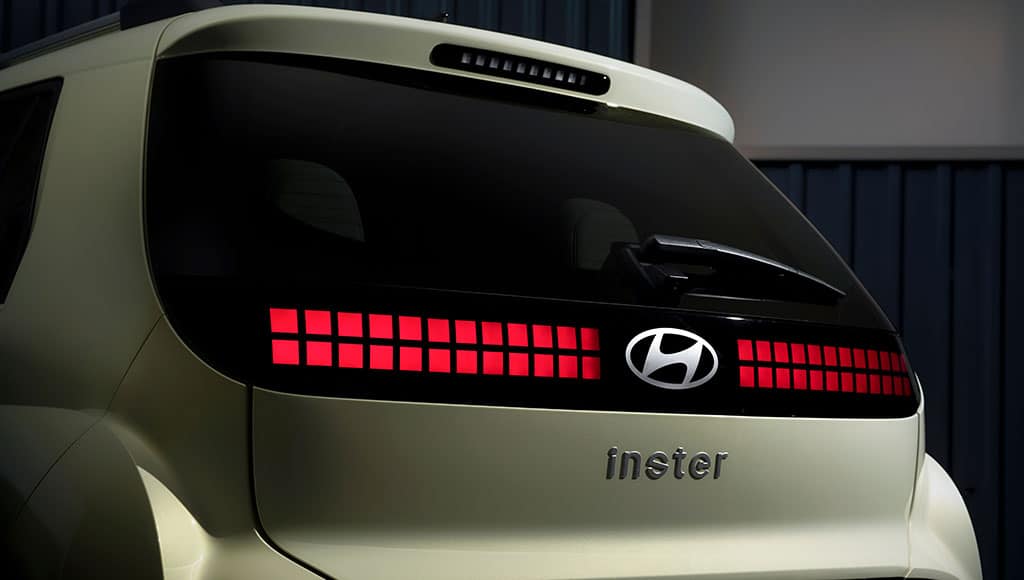
Now, these being the 13th Annual Resident Awards and not Award, I figured we needed at least another car – and it should be an electric one. You know, to keep up with the trends and all. That car is, again surprisingly, the Hyundai Inster. Yes, a Hyundai – I don’t know what’s happening!
Well, in fact I do. Small cars are making a spectacular comeback for the most obvious reason: they make a world of sense. I wrote about the Inster recently on these pages, so no point in repeating myself. It’s a brilliant car that shows what all electric cars should be like. Not big. Not heavy. Not using a tonne of resources. Practical, fast, frugal, quirky and with a distinct personality. I liked everything about it.
Hyundai is doing a good job in making electric cars appealing with the Ioniq 5 and Ioniq 6 and their respective sporty N versions. No, I am not a customer for those, but, as an objective analyst, I have to say they are rightfully competing with the likes of Porsche and BMW for electric driving thrills.
Still, the Inster is my favourite Hyundai at the moment and a great alternative to the Grande Panda if you want something a bit smaller. These cars will probably never share garage space as they are so similar in so many of their elements, but whichever you choose, you can rest assured you have made the right choice.
Roll on 2026. And more cars like these if you please.
Read more from Guilherme Marques about motoring– Lancia – Defining greatness or Mercedes G580 – Question: why? Answer: why not?
Motoring Trade | Business, Services, Marketplace – click here