Endemic to Mexico, agave is undoubtedly the second most important plant after corn. For millennia, it has provided so much prized shelter and sustenance to the local people.
Its fibrous thread has become a source of Mexican financial prosperity when local artisans began using it to weave nautical ropes and textiles. Its sap has been used as a sweetener and as an alternative to maple syrup or honey. But, above all, agave is the source of the Mexican signature distillations, mezcal and tequila.
Unlike fermentation, that was known to Aztecs who brewed the agave sap into a beverage called pulque, distillation arrived with Europeans. When explorers and conquistadores disembarked at the Mexican shores, they brought over Filipino sailors, who carried coconut palms together with the technology of distilling them into the coconut wine, vino de coco.
These principles were applied to agave that resulted in the low-proof single distillation drink, known as vino de mezcal.
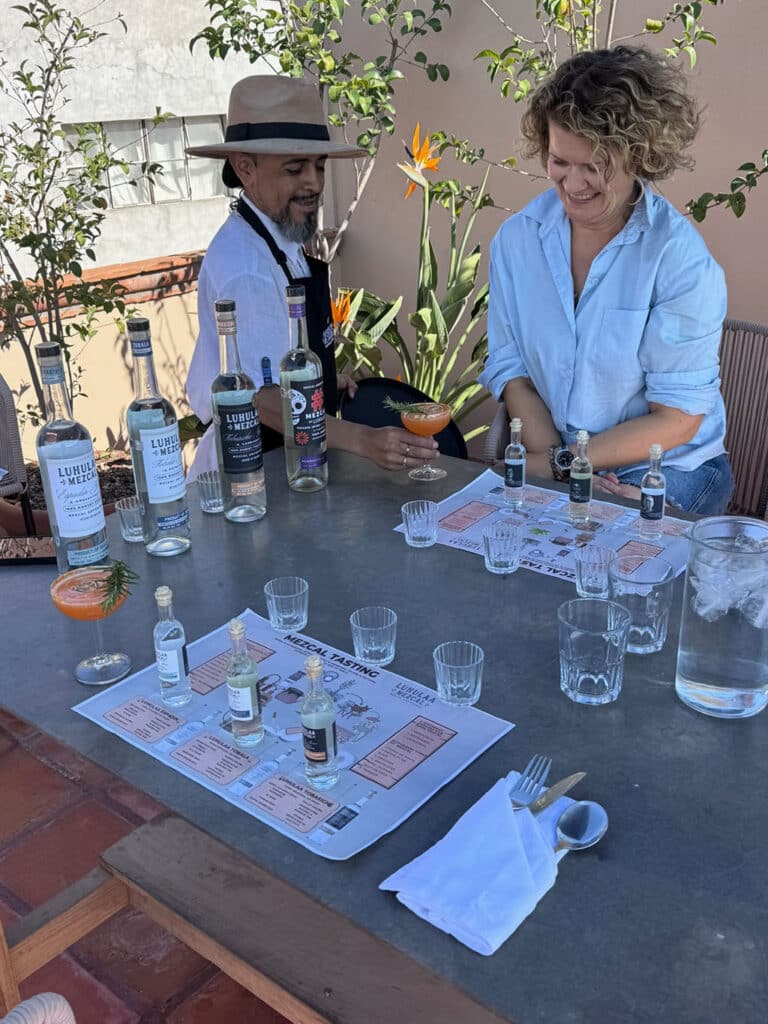
At the start, this category served to address all types of distillations from agave. However, in and around 1700s in the town of Tequila in Jalisco (from the Nahuatl word tequitl, “the place of tribute”), tequila split away into a category of its own by choosing to focus exclusively on Agave tequilana, aka the blue Weber agave, after the French botanist Frédéric Albert Constantin Weber, who identified the species.
On the other hand, mezcal (from Nahuatl “cooked maguey”, a type of agave) remained faithful to all the agave varieties, of which there are nearly 400, and each of which carries the distinctive vegetal profile in the final product.
To begin, there is a Cuishe agavethat resembles narrow fence posts and carries dry, herbaceous, and vegetal notes with a subtle sweetness. Then, there is a tree-like Tobasichethat brings forward cedar-like aromatics and an earthy finish.
The blue-green, spiky leaves of Tepeztate evoke cologne-like scents and produce robust and earthy flavours. The wide-bellied Tobalá,the ‘king of mezcals’ for its small harvest, is delicate, floral, and fruity.
Some grow in the valleys, others climb to the edges of the mountains; nonetheless all of them hail from the wild. Collectively, they present a challenge for maestros mezcaleros, mezcal producers, who hand-pick and harvest them on foot in their habitat. There is the gentlemen’s agreement between mezcaleros about respecting boundaries of each other’s wild agave plots. It becomes important to observe as plants take years to mature.
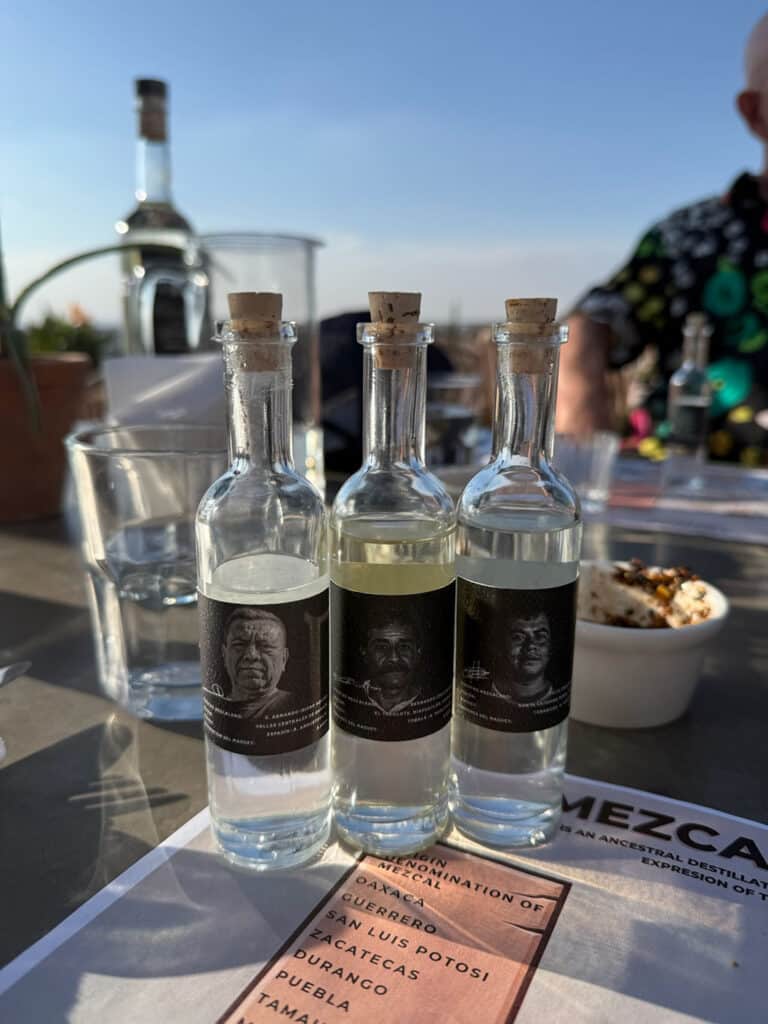
It all begins when spiky and fleshy leaves start forming rosettes, the body of the plant. During its six to 30 years of growth (depending on the plant), agave gains more and more sugar in its core. As the final gasp for immortality, the plant shoots a towering reproductive stem known as quiote, deposits all sugar in it and dies. The sweet, flowering stem attracts a feast of the lesser long-nosed bats, known to be the only pollinators of the wild agave.
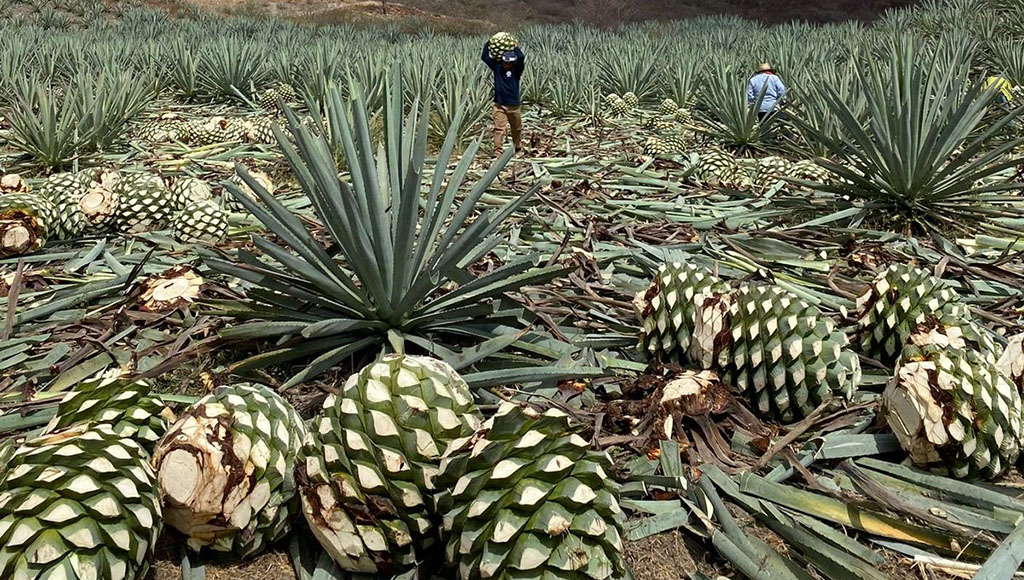
To produce the spirit, plants are harvested before flowering takes place, in order to concentrate all sugar in the heart of the agave known as piña. In Oaxaca, where most of Mexico’s mezcal is produced, harvesters make intentional efforts of allowing plants to flower, sacrificing precious mezcal material to ensure natural propagation of their wild species.
Due to the growing demand, however, there is pressure to focus on the cost-effective Espadín variety, but the troubles of monoculture are well known to mezcaleros from their colleagues in the tequila industry.
At the beginning of 1988, a blue agave blight wiped out thousands of acres of crops. It being a monoculture, the disease passed through the fields in the blink of an eye causing the blue agave to wilt and die. This became known as tristeza y muerte, and led to first precautionary and then customary use of herbicides and pesticides, something that the mezcal industry refrains from with passion.