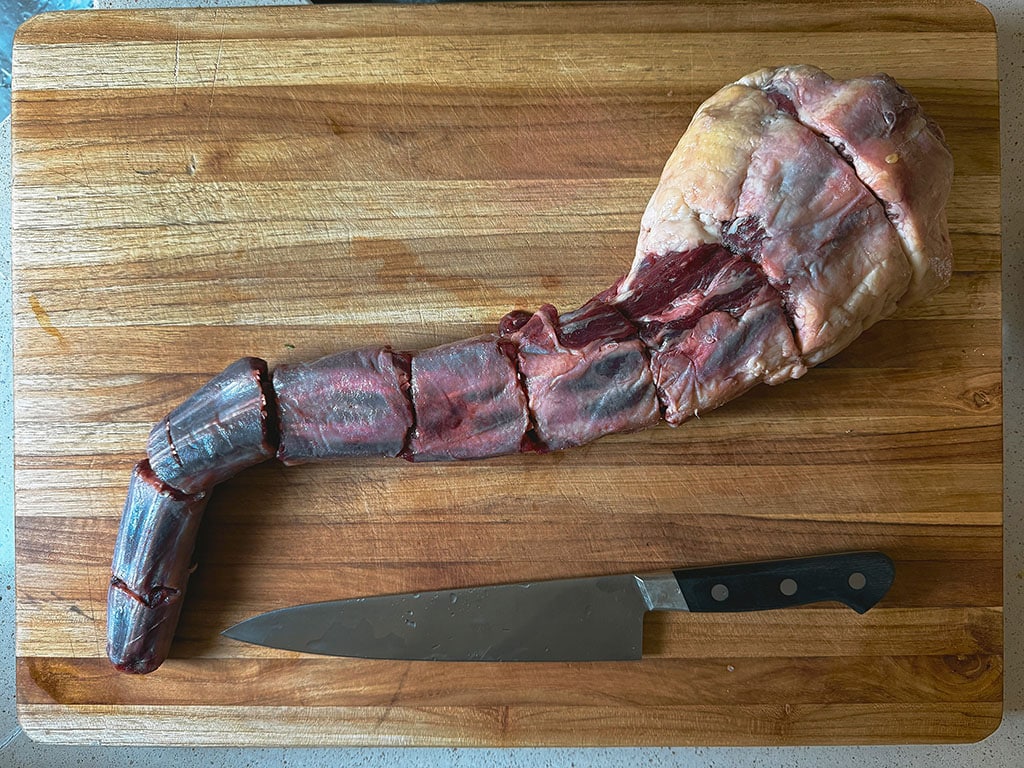
Jennifer McLagan calls them “odd bits”, and in her book of the same title, she delves into the nitty-gritty of engaging with such things as brains, bellies, tongue, gizzards, hearts, and so much more.
Interestingly, though we most often feel squeamish about them and shy away from even trying to put them on the plate, the professional culinary world raves about these prized possessions and repeatedly refers to them as delicacies.
Oxtail is one such part. Considering the name for a moment, one might wonder why we have oxtail but no other “ox” cuts in the supermarket. This makes for a great question. Understanding its origins requires a bit of historical knowledge and an understanding of the terminology as it applies to beef cattle.
In most countries, the term “beef” includes the meat of cows, bulls, heifers, and oxen. Cows are mature females; bulls are adult males; heifers are females that have not given birth; and oxen are castrated males of the species.
Historically, oxen were used as beasts of burden, pulling the hardest jobs around the household because they were easier to manage than bulls, especially around herds of heifers. They were slaughtered when they outlived their working purpose, and it was discovered that their meat possessed a superior flavour profile. As a result, the practice of castration continued even after oxen were no longer widely used as beasts of burden.
Over time and with the evolution of husbandry practices, we began to call these animals steers. Though some still suggest that “steer” refers to the younger castrated stage, while “ox” applies to the mature working adult, the term “oxtail” remained. Today, it also denotes the tail of other beef cattle, such as cows, bulls, and heifers.
Strangely enough, as a documented culinary practice, oxtail does not appear in English resources until 1827. According to Hestia’s Kitchen, much earlier references mention almost every other part of the ox – ox head (1631), ox cheeks (1756), ox gall (1631), ox bladder (1669), ox marrow (1669), and ox tongue (1631) – but not the tail. It is quite likely that the practice of cooking oxtail arrived in Britain with Huguenot refugees in the late 1700s, who brought French culinary knowledge and the famous oxtail soup with them.
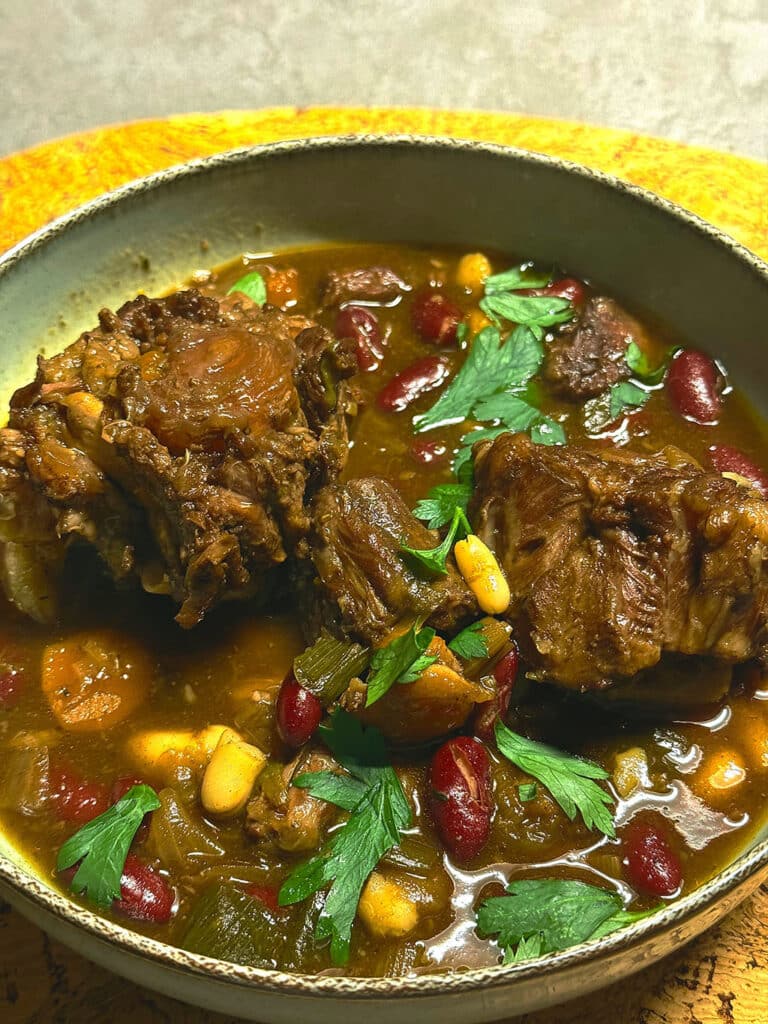
In Spain, on the other hand, the earliest mentions of oxtail dishes are often connected to the Islamic period in Al-Andalus (8th-15th centuries), with Arabic culinary manuscripts describing stews using bull or oxtail. The modern-style Spanish rabo de toro, a rich, wine-based stew typically associated with Andalusia (especially Córdoba), is much more recent than many popular accounts suggest.
Some believe it draws inspiration from the famous Roman cookbook De re coquinaria, attributed to Marcus Gavius Apicius and compiled around the 1st century AD (with later editions). Andalusia is a land of bulls and bullfighters, so dishes that make use of all parts of the bull hold a prominent place in the local culinary repertoire.
A fascinating culinary story comes from Caribbean culture. Here, the history of oxtail is linked to the colonisation period, when Europeans, wanting to eat familiar foods, brought animals to the region that had not previously existed there, such as chickens and cows.
The people who worked for the Europeans, often of West African origin, were left to make use of the parts of the animal that their employers were less interested in. It was out of necessity that a myriad of fabulous recipes emerged. For instance, Jamaican-style oxtail makes use of essentials such as allspice, Scotch bonnet, thyme, sugar, and browning, together with a few imported additions such as ginger and even soy sauce.
Another variation comes from Haiti, where the dish is flavoured with Haitian epis, a seasoning paste made from a mix of garlic, scallions, bell pepper, onions, thyme, parsley, bouquet garni, and Scotch bonnet. What sets it apart is the inclusion of cloves, which give the dish a unique sweet-spicy warmth. It is usually served over red beans and rice.
For other cultures, oxtail is a familiar favourite too. Sancocho is a revered soup that often features oxtails in Colombia and elsewhere in South America. In Mexico, there is a dish called Gallina Pinta that features oxtails and beans. South Africans cook oxtails in traditional three-legged cast-iron skillets. On the other side of the world, Koreans are also fond of oxtail. They slow-cook it with onion, carrots, Korean radish (or daikon), and sometimes dried shiitake mushrooms, flavouring it generously with garlic and ginger.
The beauty of this delicious meat is that it is intensely umami, more so than almost any other cut. When cooked, it tastes like a concentrated version of beef short ribs or shank, with deep notes from the bone marrow and gelatine that infuse both the meat and the cooking liquid.
Due to its high content of collagen and connective tissue, it is a tough cut that requires slow cooking, braising, pressure cooking, or stewing, to extract its unctuous and luxurious juices. When slow-cooked for several hours, the collagen breaks down into gelatine, resulting in succulent, fall-off-the-bone meat and a creamy, lush, gelatinous broth. This gives oxtail dishes a comforting, sticky richness that coats the palate and wins the hearts. It seems that offal is not so awful after all.
Read more about food from Irina Mikhailava: The mighty Iberian black pig or Alpine comforts or Kaiserschmarrn: an authentically Austrian sweet pancake