To taste a dish at its source is to set a standard, to create a measure that quietly reshapes every later encounter, forever judged against that first, pure experience.
Lately, I’ve returned to the flavours of Austria, a land cradled at Europe’s heart where meadows roll into mountains. Austrian cuisine bears the fingerprints of its neighbours and conquerors: German sausages and hearty roasts, Hungarian goulash and strudel, Italian roots in Wiener Schnitzel (tracing back to cotoletta alla milanese), even a Turkish passion for coffee that still perfumes Viennese mornings.
Among the empire’s lavish culinary heritage, Kaiserschmarrn holds a place of quiet royalty. Known also as Kaiserschmarren – “Emperor’s mess” or “Emperor’s nonsense” – this shredded pancake feels deeply, authentically Austrian, despite its imperial name.
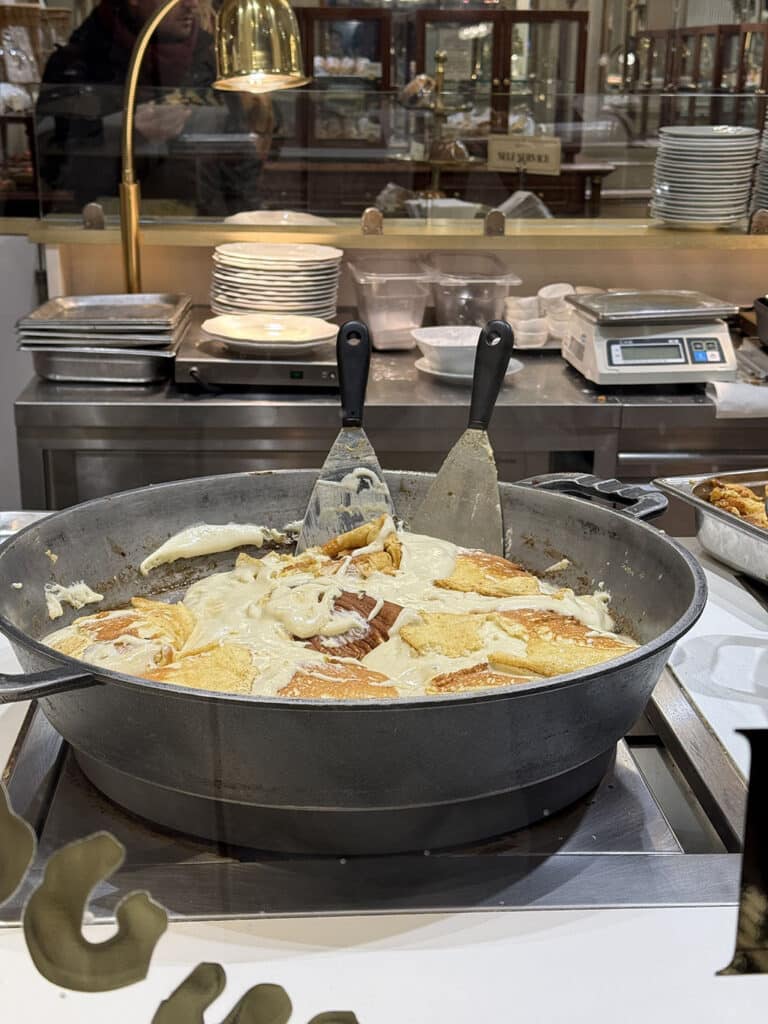
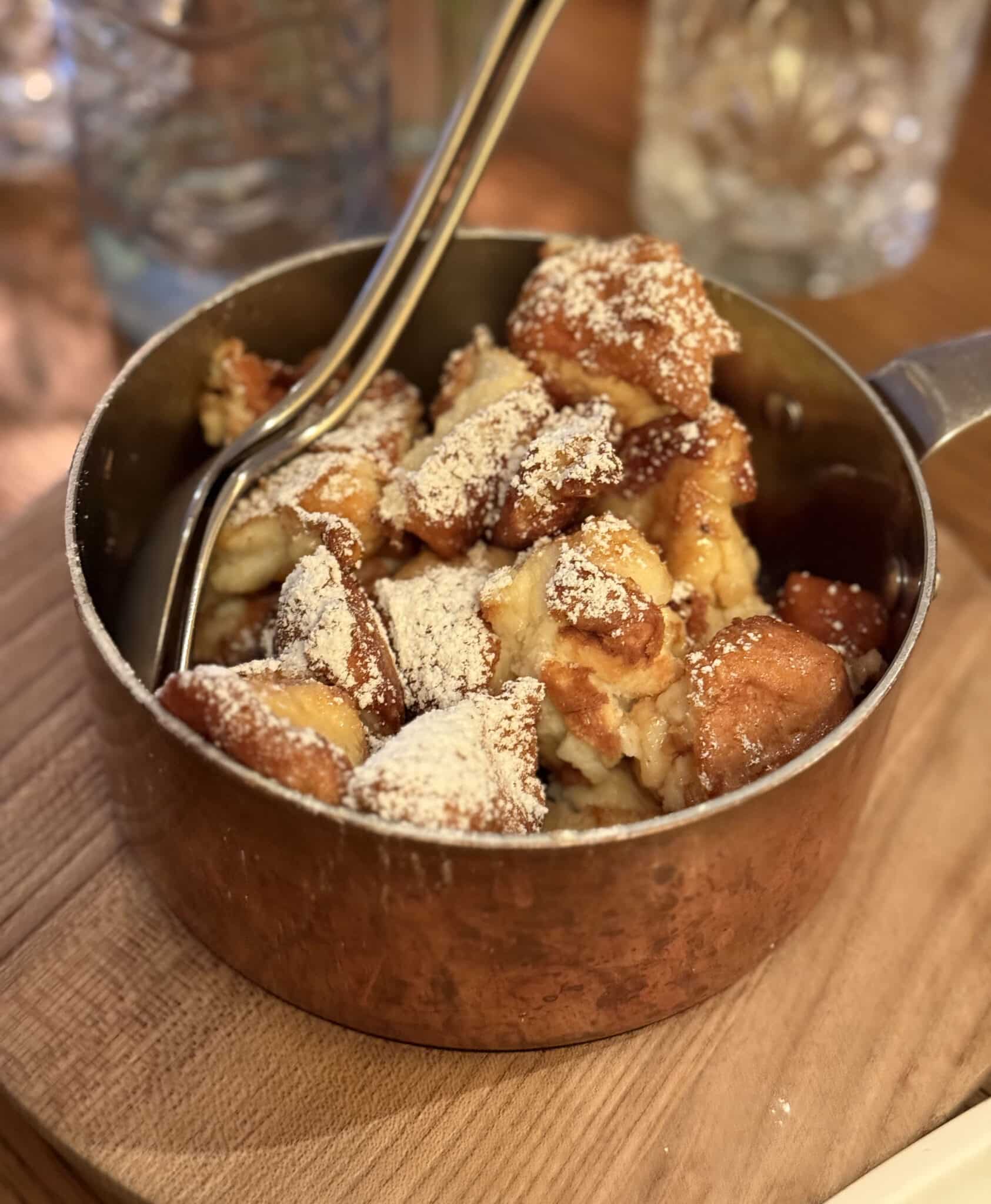
A thick, cloud-like batter puffs up soufflé-style, studded with rum-plumped raisins, then deliberately torn into ragged pieces and caramelised in butter. Dusted generously with powdered sugar and paired with tart plum compote (Zwetschgenröster), it arrives warm, comforting, and gloriously unrefined.
Legends swirl around its birth, all circling Emperor Franz Joseph I (1830-1916) and his famously figure-conscious wife, Empress Elisabeth (“Sisi”). One tale claims it began as a simple Alpine peasant dish – Holzfällerschmarrn, the lumberjack’s hearty pancake – elevated for the emperor during a hunting trip with extra eggs, sugar, and raisins.
Another, more whimsical version has the imperial chef preparing a light confection for Sisi, who – ever vigilant about her silhouette – declared it too rich and pushed it aside. An exasperated Franz Joseph ordered the Schmarrn to be passed to him, and so the “emperor’s nonsense” was born, embraced by the monarch who savoured its indulgent comfort.
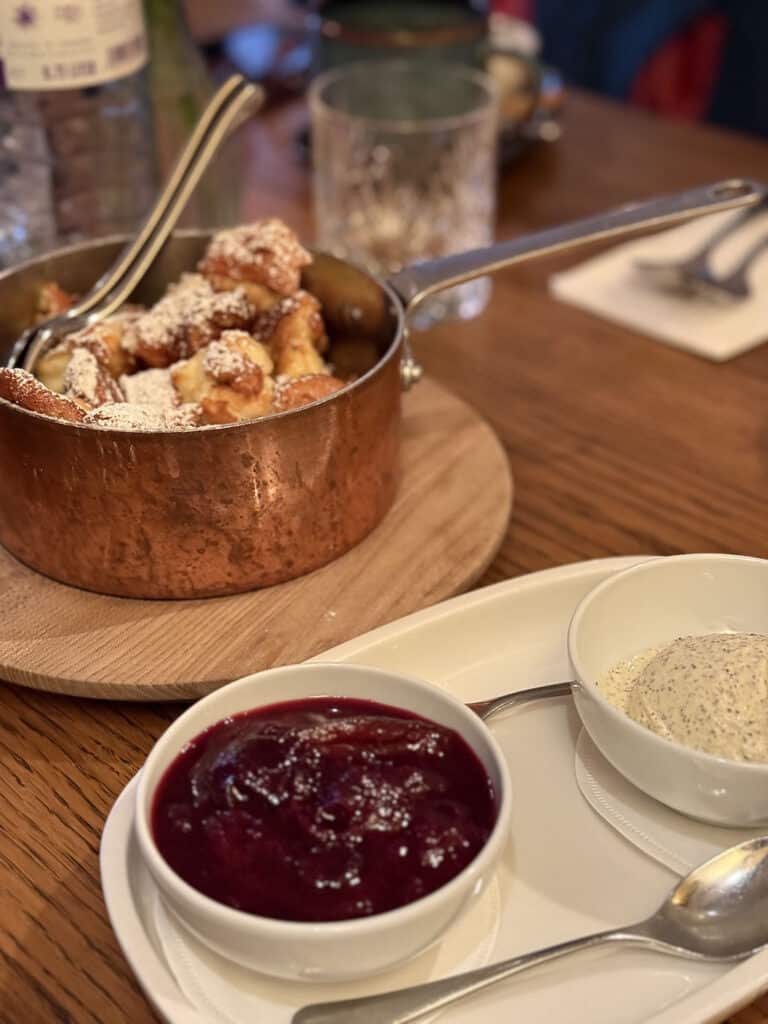
Whatever the truth (and folklore loves to embellish), the technique remains telling: a batter folded with whipped egg whites for lift, fried in plenty of butter, then shredded by hand – not cut – for those signature irregular edges that soak up caramel and crisp beautifully. Rum-soaked raisins add boozy depth, while the compote cuts through with bright acidity.
In this way, Kaiserschmarrn bridges the rustic and the regal. It embodies Gemütlichkeit – that warm, cozy glow of shared comfort – and belongs to Austria’s cherished category of Mehlspeisen (sweet flour-based treats). Far from a fragile afterthought, it’s often hearty enough for a main course, devoured in mountain lodges after a day on the slopes, in bustling Viennese cafés, or around family tables.
It captures the soul of Austrian identity: humble Alpine traditions polished by Habsburg grandeur, a delicious reminder that the finest flavours often arise from happy accidents and generous hearts.
Read more about food from Irina Mikhailava: Galette des Rois: a journey through centuries of Kings’ Cake tradition or Comfort in every spoonful: the magic of soup or The true flavour of Christmas