Food takes centre stage in our thoughts as we craft menus and look forward to preparing the dishes we have craved all year. For some it might be a roast bird, oysters, or foie gras; others are drawn to a lavish smörgåsbord or the traditional Portuguese bacalhau com todos.
Every celebratory meal is a punctuation mark in the story of our lives — a milestone that honours who we are and our sense of identity. We shape that story with every occasion we experience and every meal we share. In my family there are dishes prepared only at Christmas; their very scarcity is what makes them so special and joyful when the season finally arrives.
Take, for example, the oatmeal pudding served with fried onions that was once eaten on Christmas Eve — the last day of the traditional pre-Christmas fast. Or the hearty, savoury stew of meats, mushrooms, and (wait for it) herring, eaten with pancakes or dumplings on Christmas Day itself. (For the curious, it’s called machanka and is typical of Belarus and Ukraine.) These are far more than mere dishes. They are rituals that mark the seasons, guard traditions, and commemorate ways of life.
As much as I love these foods, I don’t expect everyone else to share my enthusiasm. After all, we are not born with a single, pre-installed food programme; we learn what we find tasty and appetising from the people and experiences around us.
Our families begin that education by modelling certain foods and reinforcing certain behaviours. What we come to regard as delicious is wired into our psyche through emotional and relational conditioning — by whoever fed us, praised us, comforted us, or made us angry when food was involved. This happens through hormonal pathways: when something tastes better than expected, dopamine neurones fire, creating a precedent that feels “worth repeating.” Conversely, if stress accompanies eating, cortisol surges and links food with tension.
These early messages become encoded in our being and often “speak up” when we least expect it. They drive us to seek experiences associated with comfort and avoid those linked to stress. Inviting someone who associates a Sunday roast with love and warmth to dinner will probably bring them great happiness. Inviting someone whose childhood Sunday meals were battlegrounds of family arguments, however, may prove challenging — they are likely to avoid such gatherings like the plague.
The influence of social context goes even further: eating in good company sharpens our appetite and lets us keep going longer. I’m sure we’ve all had one too many slices of panettone simply because the cousin we were sharing it with urged us to “go on, have another.” The comfort of social banter seems able to magically reshuffle the contents of our stomachs as if playing Tetris.
In her book ‘The Way We Eat Now’, Bee Wilson cites a striking study of Japanese men living in California. These men followed a traditional Japanese diet yet were less healthy than their counterparts back in Japan. The difference? To unlock the diet’s full benefits, the Americanised men had to slow down and eat in the traditional Japanese way. Eating alone from a plastic box simply didn’t work. The nutritional potential of the food turned out to depend on the cultural context and manner of eating.
As we move through life, our relationship with food evolves. We discover new flavours, acquire new tastes, make new friends, and adopt new traditions. We learn and grow along the ever-moving continuum of time and experience. So as this holiday season approaches, my Christmas wish is that everyone reflects not only on the menu that will be served, but also on the kind of atmosphere in which it will be enjoyed. I am a passionate champion of good food, but I am an even bigger believer that true flavour is not created solely in the kitchen. It is a fusion of moods, memories, and moments shared together that unlocks the full joy of eating.
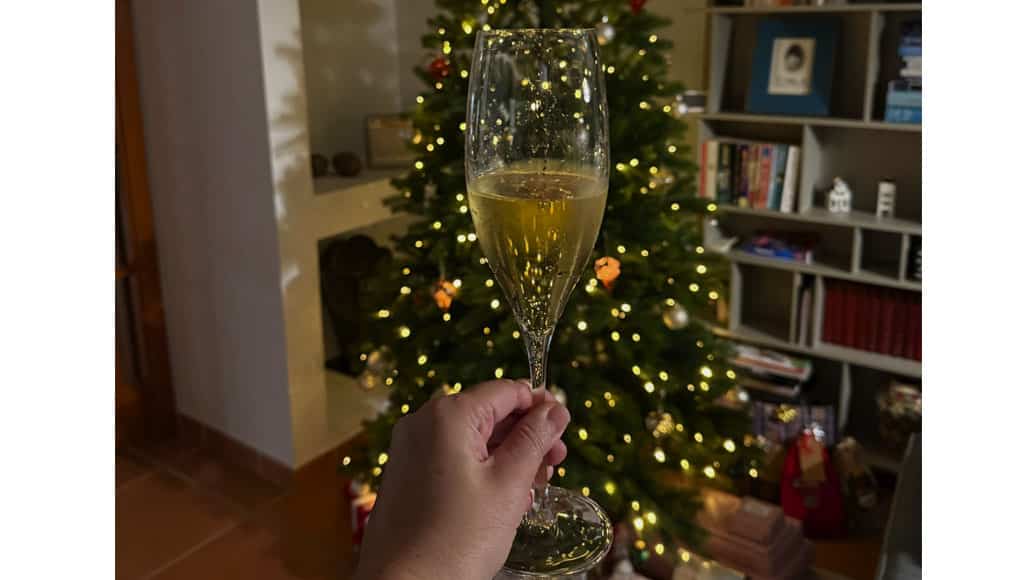
Cheers to that — and happy holidays!
Read more of Irina Mikhailava’s articles: The tales of focaccia or Pomegranate passion: recipes, benefits and ancient roots, Cepelinai: a taste from the road!