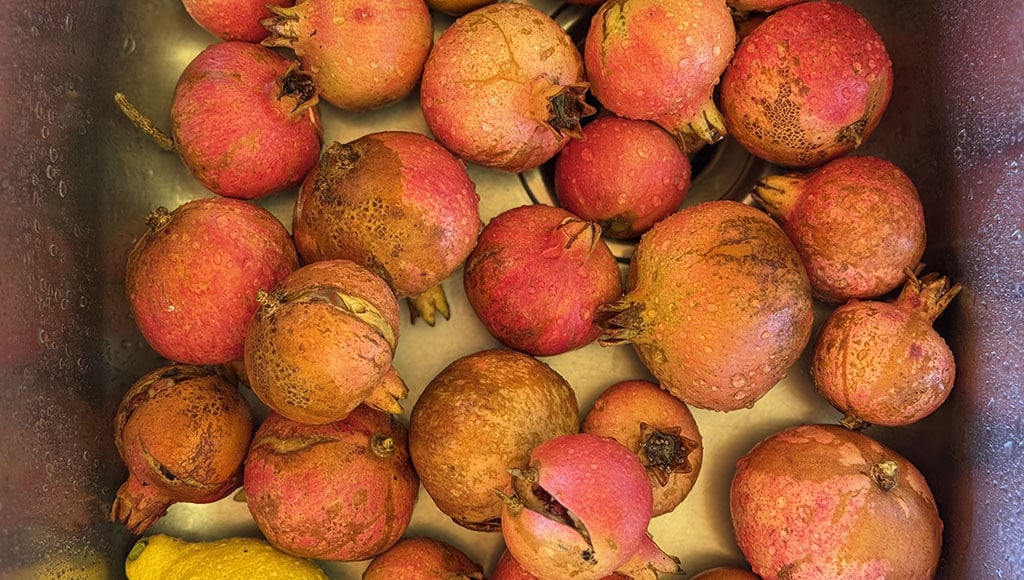
For example, in Ancient Greece, pomegranate symbolised life, fertility, sanctity, and vitality. In Greek mythology, the pomegranate was known as the ‘fruit of the dead’, featuring prominently in the Myth of Hades and Persephone. Smitten by the beautiful Persephone, the daughter of Zeus and Demeter, Hades, the god of the Underworld, tricked her into eating a few pomegranate seeds which would bind her to staying with him forever. Learning about the wrongdoing, Zeus negotiated a compromise and agreed that Persephone would spend time in the Underworld, in months equal to the number of seeds she consumed. Thus, when every year Persephone would visit Hades, her mother Demeter, the goddess of agriculture, would be so smitten with grief that she would inflict a cold and barren period on the pastures, known as the winter.
In the Land of Israel, Moses mentioned pomegranates to Israelites as one of the seven chosen species which signified God’s faithfulness. They were pomegranates, figs, barley, wheat, vines, honey, and olive trees. This is now celebrated during the Passover, a period of renewal and giving thanks. In Islam, pomegranates are believed to be grown in the Garden of Paradise, and in some versions of the Christian scriptures, seeds represented the flock of the church, its community.
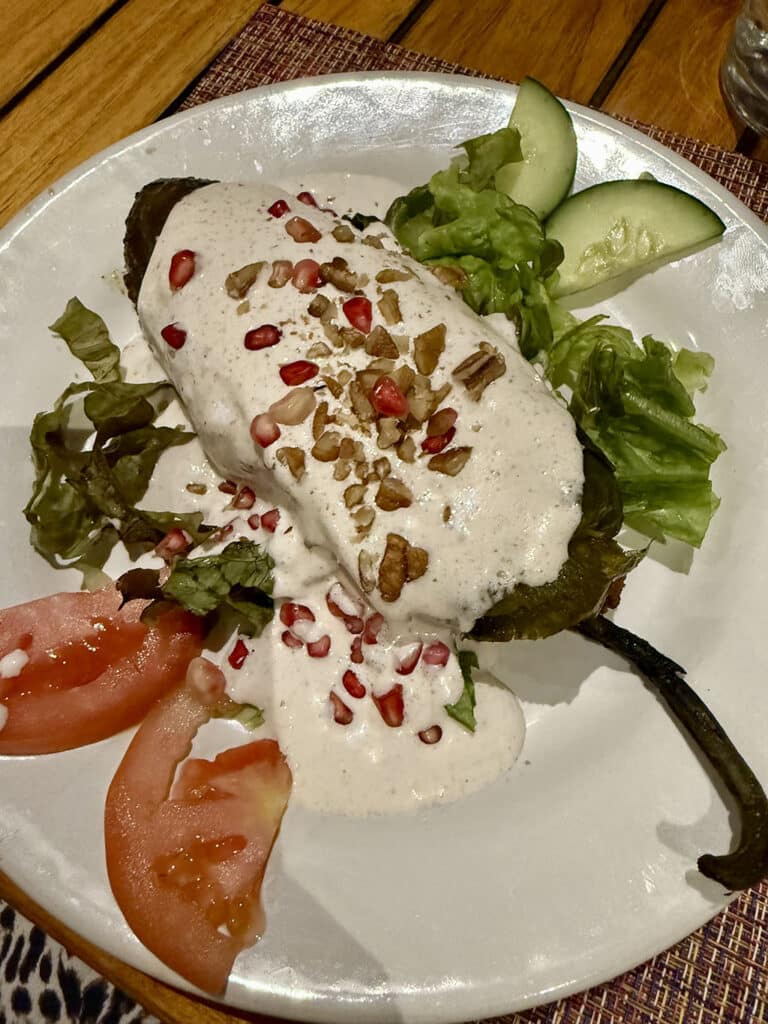
Fast forwarding to 1821 in Puebla, Mexico, takes us to the Augustinian nuns who created chiles en nogada, a dish that became a celebration of Mexican independence. It consists of roasted poblano peppers stuffed with a savoury-sweet mix of ground meat, fruits, nuts and spices, and served in a creamy walnut sauce. It is sprinkled with the pomegranate seeds that represent the blood of the patriots who fought for the unity of the Mexican people. How is that for a fruit story?
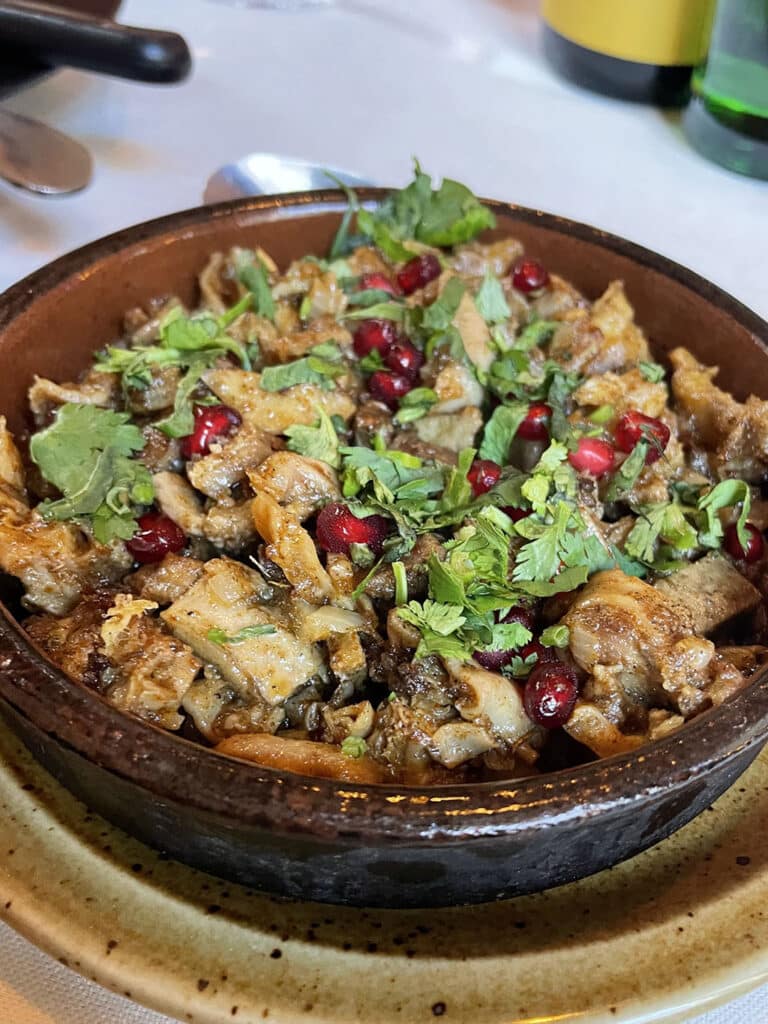
This wide cultural dissemination might be confusing in terms of the origins of the fruit, but there is consensus that pomegranates are native to the region that presents an area covered by modern-day Iran and Northern India. From there, fruits travelled all over the world following the trade routes.
Botanically classified as punica granatum, pomegranates are the sweet-tart fruits that belong to the Lythraceae family. The name suggests that it is a ‘seeded apple’ or an ‘apple of with many seeds’, of which there can be anywhere between 200 to 1,400 pieces.
Each fruit averages between 6-13 centimetres in diameter and contains an outer shell that is hard and leathery, exocarp; a thick and spongy network of membranes inside, mesocarp; and the seeds, often referred to as arils.
The seeds are translucent, juicy and mildly acidic. They burst with flavour that sits somewhere between rhubarb, cranberry and grape. Each seed can take a different hue of red depending on the fruit variety, and it stains vigorously anything in its vicinity from aprons to chopping boards!
Pomegranate’s nutritious profile is as impressive as its cultural significance. They are an excellent source of vitamin K that assists in wound healing, vitamin C that strengthens the immune system, fibre that regulates the digestive tract, and folate that develops the red blood cells.
The fruits also contain a high dose of antioxidants that reduce inflammation and protect cells. Pomegranate seeds can be consumed straight, or used to sprinkle over salads, stews, yogurt or desserts. Their juice can be reduced to make a syrup, which suggests added sugar and thinner consistency, or molasses, no sugar and thicker consistency.
The sauces, as well as the seeds, feature prominently in many Caucasian, Middle Eastern and Turkish preparations. For instance, in Georgia, pomegranate seeds are used to dress lobio, a bean stew dish. In Turkey, they are central to muhammara, a sauce made with molasses, red peppers, walnuts and onions.
One of the favourites of the Iranian cuisine is khoresh fesenjan, a dish of a tender chicken or duck cooked in a pomegranate and walnut sauce. In Azerbaijan, its dish narnumru would win a competition of the greatest amount of seeds used in a recipe. Here eggs are cooked atop sautéed pomegranate seeds and onions – it is a pomegranate heaven. No wonder in Azerbaijan pomegranate is considered the “king of fruit”.
As a symbol of vitality and life, pomegranates have also been used as a source of nutritious hydration. Many cultures juice pomegranates, including Portugal, where the turn of the seasons is usually marked with the addition of a pomegranate juicing machine in the local supermarkets. Aren’t we lucky?