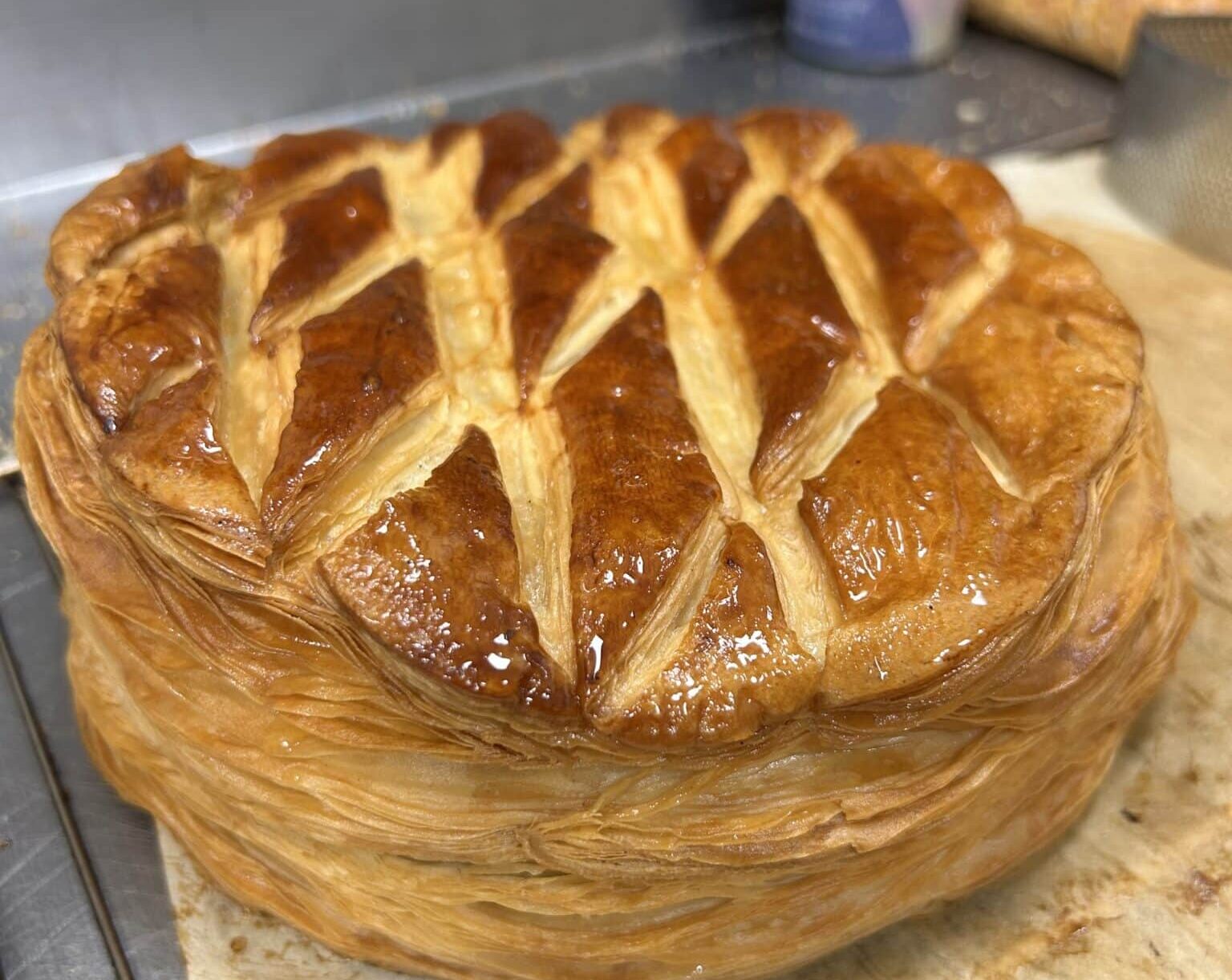
This event is often marked by lavish celebrations and noteworthy culinary bakes. In France, Galette des Rois takes the centre stage, however, what one might find in the local bakery differs enormously depending on the location.
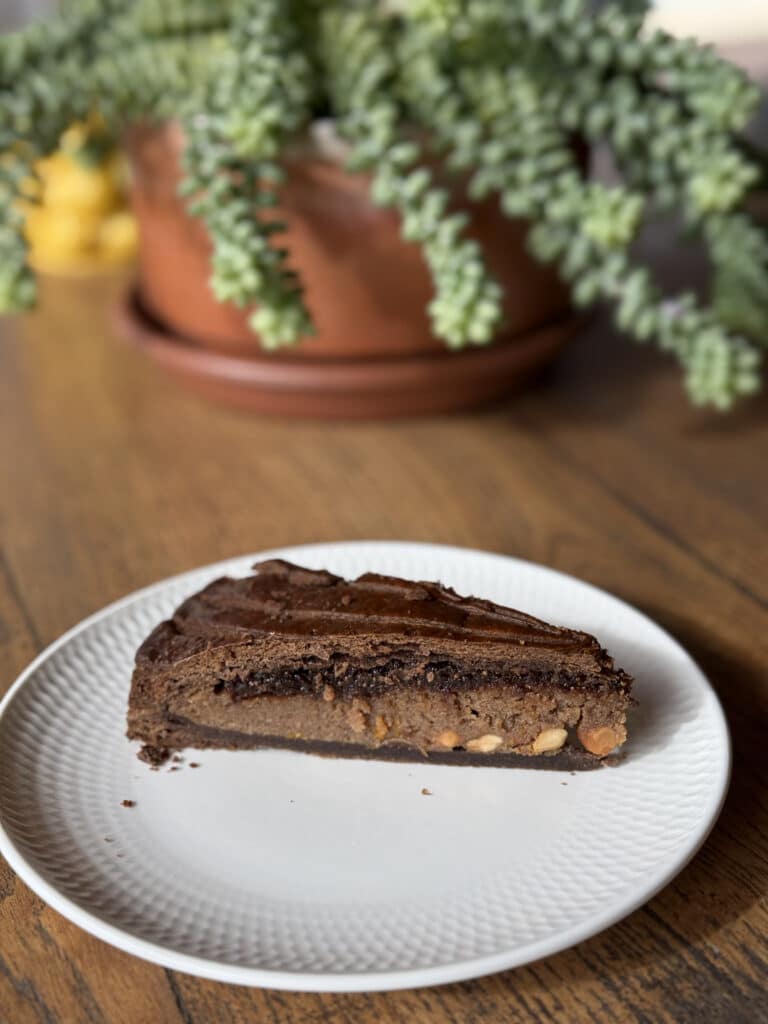
When in the north of the country, Galette des Rois consists of two layers of the flaky puff pastry (pâte feuilletée) encasing a rich almond cream filling called frangipane; the southern version is an enriched brioche dough, often scented with orange blossom water, and topped with candied fruits.
Many reasons such as geographical preferences, historical evolution and regional ingredient variability might be at the core of the divide. In the north, the abundance of butter has led to the preference of the butter rich versions of this celebratory bake. Furthermore, Paris, as a centre of power and innovation, has also popularised the richer frangipane version through its urban bakeries and royal courts.
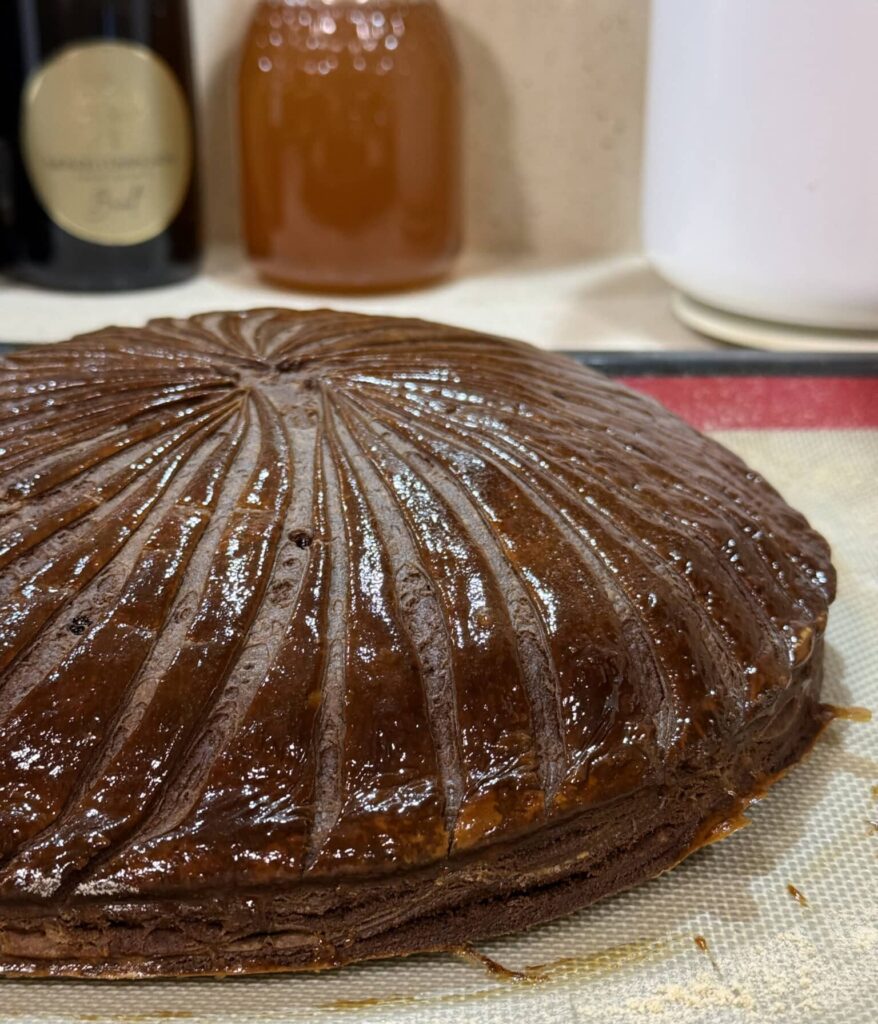
The northern tradition goes way back to the Middle Ages when Benedictine monks introduced a cake that consisted of a puff pastry filled with the almond frangipane. They borrowed the pastry technique from the 13th century cookbooks of Moorish Spain. These texts mention musammana, a paper-thin layered pastry that is achieved by rolling the stiff dough into fine sheets and smearing them with butter. The result was the flaky, layered flatbread that resembled the modern puff pastry.
It is worth mentioning that the Moorish obsession with creating ultra-thin pastry sheets, known as waraq, or “leaf” or “paper”, was also at the origins of filo/phylo pastry, which was popularised in the Mediterranean with the travel of the Moors through the area.
On the other hand, the south of France preferred a much lighter, brioche version to celebrate Epiphany. Also known as ‘brioche des rois’ here, the festive bake takes a form of a ring-shaped sweet bread (resembling the crown of the King) made with a brioche dough and enriched with nuts and dried fruits.
The Portuguese Bolo-Rei and Spanish Roscón de Reyes stem from this tradition.
On the whole, the origins of Three King celebrations date back to Ancient Rome and the honouring of the Roman god Saturn known as Saturnalia. The occasion marks the return of longer days and was rejoiced by indulging in sweet foods. Slaves were freed on the day, and as tradition would have it, a “King” was selected amongst them to preside over the festivities.
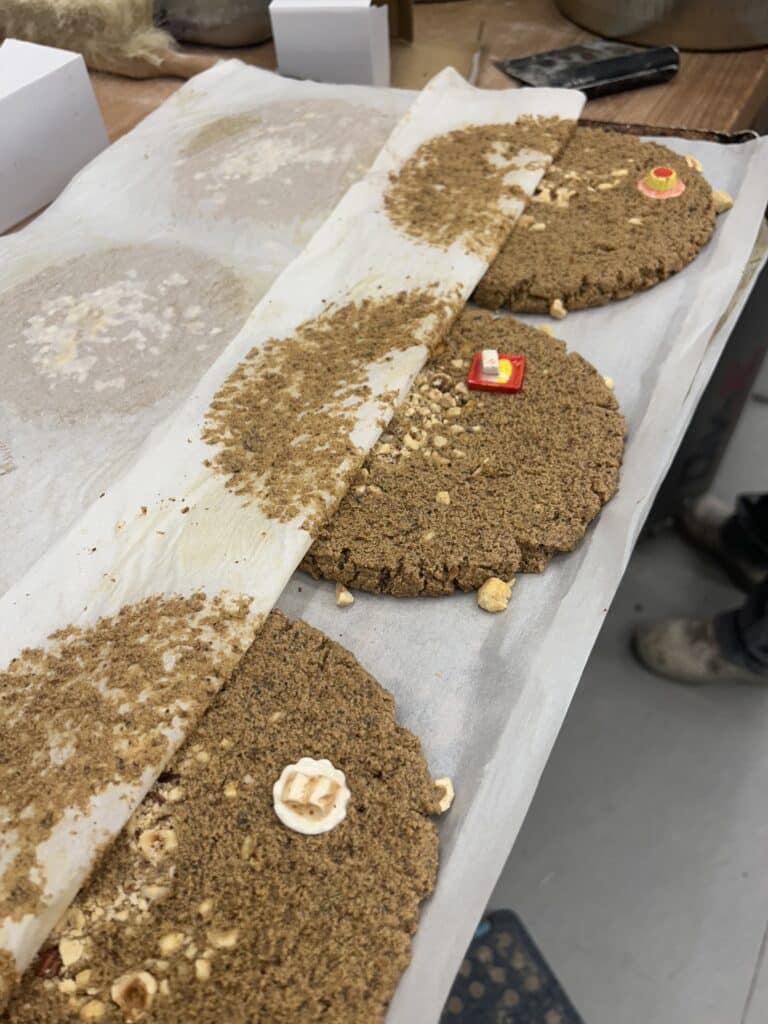
As a nod to the Romans, both traditions observe the need to elect the “king” for the festivities. They achieve that by hiding a trinket in the bake, which used to be a fava bean (a fève) and now is a little porcelain figurine. The tradition has been of such importance that during the 17th century Three Kings festivities of the French court even the real kings were required to abide by it. In this way, if a noble woman would find such trinket in her slice, she’d be entitled to request services from the sovereign.
As famine struck France and the French Revolution took the reins of the country, rejecting everything connected to monarchy and/or religion, Galette des Rois has come to symbolise togetherness and equality amongst the French. Up until this day, the cake is sliced with a spare piece, that is known as either the “part du pauvre” (poor man’s share), or the “part du Bon Dieu” (the God’s share) or the “part de la Vierge” (the Virgin’s share), all pointing at the importance of sharing and community during celebrations.
The Galette des Rois’s survival and its transformation throughout history is an acknowledgement of its popularity and a deep-seated importance to the French people. Either version, or both simultaneously, are still enjoyed in their abundance by the French. Undoubtedly, this is what keeps the magic of this tradition going forward.
Read more about food from Irina Mikhailava: Comfort in every spoonful: the magic of soup or The true flavour of Christmas or The tales of focaccia