A chain of Atlantic depressions, led by Storm Kristin at the end of January and followed by further storm systems in early February, brought a punishing mix of extreme wind, intense rainfall and river flooding that hit the districts of Leiria, Coimbra, Aveiro and Castelo Branco particularly hard.
How much damage has been done?
The most eye-catching headline figure so far is the government’s emerging estimate that reconstruction could exceed €6 billion, spanning homes, factories and public infrastructure. That number is moving upwards as insurers, municipalities and ministries compile assessments, but it gives a sense of the scale now being discussed at national level.
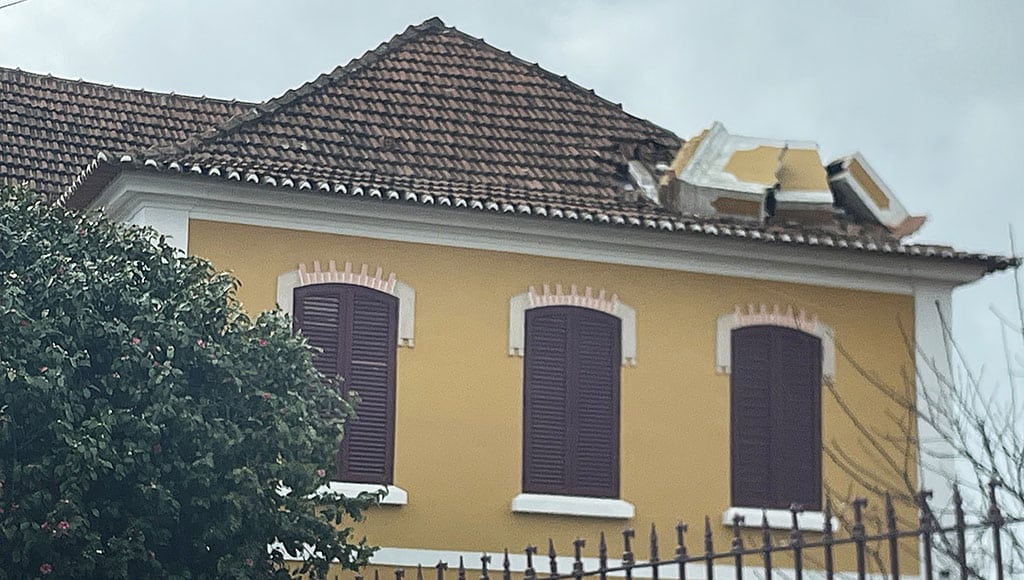
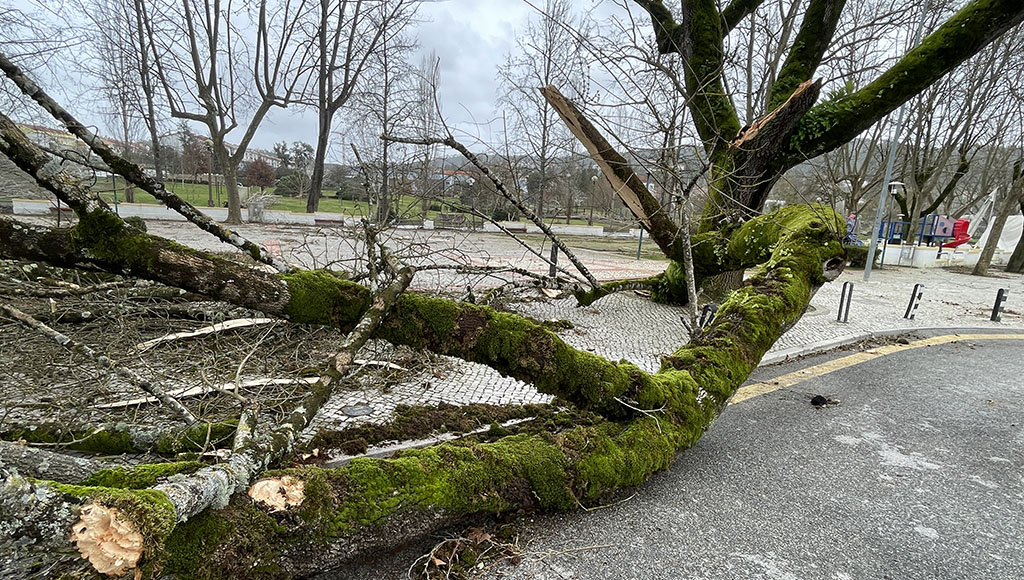
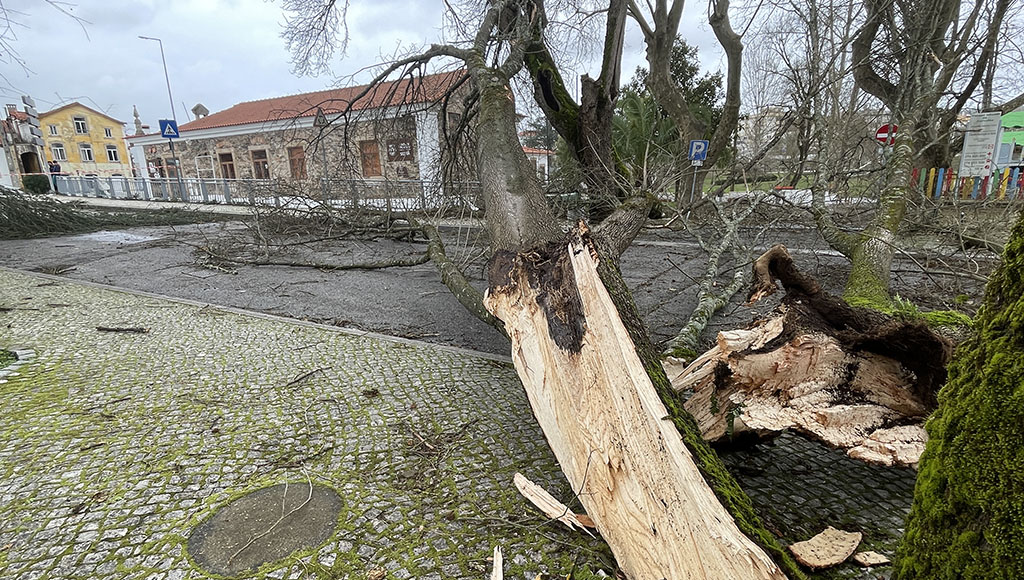
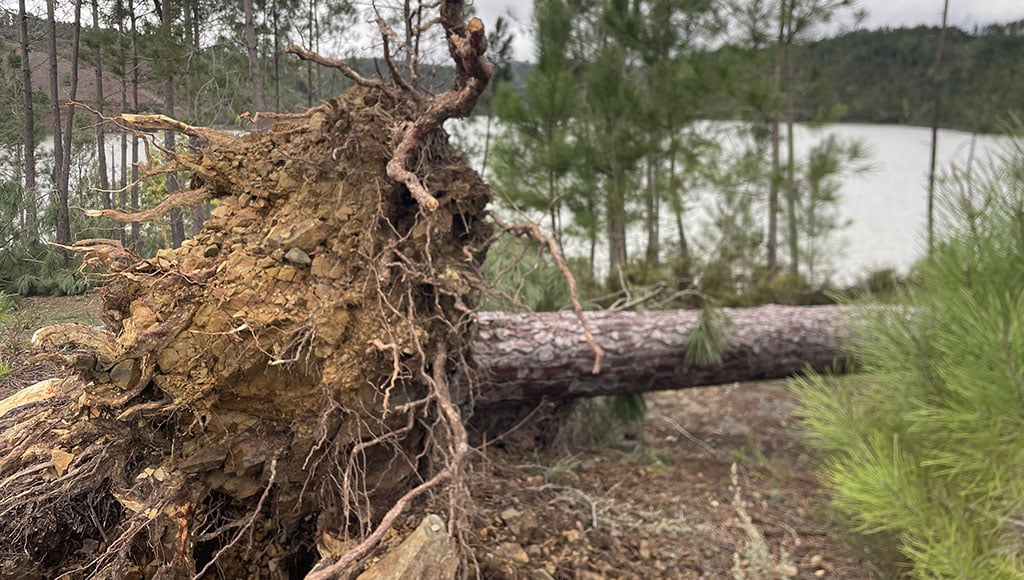
On the ground, the damage has been both dramatic and mundane: roofs damaged by wind and falling trees, tiles littering the streets, windows blown in, warehouses and school buildings ripped open, fallen trees blocking roads, and repeated electrical failures that left large numbers of households without power for days, but, for many, this has stretched to weeks.
Interestingly and thankfully, Rural Properties’ various renovations, all of which stood in the path of the successive storms and all of which have newly-built roofs, were undamaged while many of the old-style ‘wood and tile’ roofs that characterise Portugal’s older buildings suffered.
The most serious flooding has been around the Mondego basin. A levee failure near Coimbra triggered significant flooding and forced evacuations; the focus for the media became the collapse of part of the A1 motorway near Coimbra.
How have communities responded?
Across the central region, the response has been characterised by two simultaneous realities: organised emergency operations on one hand, and ordinary people improvising on the other.
In the immediate aftermath of Kristin’s most violent winds, residents in affected towns queued for basic repair materials, such as tarpaulins, tiles, timber and glass, with the rise in sales of generators and chainsaws a notable result. People moved quickly to protect what remained of their homes while also offering help and practical support to less able neighbours and relatives.
As flooding risks rose, cooperation became more formalised. Civil protection warnings emphasised the dangers created by saturated soils, not just river flooding, but also landslides, and local authorities in areas like Coimbra prepared for the possibility of further evacuations if water levels surged again.
Alongside official messaging, volunteer networks and NGOs moved into the gaps: helping with clean-ups, temporary shelter, food distribution and support for the elderly and vulnerable residents. International coverage noted how volunteers stepped in while some residents took risky actions to shore up storm-damaged homes, reflecting a mix of resilience and desperation with the next weather system already forecast.
There has also been a psychological shift as those living in repeatedly battered areas are speaking less about a “once-in-a-generation storm”, despite the wind speed hitting a new record of 208.8 km/h (129.7 mph), and more about a pattern: severe weather arriving in quick succession, leaving little time to recover before the next blow landed.
What has the government done and has it been adequate?
The government’s core response was a €2.5 billion package announced after Storm Kristin, combining immediate relief measures and longer-term recovery support measures that included credit lines for rebuilding, tax and social-security relief provisions in affected areas, and a mortgage moratorium mechanism designed to prevent families and small businesses from suffering a short-term cashflow crunch while repairs begin.
The government also extended and adjusted emergency status declarations across dozens of municipalities as conditions evolved. The sought-after ‘Status of Calamity’ was a key legal step that unlocked exceptional measures and accelerated certain procedures including the deployment of army personnel.
Government adequacy is being judged not only by the headline numbers, but by speed, coordination, and whether help has reached those who need it fast enough. Criticism intensified after further floods and evacuations, and the political temperature rose sharply when the elusive Interior Minister Maria Lúcia Amaral resigned, citing an inability to continue amid the mounting backlash over the crisis response. That resignation was a clear sign that the government’s response had been less than convincing.
A fair assessment at this stage may be that the government has announced plenty of support but faces criticism on delivery: how quickly claims are processed, how effectively municipalities are resourced and reimbursed, and whether infrastructure repairs can be executed swiftly.
For central Portugal, the next weeks will be about more than clearing debris. Many are still without electricity and water, others are homeless and those with even small debts to the State do not qualify for the financial aid on offer.
February may become the moment Portugal’s leaders, national and local, finally treat a shift in weather patterns not as a policy slogan, but as an impetus to clear drains, reinforce levees, look again at building zoning and replan emergency logistics.