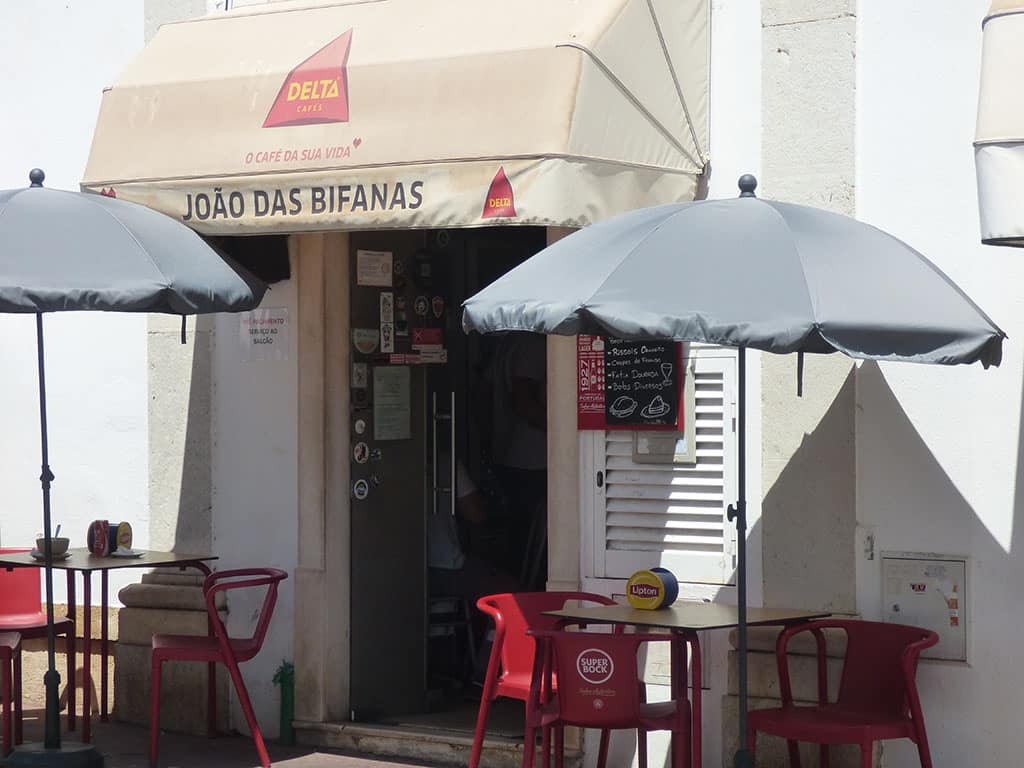
When I say “tiny”, the café is approximately 25 metres square, with room for just two tables inside, and three outside on the pavement and it used to be even smaller! Yet it is here that João Manuel Reis de Deus, now 69, began his business in October 1980 at the age of 24. He never imagined he would still be making bifanas, six days a week, over 45 years later!
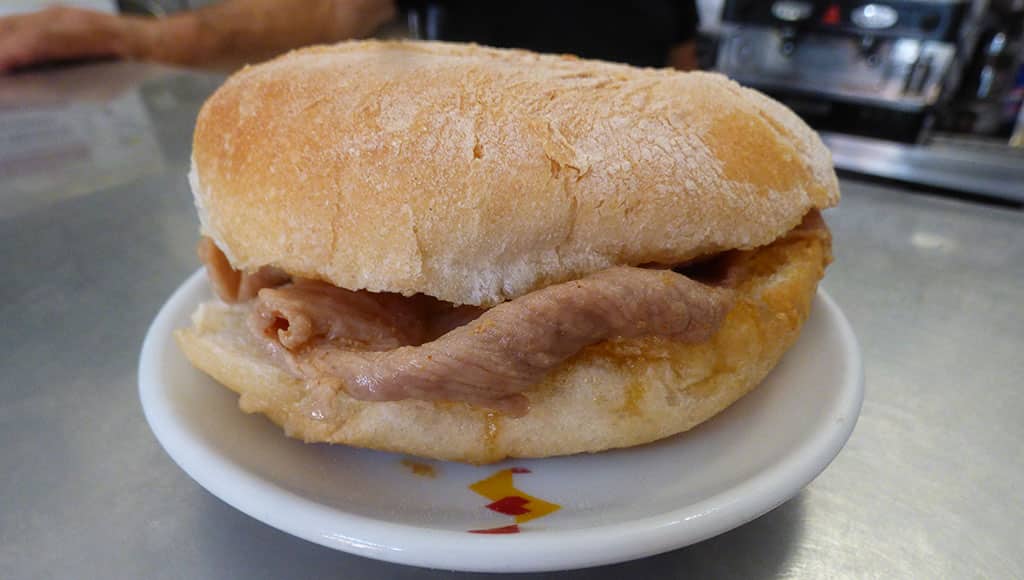
I went to ‘officially’ meet João and, of course, to eat a bifana, well, I ate two as one is never enough. I noticed how he greeted each customer warmly with a welcome smile. Nothing was rushed and people waited patiently while he chatted to me. Without my asking, a bifana appeared in front of me on the counter.
João’s charm and generosity have earned him a devoted following of both locals and foreigners, some travelling long distances just for his bifanas, making a point to visit whenever they are in the Algarve.
His nickname, João das Bifanas, is known far beyond Lagoa and his popularity is evident when, on his birthday, this year (April 16), João arrived at 8am to find a crowd outside his café waiting to wish him Happy Birthday and to share a cake. An impromptu street party commenced for one of the community’s most loved figures.
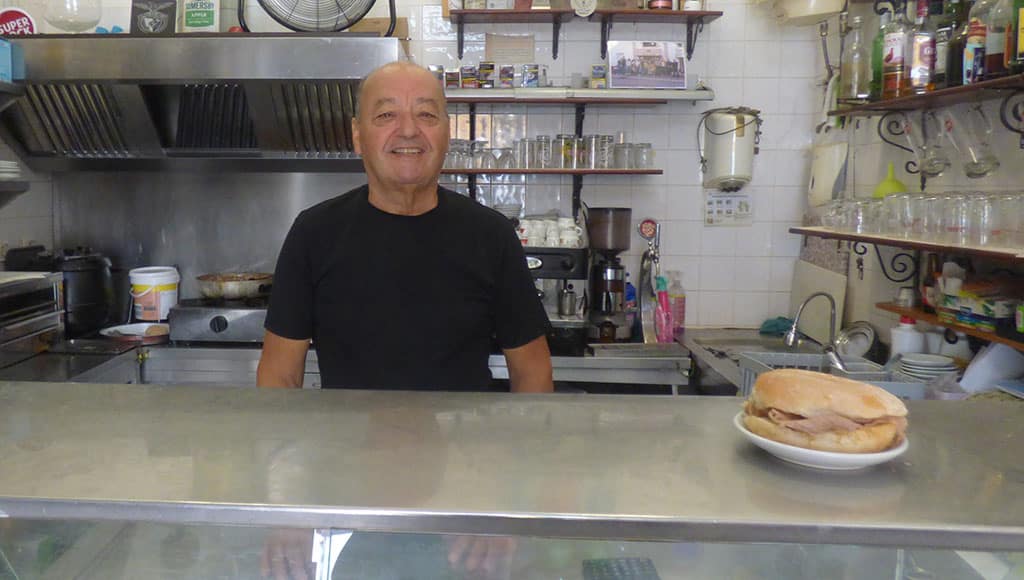
Over the decades, his customers have included judges, politicians, engineers, police commissioners, doctors, musicians, and holidaymakers. While I was there, an Englishman popped in for four takeaway bifanas and told me he had been coming for almost 30 years.
In the café’s early days, poor children would often linger outside, and João always gave them something to eat. Many still visit today, bringing their own families, grateful for his kindness, including one who is now a famous musician who always remembers and mentions João in TV interviews.
João started working at age 11 in a grocer’s, later serving two years conscription in the army during the terrible colonial wars in Africa, and working at a petrol station on his return. Inspired by a local man, António Agostinho who sold ‘morcelas’, blood sausages, in a special sauce, João developed his own marinade and opened the bifana café.
I asked him what his work motto was. “To always serve people happily, humbly, and with care. It is important to enjoy what you do, and to look forward to what the day brings.”
His dedication is clear as, in over four decades, he has only taken one month’s holiday!
“I am motivated to keep working because I enjoy meeting people and many have become friends for life. I take pleasure in what I do and there is never a day when I do not look forward to coming to work.”
On Facebook pages, you can find hundreds of comments praising both João himself and his bifanas!
One story he loves to tell is how he once provided mini bifanas for a friend’s daughter’s pre-wedding reception and how the guests all wanted to take their photograph with him!
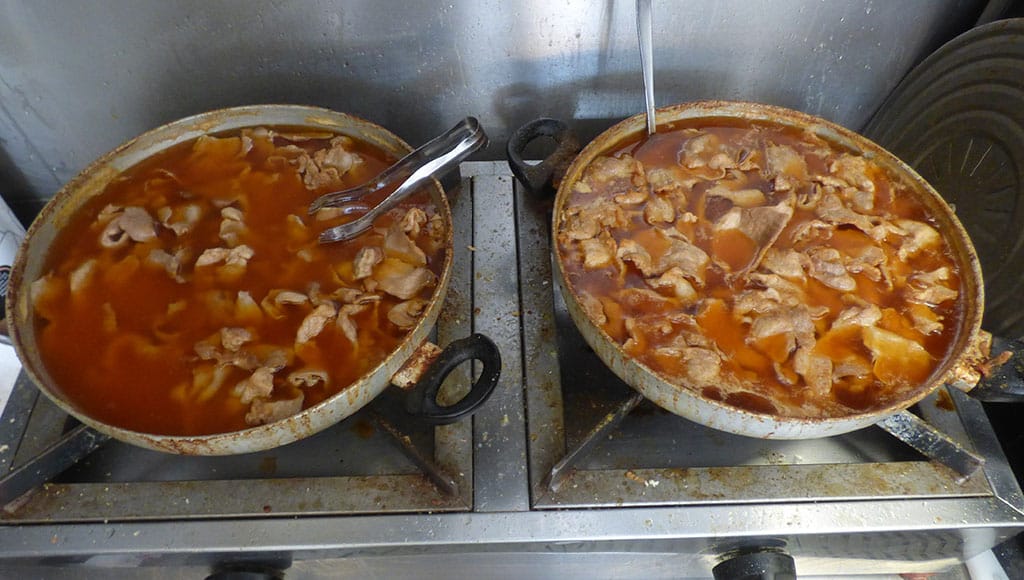
Did you know that bifanas are found all over Portugal, in cafés, bars, at festivals, football matches, and markets? The basic ingredients are simple. Thin slices of pork marinated in white wine, bay leaf, paprika, and garlic, plus a few secret twists which each cook adds.
In Porto, bifanas may include onions, tomatoes, beer, and whisky. Some regions use red wine instead of white, or fry the pork in fat before simmering in the sauce.
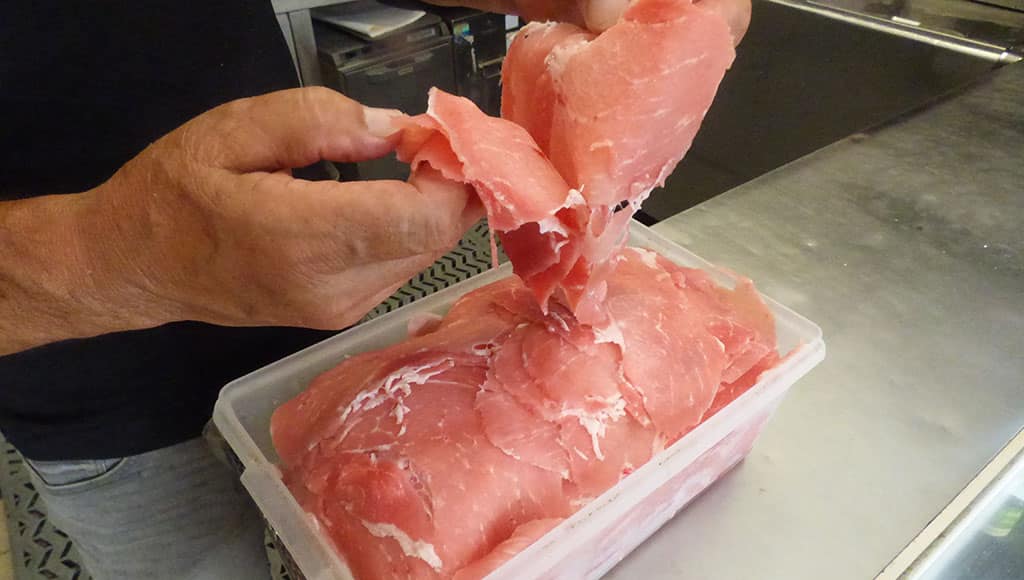
It is the marinade that makes each bifana unique, and João’s is exceptional. He proudly showed me his fridge full of ready sliced bifanas that looked like ‘presunto’ as the colour and quality looked so good.
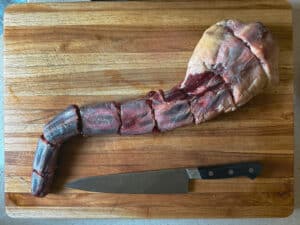
“It is important to have extremely thin slices from the leg of the pig, which accounts for their taste and succulence. I always buy the best cuts of pork and slice the bifanas myself.”
As for the origin of the bifanas, there are several stories.
One says they began in 1968 in Vendas Novas, Alentejo, where Maria Clara Isabel, at her Café Boavista, served them to travellers on the EN4 road that connected the Alentejo to Lisbon. Maria’s bifanas became extremely popular and Vendas Novas now sells over a million bifanas a year even trademarking them since 2011. In 2024, the town made the world’s largest bifana with 32 kilos of pork in a 15-metre bread roll. Sadly, it was on this day too that Maria Clara passed away, making it a fitting tribute.
Another tale claims bifanas originated in the village of Casa Branca in Montemor-o-Novo. The town flourished in 1857 as a stopping point for the new steam trains, between Lisbon and the Alentejo. At the station, Maria Eugénia served bread and meat accompanied by wine to hungry travellers.
One day, the pork was too tough to chew and so Maria left it to marinade, on the stove, with garlic, bay leaves and pork fat in white wine, leading the irresistible aroma to draw people from all over town. Before long, Maria opened a small café, where weary travellers enjoyed her bifanas during their 15-minute train stop, a tradition she kept for over 50 years.
Other stories suggest a link to the Chinese ‘bifan’ brought to Porto during maritime voyages and adapted into a Portuguese classic.
Wherever they began, bifanas have become part of Portugal’s culinary heritage. In Lisbon, ‘Bifanas do Afonso’ draws daily queues and in Porto ‘Casa das Bifanas Conga’ is legendary, both open since the late 1970s. In Lagoa, we have ‘João das Bifanas’.
While bifanas can be accompanied with chips, rice, salad, or even a fried egg, the true bifana is simply in a bread roll. Some add piri-piri, mustard, or ketchup, but I think João’s sauce alone is enough.
João’s roots run deep in Lagoa with his grandmother having worked in the market next door selling potatoes. Some visitors might pass his café without a second glance, not knowing that inside is a world-renowned bifana.
I asked João who would take over when he retired and he laughed as retirement is not in his immediate plans. His daughter Joana helps him out so hopefully the next generations (he has two daughters and three grandchildren) will continue to provide us with this iconic fare, because for just €2.50 each bifana, you get to taste a piece of Lagoa and of Portuguese history!
So now you know!