Fuel prices in Portugal are set to rise further next week, with standard diesel increasing by around 10 cents per litre and 95-octane petrol rising by 10.3 cents, according to ANAREC (the national association of fuel retailers).
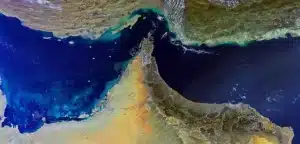
The rise “comes amid heightened geopolitical tensions in the Middle East, with oil prices under pressure from the closure of the Strait of Hormuz and volatility in international markets”, writes Lusa.
Based on current figures from the Directorate-General for Energy and Geology (DGEG) and the increases reported to Lusa by ANAREC, taking into account market opening prices, from Monday, the average price of 95 octane petrol is expected to stand at €1.883 per litre, whilst regular diesel could reach €1.937 per litre.
The final average will only be confirmed at the end of the day, and may still change depending on the evolution of international oil prices – and the final cost at the pump may vary by petrol station, brand, and location.
This week, regular diesel rose by around 19 cents per litre – with the government’s discount mechanism already applied – and petrol by seven cents.
The new increase comes after yesterday’s oil close in London, with a barrel of Brent for May delivery rising by more than 9% to $100.46 – the highest level since 2022, driven by Iran’s statements regarding the closure of the Strait of Hormuz. The price closed 9.22% higher than the previous day, when Brent stood at $91.98.
Iran’s ‘new’ Supreme Leader, Mojtaba Khamenei (possibly dead but whose name is being used nonetheless by the regime to issue statements) announced this week that the blockade of Hormuz, through which around 20% of maritime hydrocarbon trade passes, is likely to be extended.
In response, the 32 member countries of the International Energy Agency (IEA) decided to release 400 million barrels from their strategic reserves to offset the supply loss caused by the closure of the strait. This is the sixth time the IEA has coordinated the release of strategic reserves, with the quantity released more than double the record intervention during the start of the war in Ukraine.
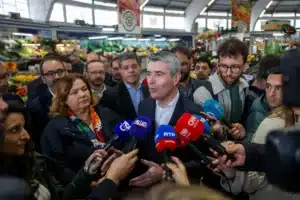
Domestically, the government announced that it will maintain the fuel discount scheme should price rises next week exceed 10 cents per litre. Minister of the presidency, António Leitão Amaro, said at the end of the meeting of the Council of Ministers yesterday that the established scheme remains in force and that “the state does not profit at the expense of consumers”.
Last Friday, the government moved forward with the implementation of a “temporary and extraordinary reduction” of 3.55 cents per litre in the Tax on Petroleum and Energy Products (ISP) – applicable to road diesel on the mainland – a measure announced by Prime Minister Luís Montenegro to offset any increases exceeding 10 cents.
Minister Leitão Amaro also emphasised that the continuation of the mechanism aims to provide predictability for consumers and avoid measures that only benefit operators, stressing that “there is a refund mechanism to say that the state does not profit at the expense of taxpayers because prices rise”.
“Therefore, we refund the excess tax via a discount on fuel duty, from the moment the increase has exceeded or exceeds 10 cents per litre,” he explained.
The current conflict followed the large-scale offensive launched against Iran launched by the United States and Israel on February 28.
Iran responded with attacks against neighbouring countries, and against oil tankers in the Strait of Hormuz. And the overall game plan appears to have spiralled out of control.
Fears in Portugal are that businesses will start to find operations ‘unsustainable’. The country is already headed for deficit as a result of the ‘calamities’ of late January/ early February’s carousel of storms that caused billions of euros of damages, thus rising prices (that will come as a result of fuel increases), will only exacerbate current difficulties.
Source: Lusa