Portugal’s government ‘knew’ that the country’s electrical system would not withstand the speed of the winds brought last week by Depression Kristin – but there was nothing that could be done. It was too close to the arrival of the storm for anything more effective than ‘basic survival advice’ to be given.
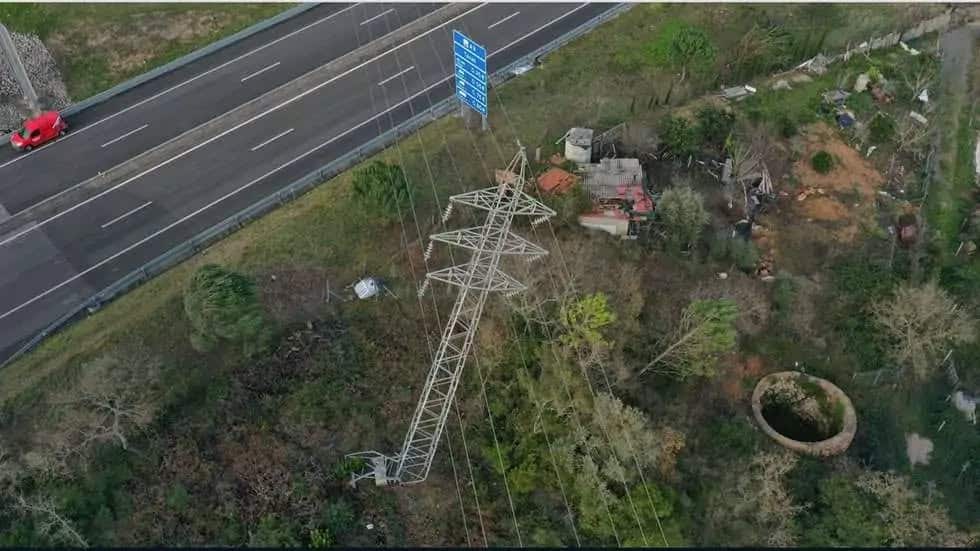
Minister for the Environment and Energy, Maria da Graça Carvalho, has told SIC Notícias that pylons (high, medium and low) are built to remain upright in winds of up to 150 km/ hour. The fact that Kristin was bringing winds with gusts of (at some times) nearly 200 km/ hour, indicated imminent ‘disaster’ (which is exactly what happened: more than 5,000 kms of electrical cabling was destroyed, along with 800 posts and pylons). “Our electrical system was completely devastated in the corridor of Leiria to Figueira (da Foz) and almost all the way to Spain”, said the minister
With almost 90,000 homes still without power (and that means without water, as well), the consequences of a violent storm are now all too clear. The government therefore wants to invest in burying cables underground – an undertaking that will be “15 times more expensive” and “take several years”.
For cables to be buried, instead of carried overland by a network of posts and pylons, “we will need European finance”, or the change will have to be “financed by taxpayers/ consumers”, Ms Carvalho added.
The government has already approached Brussels over altering spending under the PRR (Plan for Recovery and Resilience, brought in to assuage damages wrought by the Covid-19 pandemic), and hopes for a decision “soon”, she said.
In the meantime, focus is at least on getting homes still without power ‘back up and running’.
The minister told SIC that 95%, possibly 98%, of homes should have the lights back on by Saturday (tomorrow). The remaining ‘victims’ of Storm Kristin’s ‘explosive cyclogenesis’ may have to wait a little longer. Repair company E-Redes has said it is doing everything it can, but cannot guarantee 100% ‘success’ before the end of this month.
Source material: SIC Notícias/ Notíciassominuto