Current ‘yellow warning’ is lowest level of meteorological risk table
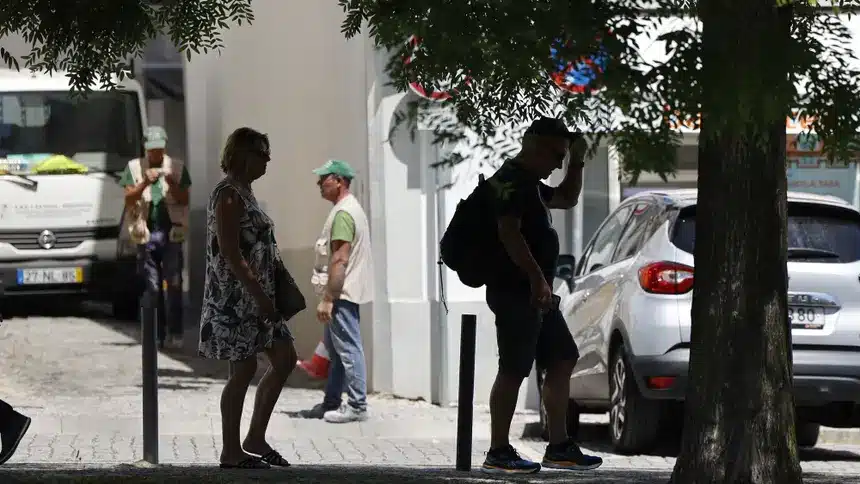
Portugal’s sweltering weather will be continuing for some days yet, with IPMA (sea and atmosphere institute) extending its ‘yellow warning’ for 13 mainland districts to 6pm on Tuesday.
Saturday’s advice extended the warning only to 00.00 hours Tuesday, but this has since been increased further for Beja, Braga, Bragança, Castelo Branco, Évora, Guarda, Portalegre, Porto, Santarém, Setúbal, Viana do Castelo, Vila Real and Viseu.
The Algarve, which is still covered by heat warnings, should exit the ‘worst’ of the high temperatures by 9pm on Monday.
Other districts (Aveiro, Coimbra, Leiria and Lisbon) will also be experiencing high temperatures through Tuesday.
The point of these warnings is that they involve the prohibition of certain activities. Yellow involves rural barbecuing being put off limits; field burnings, and the use of chainsaws and other equipment that raises the likelihood of random sparks.
One plus about conditions at the moment is that there is an absence of wind – meaning any fires that break out should be less complicated to tackle.
For the time being, IPMA has simply explained the reasons for this ‘hotter than usual patch’: the intensification of an anticyclone located over the Azores and the establishment of a ridge associated with this anticyclone that will extend to the Bay of Biscay, promoting the transport of a mass of air of continental origin (hot and dry) over the Iberian Peninsula”.
Temperatures throughout the mainland are generally about 30ºC. Some areas (Tejo and Douro valleys and the Alentejo) could see them climbing up into the 40ºs – which is ‘seriously hot’ for Portugal, but also typical of the summer months in these regions. Places like Évora and Setúbal frequently swelter through days of temperatures nudging 40ºC.
Some locations along the west coast “could see temperatures below 30º due to the sea breeze, which will sometimes be moderate, especially in the afternoons”, says IPMA.
And after Tuesday, temperatures should fall a little (not much), but become less oppressive.
The factor accompanying these heatwaves is that minimum temperatures do not fall below 20ºC in some regions at night. Again, the ‘worst places’ for these hot nights are ‘the south, Tejo Valley and Beira Baixa’, say meteorologists.
All the usual advice follows: drink lots of water, stay out of the sun between 11-5pm, apply and reapply sunblock, wear loose clothing, and try not to do anything in a hurry.
Source material: LUSA