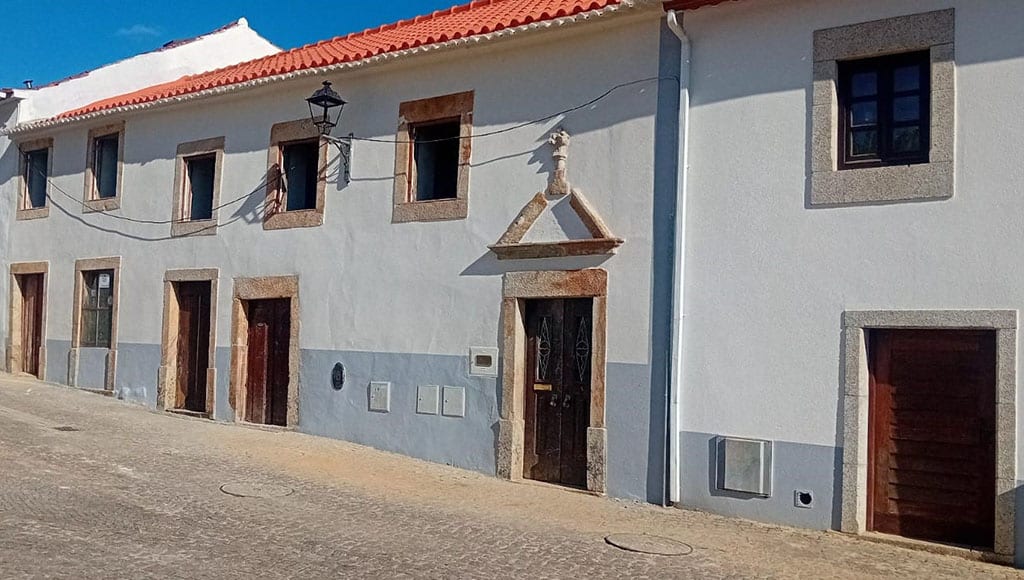
The ‘rural chic’ market in Portuguese real estate isn’t marble floors and sleek minimalism; it’s the sensitive and confident treatment of buildings that wear their history with renewed pride. Increasingly, that history is being preserved not just for financial and aesthetic reasons, but for environmental ones too.
Portugal has seen a surge of interest in rehabilitating older properties fuelled by both foreign investment and domestic policy incentives. Successive governments have maintained support for the renovation of historic buildings through ‘historic zone’ tax breaks, helping to breathe new life into many crumbling city and town centres. But beyond financial incentives, a deeper shift is occurring: the recognition that sustainable building isn’t just about new technology, but also about respecting and reusing what’s already there.
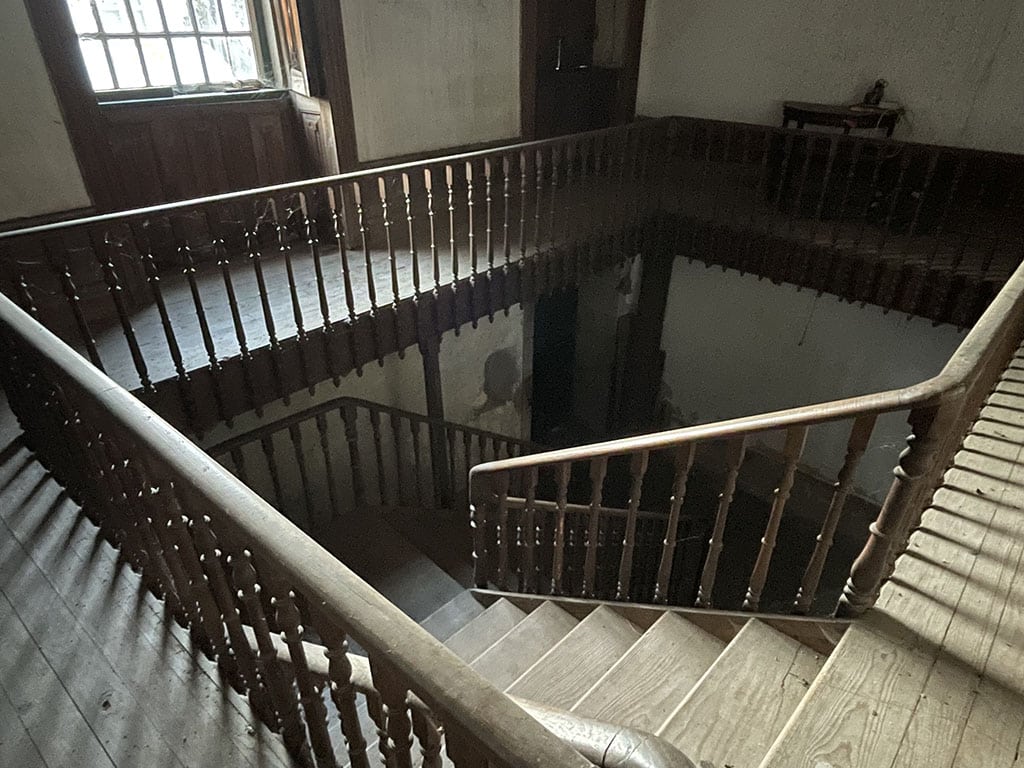
Developers and their architects increasingly are sourcing reclaimed materials including timber beams, azulejos (tiles), cast iron radiators, window shutters, vintage doors, and even entire staircases to restore properties in a way that feels both authentic and environmentally responsible. This approach preserves the architectural DNA of Portugal’s past while reducing the carbon footprint of renovation.
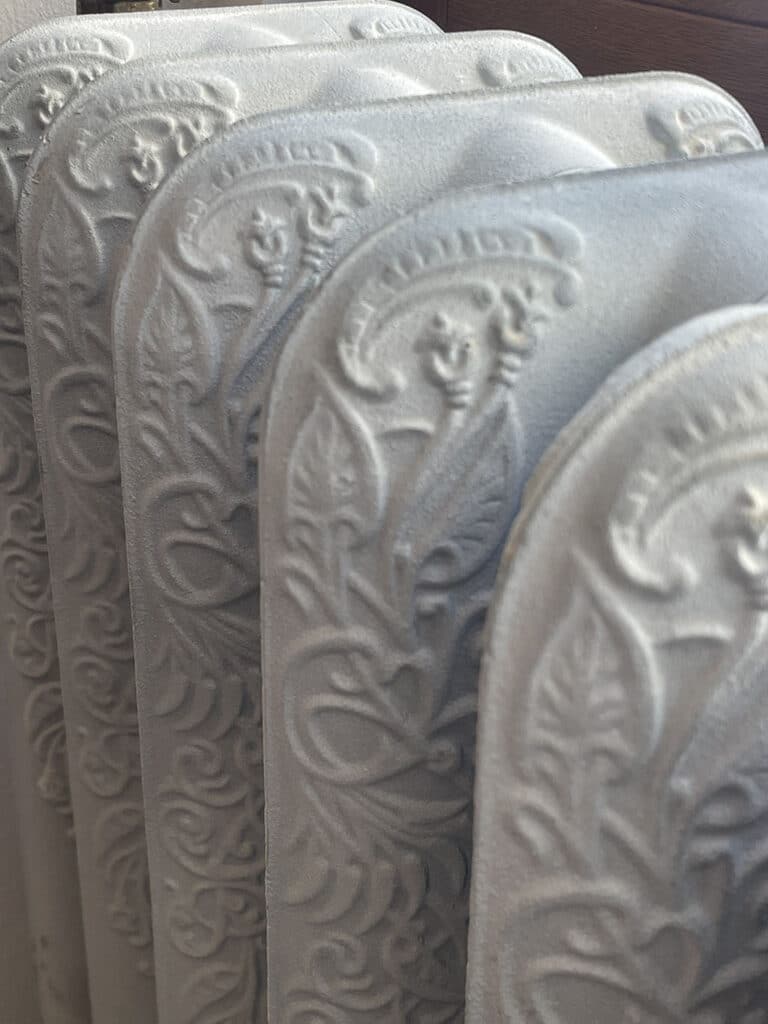
Modern building materials are resource intensive. The production and transport of steel, cement, and new timber come with significant CO₂ emissions. By contrast, reusing materials already on site or sourced locally from demolition yards can cut embodied carbon by up to 60-70%. Every reclaimed door, tile, hinge, lintel or cast-iron radiator saved from landfill represents a tangible reduction in waste and emissions.
Many of Portugal’s domestic housing materials are not just sustainable, they are cultural artifacts. A reclaimed misericórdia door, a wrought-iron balcony railing, or a piece of hand-painted tilework carries with it a weathered continuity that new materials cannot hope to replicate.
The visual and emotional appeal of reusing old materials is undeniable. Developers know that buyers are drawn to homes that tell a story. Original floorboards with decades of gentle wear, restored terracotta tiles, repaired stone door and window surrounds, reconditioned radiators and cast-iron wood burners evoke a strong, tactile connection to the past.
Rural Properties’ Casa Adelina, a mid-1800s townhouse in the historic centre of Pedrógão Pequeno (CM-Sertã), has used cast iron radiators sourced from a demolition yard near Toledo, Spain. The cost and CO₂ expended in collecting these weighty items was way lower than buying new equivalents. The radiators were sand blasted in Portugal, repainted, and a dysfunctional valve replaced. The result is both functional and beautiful in a heat pump driven system that is in keeping with the house’s overall feel.
These kinds of choices and the effort involved not only help to create distinctive interiors but also appeal to buyers seeking charm with functionality. In an increasingly homogenised market, originality sells at a premium.
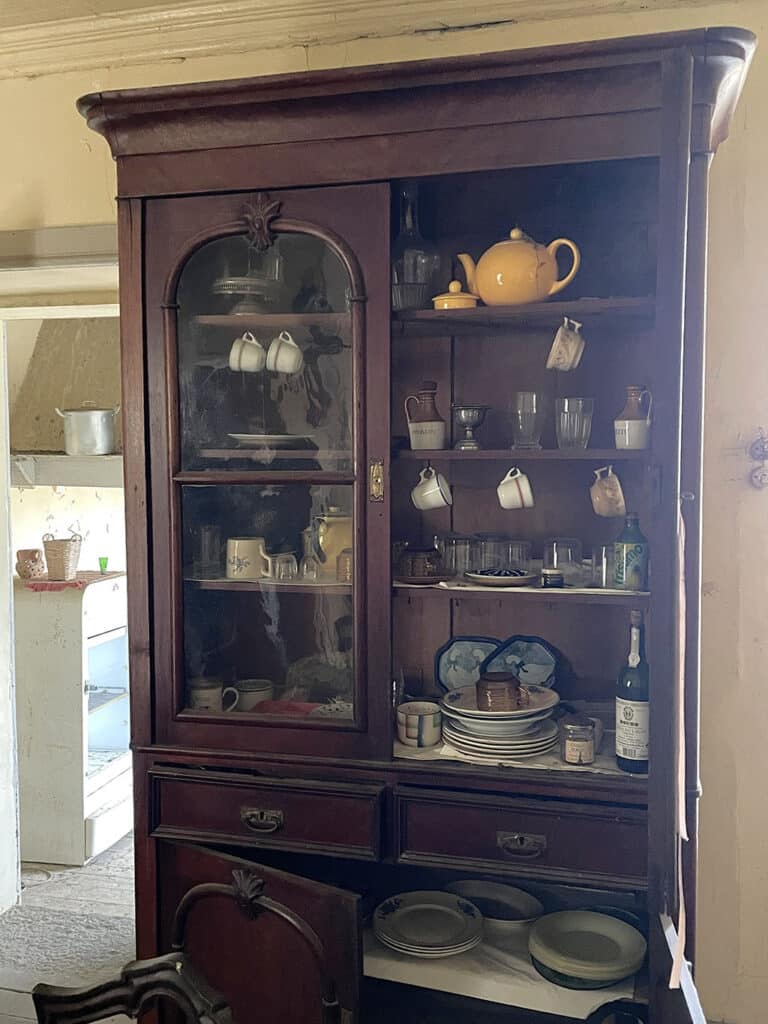
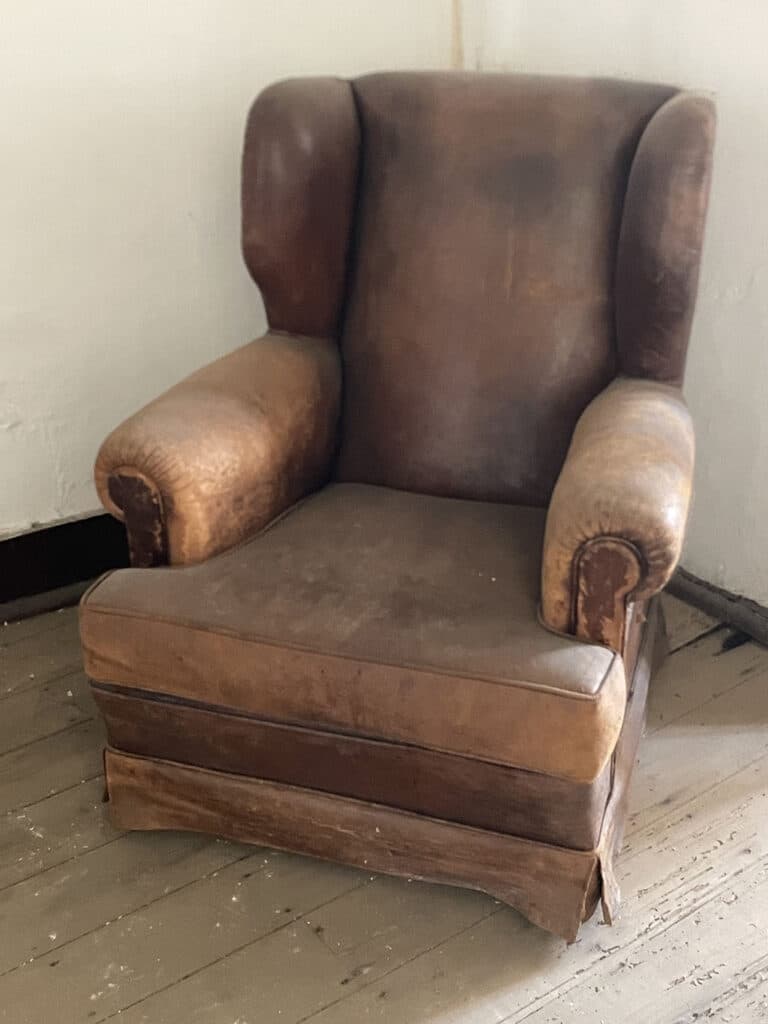
Reusing old furniture is another practice gaining traction in Portugal’s property market. Rather than importing new furnishings or relying on high-emission manufacturing processes, many developers now work with restored and antique pieces.
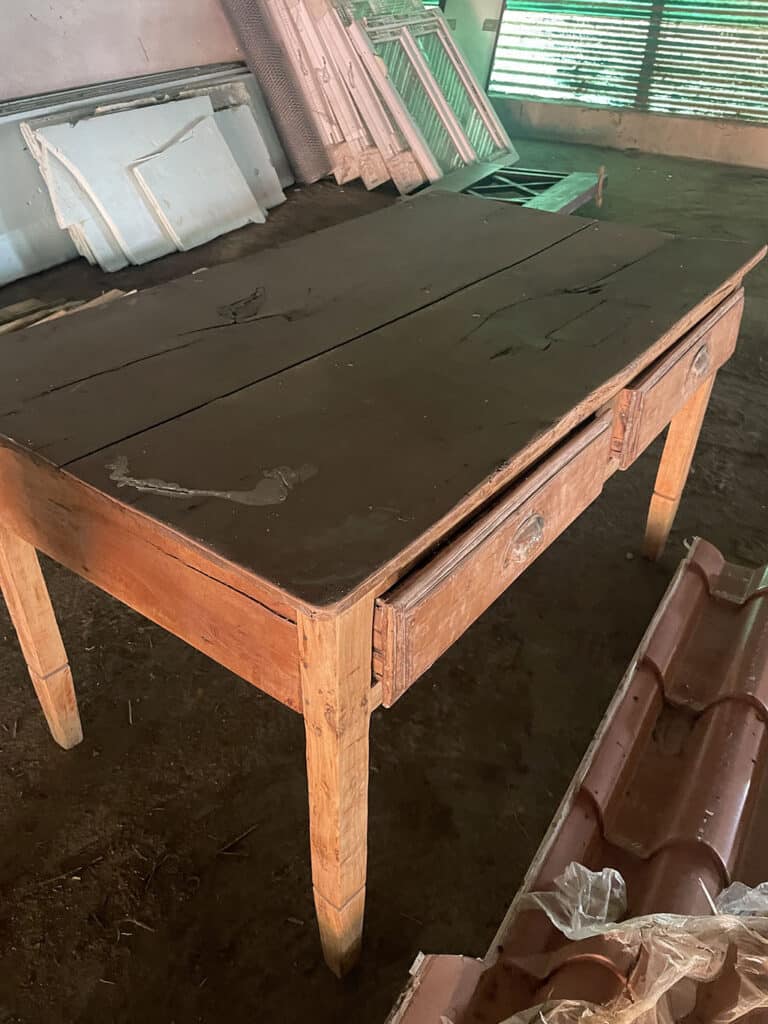
A reclaimed oak dining table, for instance, saves around 100 kilograms of CO₂ emissions compared to producing a new one from virgin timber. When extrapolated across multiple developments, these small choices add up to significant carbon savings. Moreover, using restored furniture aligns perfectly with Portugal’s aesthetic traditions of rustic simplicity, craftsmanship, and the patina of time.
Forward-thinking developers are taking this further, creating ‘closed loop’ renovation models: sourcing materials from one project’s demolition and repurposing them in another. Old pine doors become headboards; broken tiles are transformed into mosaics.
At Casa Adelina, a pine handrail from a nearby 1820s building, also under development by Rural Properties, was hand stripped, treated with linseed oil and installed with modern fixtures to create a feature, however seemingly insignificant, that adds to the overall vibe of ‘old plus new equals class’.
Portugal’s architectural conservation efforts are dovetailing with the European Commission’s 2020 Circular Economy Action Plan, which encourages material reuse and design thinking. By reducing waste and keeping materials in use for as long as possible, developers are helping Portugal align with EU-wide sustainability goals and reducing landfill.
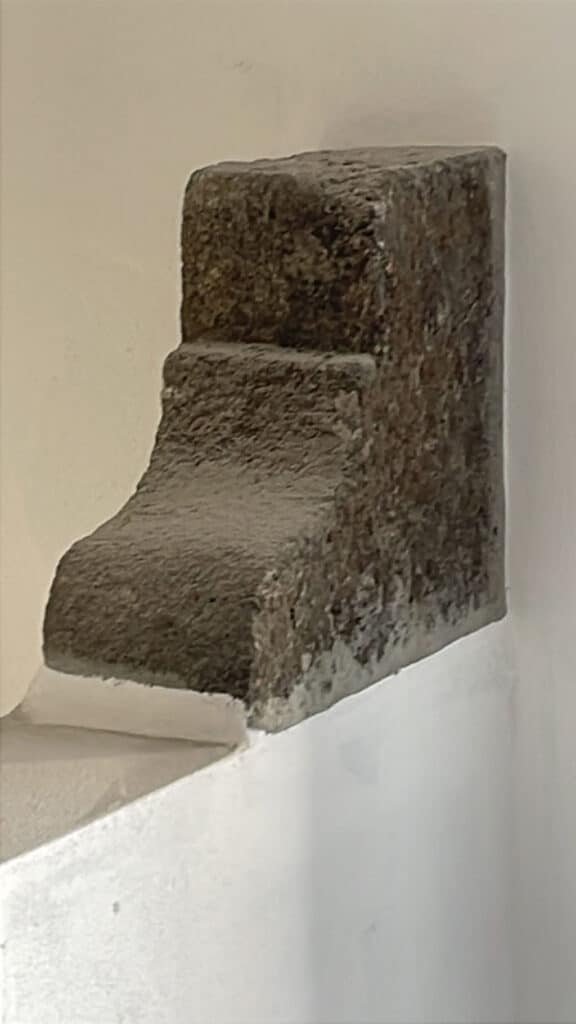
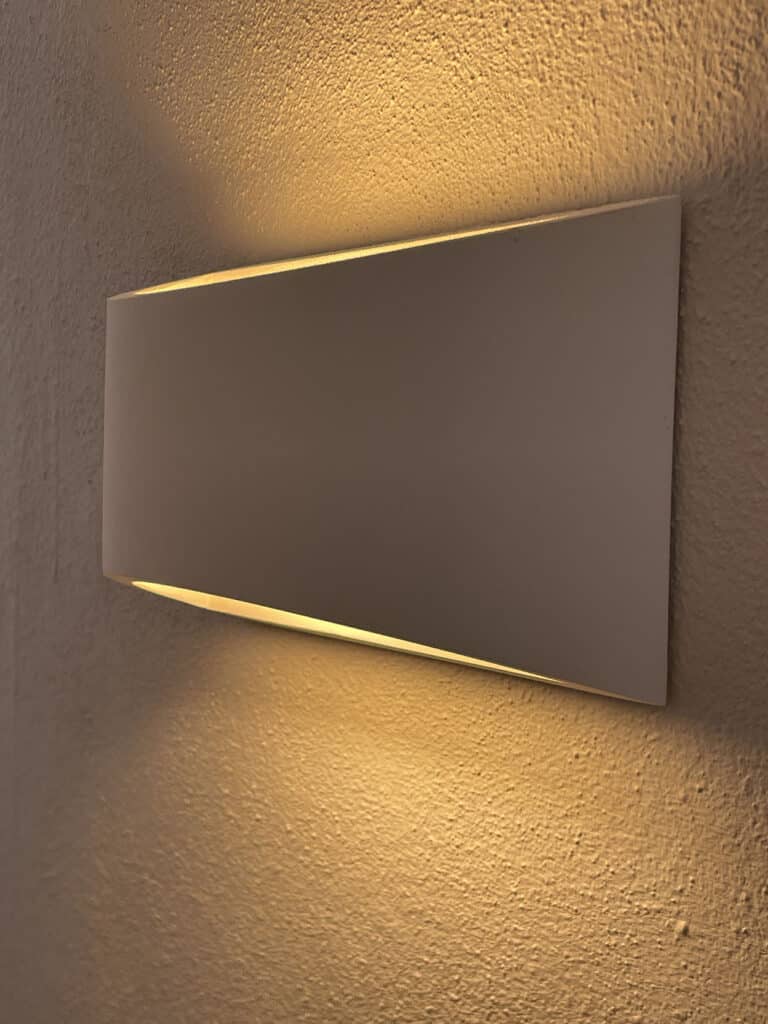
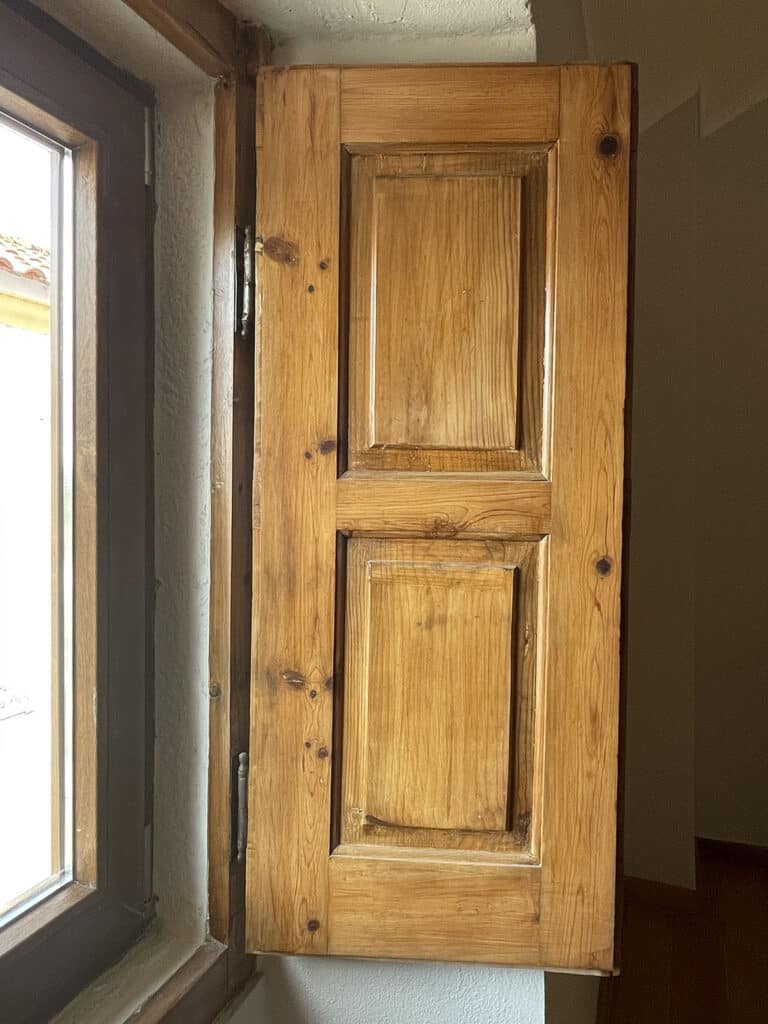
Original shutters can be stripped and rehung; wooden lintels retained instead of inserting concrete beams. Even new wall lights made from natural plaster (gesso), despite CO₂ expended in manufacturing and transport, can be described as ‘reasonably sustainable’ especially when compared to low-quality plastic or heavily processed synthetics as found in DIY stores.
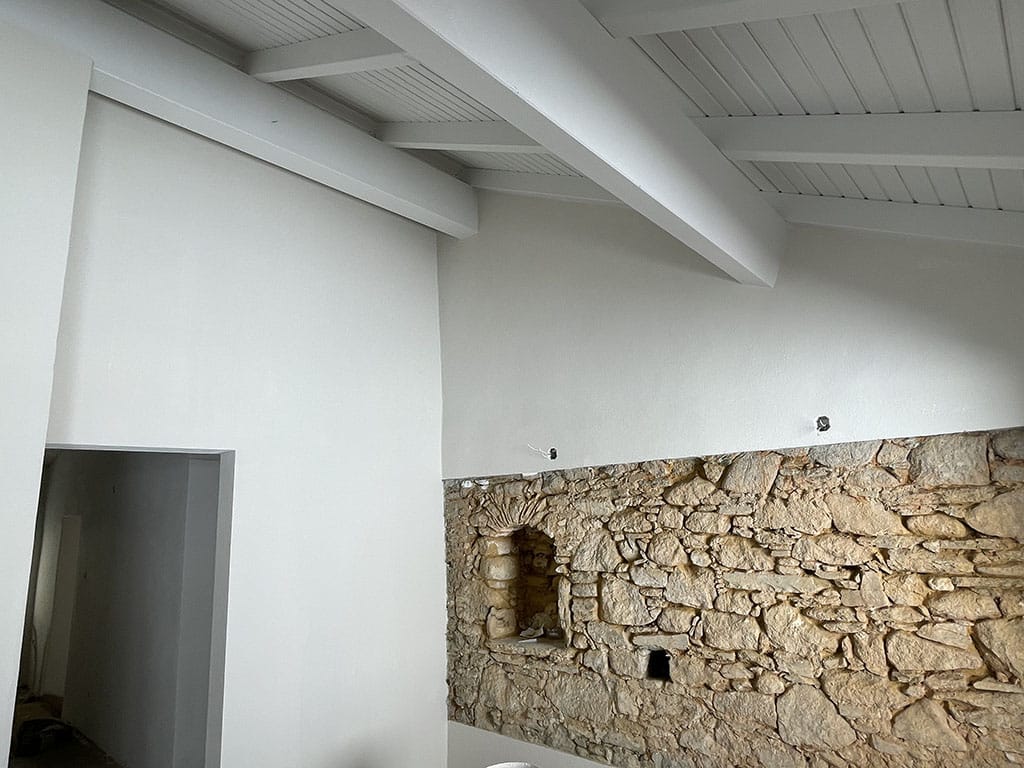
With thoughtful design, it’s entirely possible to blend the old with the new. Underfloor heating can be installed beneath reclaimed terracotta tiles; smart thermostats can control old radiators; cast-iron wood burners can be re-engineered to provide domestic hot water; PV panels can power low-level lighting permanently to shine on dark corners and features uncovered in old stone walls.
The most successful developers of older properties are those who understand that sustainability and heritage are not opposites but allies. Reusing materials isn’t just about saving money or ticking an environmental box, it’s about storytelling, authenticity and respect.
Portugal’s architectural heritage, from the grand palaces of Sintra to the lowly stone village houses of the interior, is one of her most valuable resources. By preserving and repurposing, beam by beam, tile by tile, radiator by radiator, developers at last are creating interesting and aesthetic homes where the past is recognised and appreciated.