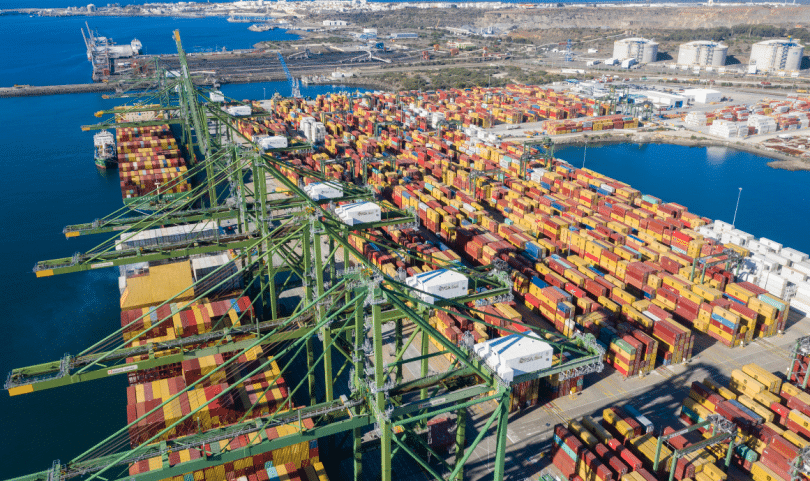
The construction of a desalination plant in Sines – on one of the country’s busiest shipping routes – will start in 2027 and is expected to be completed by 2031, minister for the environment, Maria da Graça Carvalho, has said today, citing timings given by Águas de Portugal, through Águas de Santo André (AdSA).
The minister announced the future plant in parliament earlier this week, saying the project has been costed out at “around €120 million”.
It “will be financed by a long-term industrial tariff”, she said, which will be calculated by AdSA, part of the Águas de Portugal group, responsible for managing the Santo André System.
AdSA ensures the supply of water to the population of the districts of Sines and Santiago do Cacém, the collection and treatment of wastewater, and meets the demands of industries located in the Sines Industrial and Logistics Zone (ZILS) for the supply of drinking water, industrial water, wastewater, and industrial waste.
The minister justified the investment in Sines with “the large number of industrial projects, hydrogen and green steel production“, among others, in a region “with some water stress”.
These projects “require an infrastructure connecting to the electricity grid,” she explained, adding that, in addition to creating “an area of high demand to resolve the issue of access to the electricity grid,” the government is “drafting legislation” to ensure its reinforcement.
“We are drafting legislation to create a second area of high demand in Sines, in addition to other areas of high demand in the rest of the country” that will “resolve the issue of access to the electricity grid,” she said.
She conceded that all these investments “require a large amount of fresh water, recycled water, salt water for cooling and desalinated water.“
“Taking into account the investments that are Projects of National Interest and that already have authorisation from APA ( the Portuguese Environment Agency), which in total need 10 cubic hectometres* (of water), the solution proposed to us by the technicians” points “to a new water management plan” for the Sines area, as a whole, said the minister.
This new plan assigns the management of fresh water, salt water for cooling and desalinated water to AdSA, which will also be responsible for the construction of the plant, which will be “modelled”, i.e. it will start with a “smaller” size so that it “can grow” as the need for “more investment” grows.
In addition, negotiations are underway between Aicep Global Parques, which manages ZILS, APA and EDP to take advantage of part of the infrastructure used by the former coal-fired power plant to capture seawater for the new system.
Asked about the desalination technology used, the minister said it will be “chosen by technicians from AdSA and Águas de Portugal” and pointed out that the project is also subject to “a very rigorous environmental licensing process that takes time”.
The future plant “may in some way alleviate the strain on water supplies” on the Alentejo coast, as will investments “in the refurbishment and repair of the Santa Clara dam” in Odemira and the “possible connection to the Alqueva reservoir”.
“There are a number of elements that need to be studied and compared in terms of efficiency and cost,” said Maria de Graça Carvalho, arguing that the government also knows that it has “to resolve and look at the issue of Odemira” – an area for which “the most efficient plan to apply has not yet been chosen”.
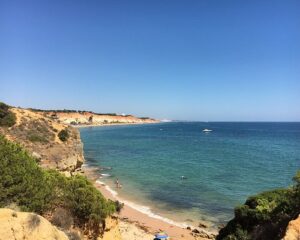
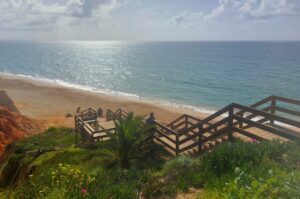
Certainly on paper, the location of Sines lends itself much more to a desalination plant than the area close to Albufeira’s Praia da Falésia (which is where the government still means to site another desalination plant). Sines is an industrial hub, its waters are not prime bathing areas, and the kind of depth required for pipes that channel brine and waste products back into the sea is more accentuated than on the Algarve coast.
source material: LUSA