For the first time this year at the Autumn Mediterranean Garden Fair, we will have a specialist grower with a range of the very popular Salvia garden plants. You can apply for a pre-order list for collection at the fair from mgapfairs@gmail.com
The first recorded use of ‘Salvia’ comes from Pliny, the Roman scientist and historian. It is derived from salvare (to heal) and refers to the several species with medicinal properties. They are also mentioned in old herbals of medieval and Renaissance Europe with recipes, charms and spells.
In nature, salvias are a major source of nectar and pollen for our pollinators. Owing to their aromatic leaves, most salvias are not eaten by rabbits and other pests.
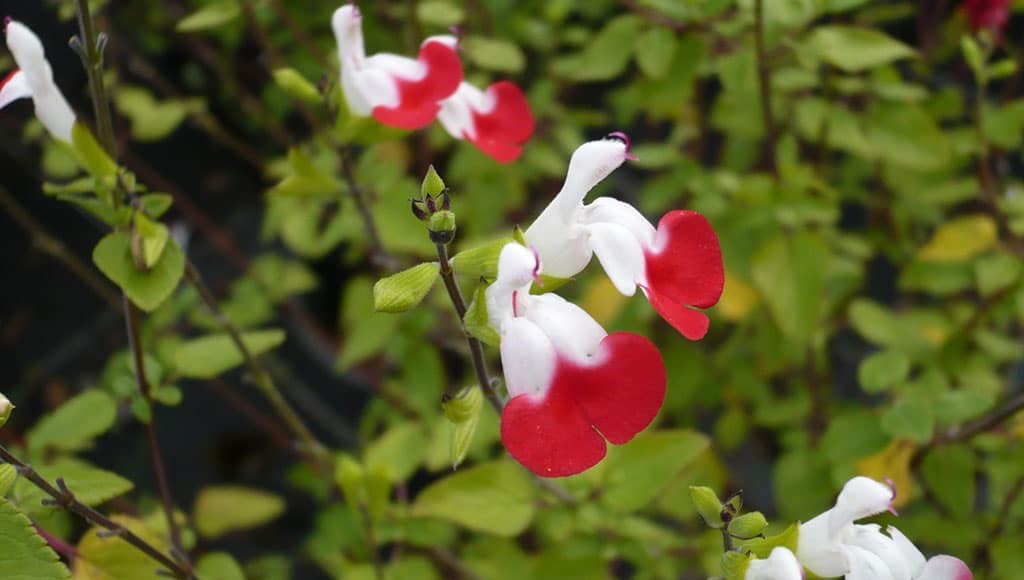
Salvias are part of the Mint plant family (Lamiaceae) and form the largest group with 900 distinct types. In common with all the members of this plant family, they have square stems which sometimes become round with age.
There are many mediterranean plants in the Mint family and they provide everything from aromatic herbs (culinary sage) and ornamental plants to shrubs and sub-shrubs such as lavender and rosemary. The teak trees of Asia (Tectona grandis) are also in the Mint family.
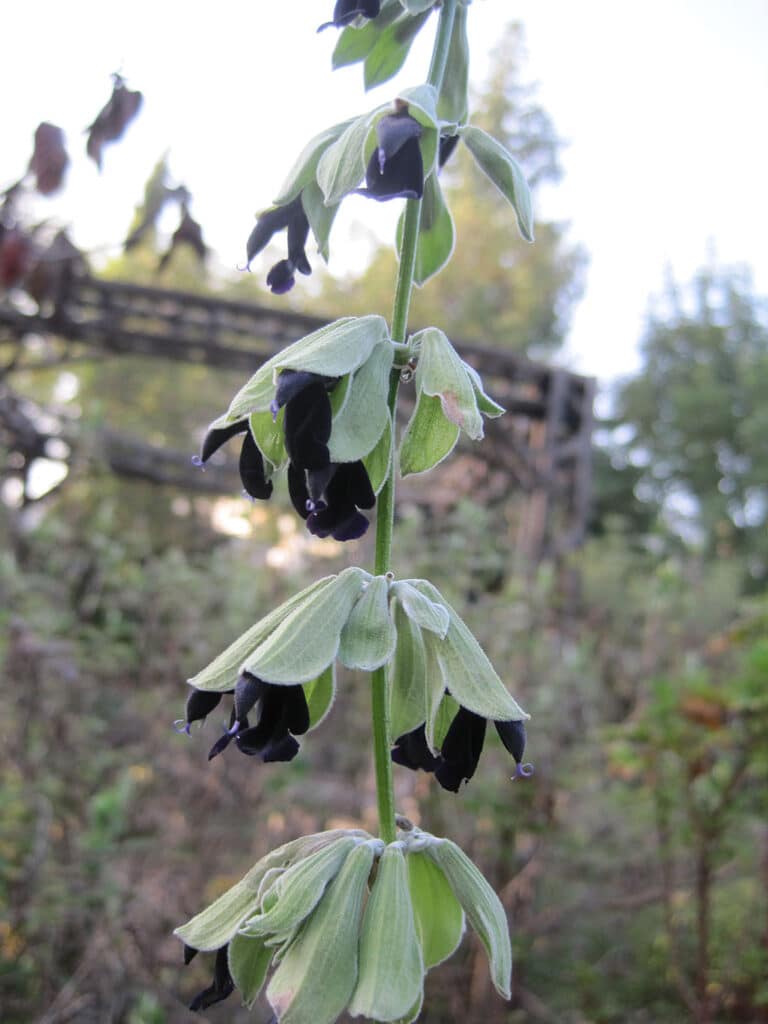
Salvias can be found worldwide, except in Australia, mostly in Central America and Mexico, Central Asia and Turkey and the Mediterranean basin. Salvia discolor from Peru has almost black flowers with contrasting silver-grey foliage.
There are seven named native species for Portugal.
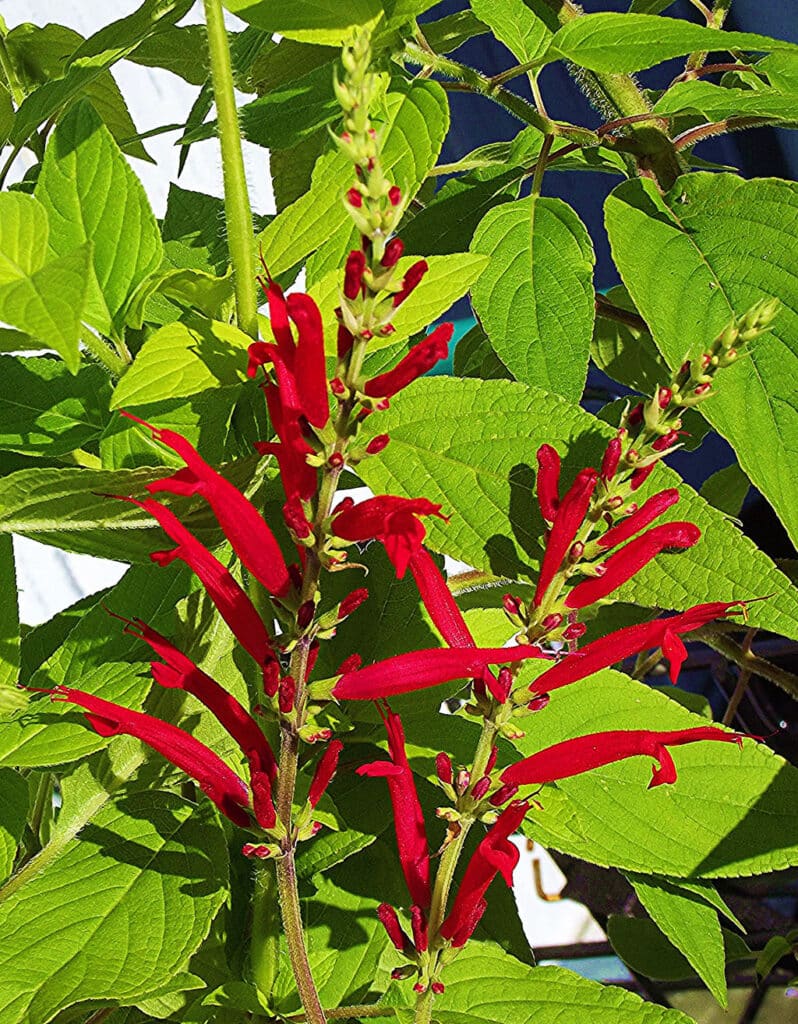
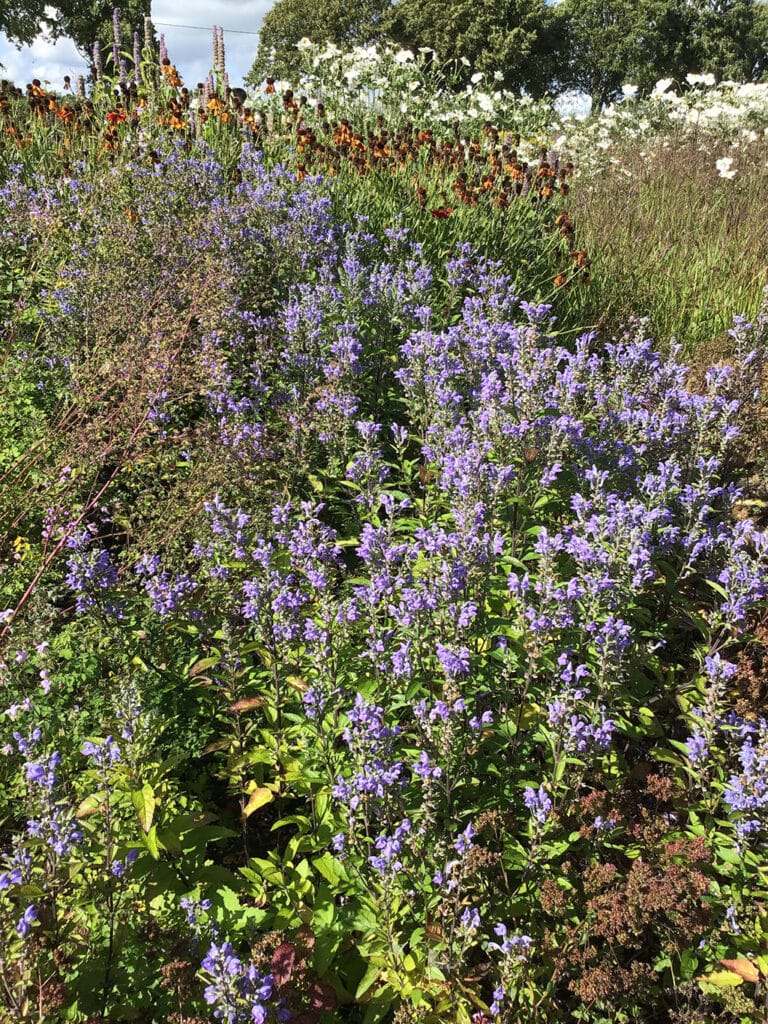
Those suited to a Mediterranean climate need a well-drained stony or sandy soil, which stays dry in both summer and winter. Salvias prefer full sun, but some species, like Salvia microphylla, will flower in half-shade. They mix well with other plants such as ornamental grasses, cistus and lavenders. Taller species can have their stems shortened when they are about 30cm tall to reduce their height at flowering time.
Propagation methods:
- by division in spring or early autumn,
- by cuttings taken from the apex of the plant in February. Keep the young plants moist and warm – around 23°C.
- by sowing seeds – sow seeds very soon after they have been gathered, otherwise they become dormant and difficult to use.
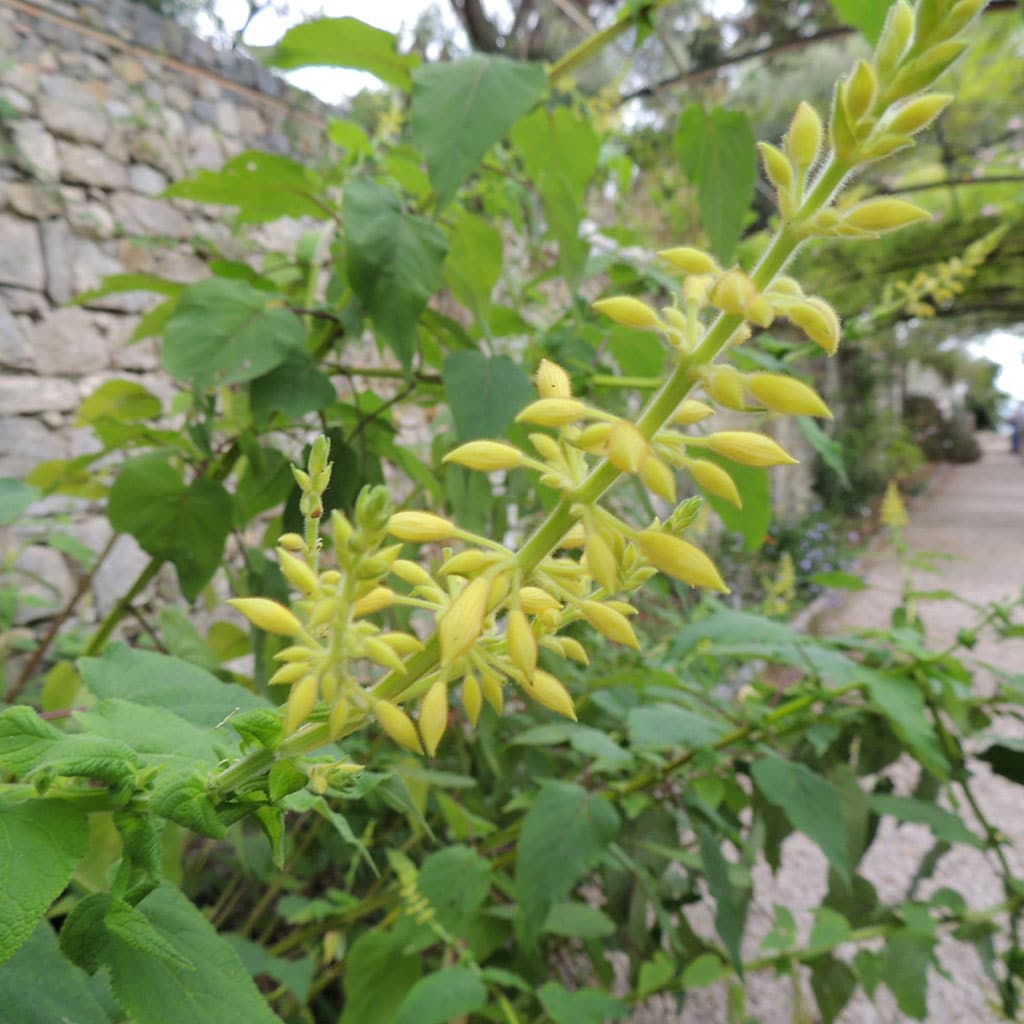
There are both hardy and tender varieties and many named cultivars in a range of colours. A lovely salvia with yellow flowers is hard to find but well worth the hunt – look out for Salvia madrensis, a high-altitude plant from the Sierra Madre in Mexico.
At the recent trials of the Royal Horticultural Society, 11 of the best performing hardy salvias received Awards of Merit and awards were reconfirmed for a further 10 salvias.
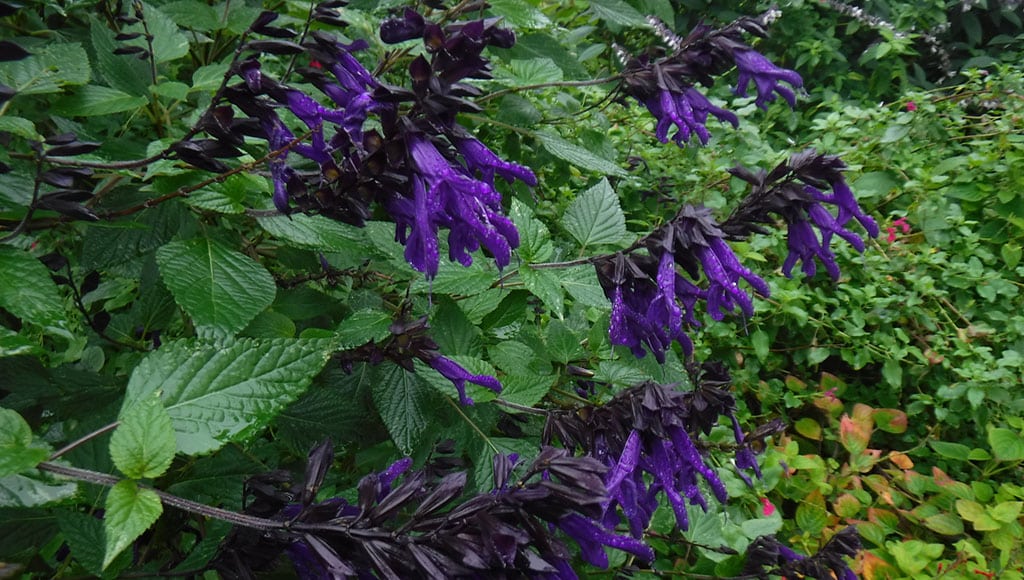
A recent expedition to Mexico discovered a range of natural hybrids between S. greggii and S. microphylla. These are named after the local village of Jame – S. x jamensis with several lovely hybrids now available.
Fashion has moved on from the gaudy red bedding plant, Salvia splendens, native to Brazil. Since its arrival in Europe in 1822, it has been widely introduced and cultivated as an ornamental plant worldwide. The more natural garden style, creating informal plant groups, has increased demand for a range of colours and heights.
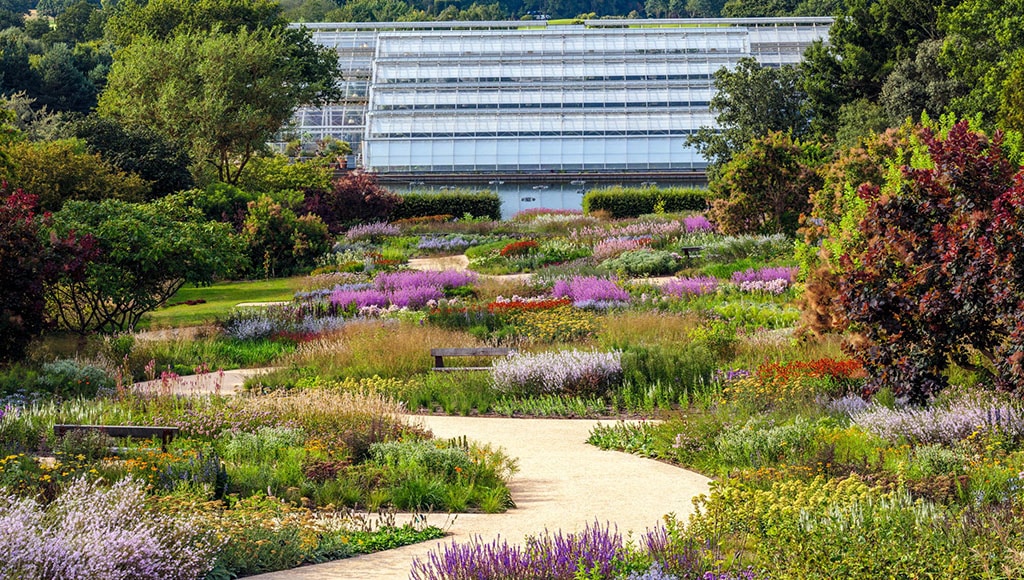
Piet Oudolf, renowned for his naturalistic garden designs, often incorporates various Salvia species and cultivars, particularly Salvia nemorosa (Meadow Sage) and its hybrids, into his planting schemes. He favours varieties like Salvia nemorosa ‘Amethyst’, known for its showy lavender-pink flowers.
Salvias are valued for their late spring to late summer blooms, ability to attract pollinators, and suitability for sunny borders with well-drained soil. Salvias are a “must have” for your mediterranean garden!
Royal Horticultural Society – Salvia, hardy trial results 2022–2024
Mediterranean Gardening France – Salvias suitable for Mediterranean gardens
Rosie Peddle mgapsec@gmail.com www.mgaportugal.org