Público reports on how a Portuguese businessman “diverted tens of millions of euros from ‘golden visa’ investors by selling apartments that did not exist and promising “impossible returns” for their money.
Among the list of people allegedly defrauded is a company owned by Howard W. Lutnik, the current United States secretary of state for commerce.
Picking up on Público’s story, online ZAP Notícias/AEIOU, explains that the well-connected businessman – using a company registered in his mother’s name – essentially operated a pyramid-scheme which targeted foreign investors keen on obtaining golden visas as a spin-off from their ‘investments’.
These were invariably property purchases billed as “offering guaranteed returns”.
“The business model was based on the sale of properties yet to be built, accompanied by guarantees of returns of between 7% and 10% and complete processes for obtaining residence permits.
“Victims include citizens of various nationalities, many of whom later discovered that the properties they had purchased did not exist in the land registry or that construction had never begun”.
The IR group imitated the name of a foreign company founded in 1989, “misleading investors”, explains ZAP’s précis of the Público article.
“Professional brochures, an office on Avenida da Liberdade” (in Lisbon) “and references to operations in Hong Kong and Beijing reinforced the appearance of credibility”.
“A textbook example” of the scheme is given as the ‘case of Cláudio Fetter, a Brazilian investor who paid in full for a plot in Lagos that was never built, without receiving a deed, income or the return of documents’.
“Público also reports that Newmark Holdings, LLC, a company that is part of one of the largest real estate groups in the United States and linked to Howard W. Lutnick, current Secretary of Commerce in the Trump Administration, is among the foreign creditors who have been harmed.
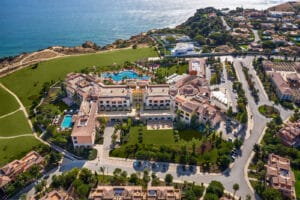
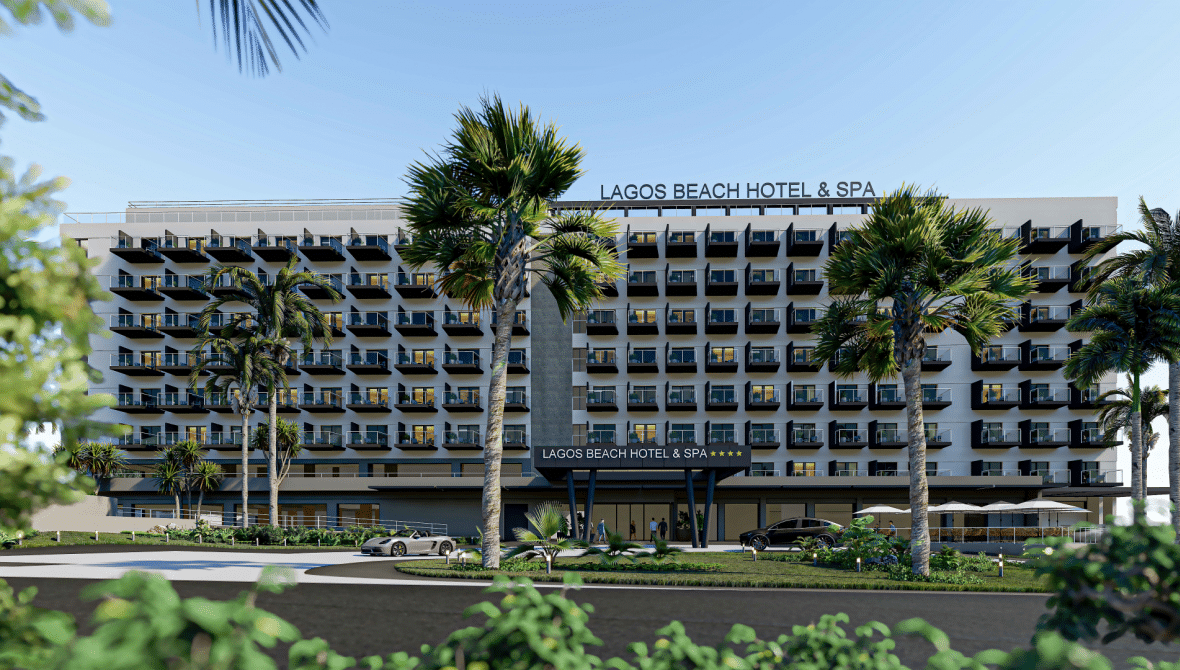
“The US holding company is claiming €457,000 in court due to breach of contract associated with the Lagos Beach Hotel & SPA development, which never got off the ground”, says ZAP (see note below).
How did this scheme unravel? According to Público, suspicions rose in 2021, with clients beginning to demand their ‘promised returns’.
“Without liquidity, the company entered into a series of legal manoeuvres, including a Special Revitalisation Process (PER) which, according to creditors and the Tax Authority, served only to buy time while assets were dissipated.
“Among these manoeuvres was the sale of 85 apartments at Lagos Beach for €13 million – a sum that was never paid, to a company linked to a close associate of the man allegedly behind the pyramid scheme.
When the IR Group, including its company Importantaltura, finally declared insolvency in June 2025, the scale of the money that had been paid into it suddenly became horribly clear: €37 million ‘in credits’, says ZAP.
“Lawyers, creditors and the Tax Authority itself pointed to evidence of asset dissipation, simulated transactions and harmful management”.
The NomadGate community (mentioned only yesterday in a story by Expresso on Americans with golden visas lobbying the Constitutional Court over the Nationality Law) carries a conversation thread dating back to 2021 on this situation, in which it appears members “all willingly financed the IR group (…) It’s truly sad”.
This suggests the investors’ sense of outrage over the Nationality Law may be compounded by a sense of fury in having been led down the garden path… and ostensibly by a Portuguese businessman.
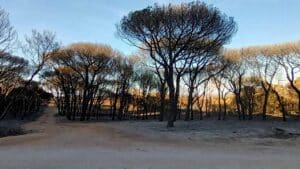
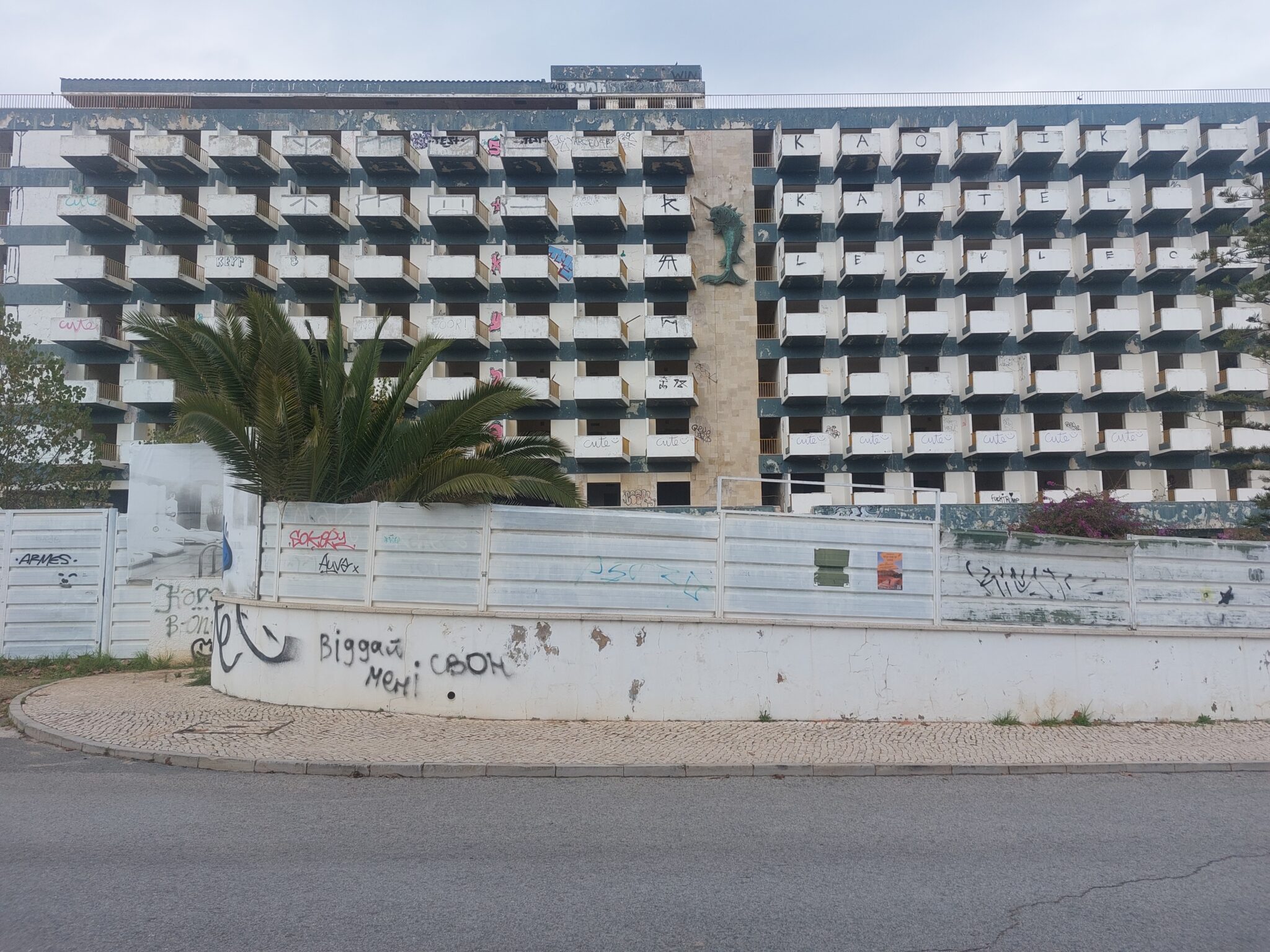
Note: the Lagos Beach Hotel & SPA development was to have ‘transformed’ the Praia Dona Ana ‘eyesore-for-decades’, formerly Hotel Golfinho. Below is how it still looks today:
Source material: ZAP/ Público/ NomadGate