However, mackerels aren’t just strong swimmers, they are synchronised swimmers. When migrating to their spawning grounds, mackerels form large shoals and, in order to coordinate the swimming speed, they use the wavy stripe on the upper part of their bodies as visual cues to orchestrate the movement.
As adults, they hunt small crustaceans such as copepods, shrimp and squid. In return, they are hunted by larger animals such as tuna, sea lions, sharks, pelicans and whales.
Returning to the culinary story of mackerel, it is important to start by noting that the high oil content makes it a quickly perishable fish. It is no surprise that mackerel was the only fish allowed for trading during the Sunday markets in 17th-century England.
Nutritionally, it is a powerhouse. Mackerel is an excellent source of omega 3, high in protein (18-20gr) and fat (13-18gr), and containing abundantly rich vitamins (D, B12, B3, B2) and minerals (magnesium, potassium, selenium and others). Compared to other predatory fish, it contains less mercury, making it a safer choice for the frequent consumption.
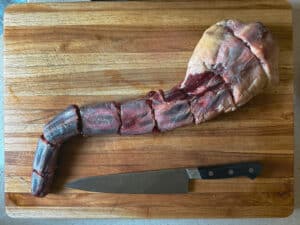
To enjoy mackerel, it is important to clean it properly. The fish is prepared following the filleting technique for any round fish. Some fillets can be left as they are. Others might contain spiky scales, called scutes, towards the end of the body which need to be removed so that they do not interfere with eating.
To peel the skin, place the fillet skin side up. Nudge the end of the skin with tweezers starting from the head side. As soon as you recover a few centimetres of flesh, place a kitchen towel into your grabbing palm for a stronger grip, and hold the emerging flesh with the other hand to help keep it intact. Pull the skin off in one quick motion. Note that this skinning procedure is not applicable to other round fish.
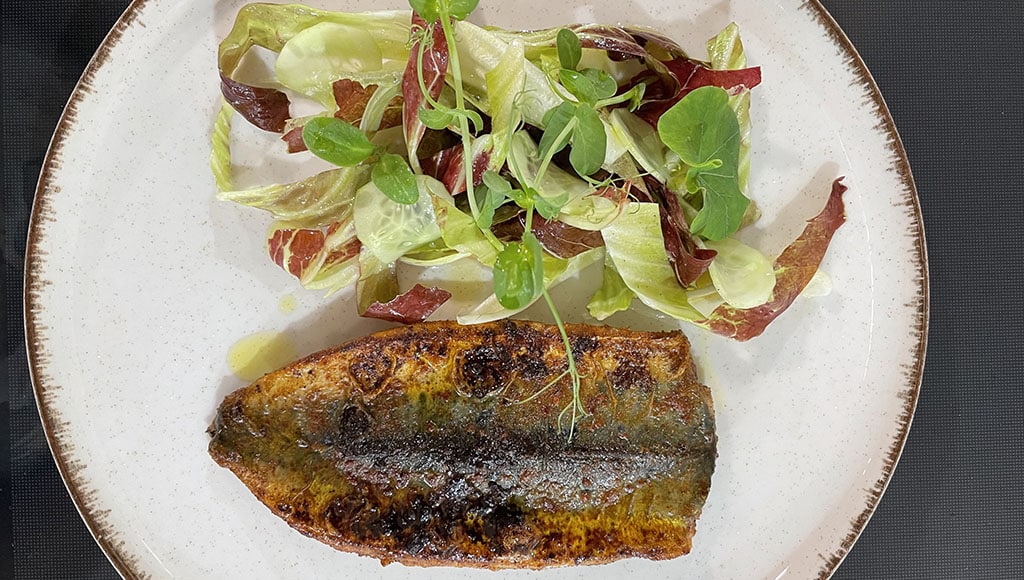
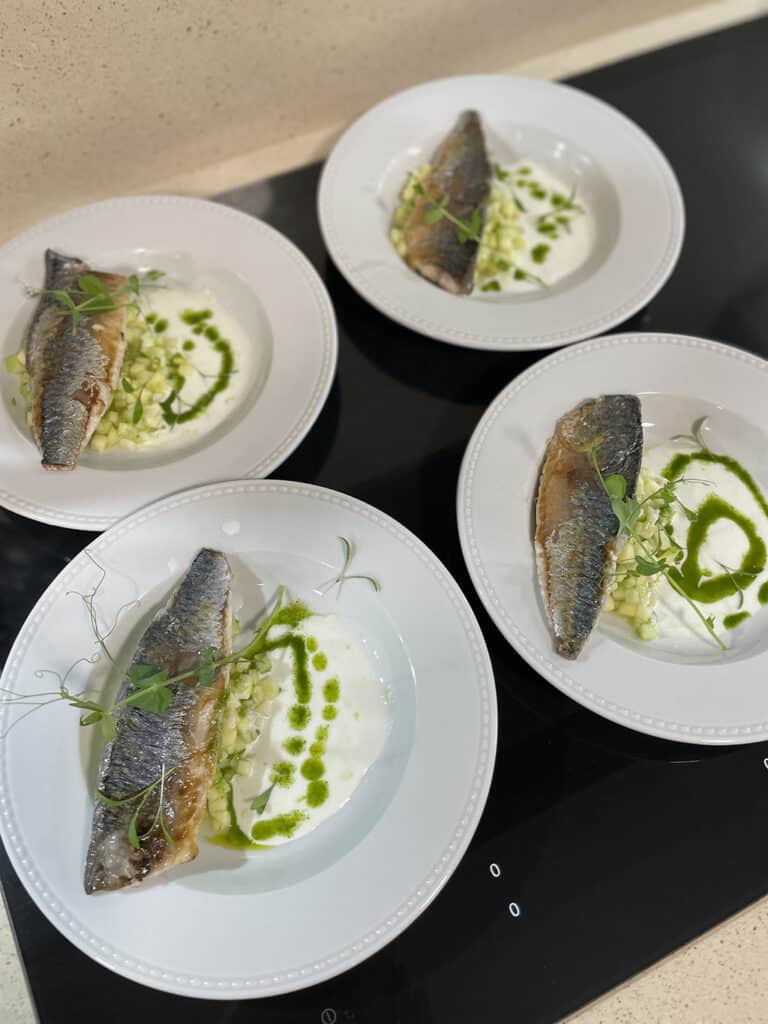
Mackerel has numerous flavour affinities. My favourites are to pan fry it and serve it with an apple salsa, or to pan fry it in harissa spice and complement it with a green salad. In both instances, being generous with salt is a must.
To prepare the salsa, peel, clean and cut an acidic apple into small cubes (brunoise cut). Combine it with a similar size cut cucumber, toss everything in a bit of olive oil, lemon juice, chilli flakes and herbs (chives, coriander, parsley, or dill).
For the harissa spice option, simply smear a generous spoon of the paste over the fillet. If using a dried harissa mix, start by preparing the paste by adding a bit of olive oil. Toss some greens in olive oil and lemon juice to complement the dish. Herbs are always welcome.
In both cases, cook fillets ‘unilaterally’ on a medium-hot pan with some olive oil. ‘Unilateral’ is a technique of cooking the fish skin side down, without constantly flipping it (in some cases, “where skin used to be” side down). This method allows the fish to cook gradually from the bottom up, like steaming, whilst browning the skin side.
To help avoid overcooking and drying out the fish, add a little water and butter to the cooking pan. There will be observable cues to the progress of this process. As fish is cooking, its flesh will be changing colour from translucent to white, and a recognisable line will visually separate the cooked and uncooked flesh.
When the fish is about 70% cooked, namely when its flesh has changed colour, take the pan off the heat, flip the fish over or cover the pan without flipping the fish, and leave for a few minutes so that the remainder of the fish cooks with the residual heat from the pan. Serve with salsa or salad, and enjoy this quintessential, summer gustatory pleasure!