Part I: Tales from around world
In Japan, the Hachinohe port in Aomori prefecture (Honshū island) is known for its mackerel culture. The “Hachinohe Maeoki mackerel” refers to mackerel caught in the waters off the Sanriku coast and further north, and is known for its high fat content, 15% or more. In line with the Japanese food culture, a freshly caught mackerel is often quick frozen at minus 50ºC so that it can be safely consumed raw later. Local restaurants also grill it on the skewer and serve it with a little sake; it complements well the delicious fat of this glorious fish.
Japan’s neighbour, Russia, is also fond of mackerel. In fact, according to a 2023 survey by Russian Agricultural Bank (Rosselkhozbank), it is the most popular fish, taking about 20% of the market. One of the country’s beloved fish soups is made with mackerel, fresh or canned.
It is also often hot or cold smoked, which makes it portable to other locations. As a person who grew up in a landlocked country, I personally profited from this smoking tradition as it enabled me to access this high-quality fish.
In Norway, mackerel’s popularity experienced a serious setback right after WWII. For some time, it had been called an “un-fish”. What served as an explanation to this conundrum was even more puzzling; belief that the fish, with its smooth and shimmering green skin, had fed off the German soldiers who died in their green uniforms at the local shores.
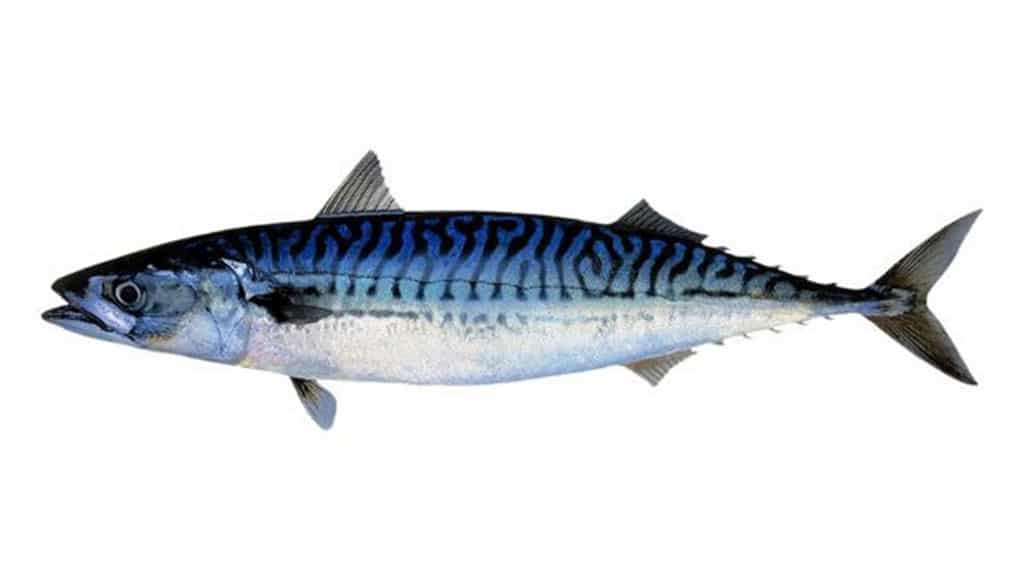
Mackerel has embodied the pain of WWII occupation so much so that, for a long time, when local nets would pull in any odd amount of mackerel, all of it would be released immediately regardless of the level of hunger that would ensue.
On the contrary to Norway, Canada tells happy stories connected to mackerel. During the summers of 1970s/80s, the sound of the “mackerel man” would often brighten the streets of the Nova Scotian communities. Announcing their arrival by calling out “Mackerel, Mackerel”, the sellers were a part of the informal supply chain providing a vital source of the fresh fish.
“The Mackerel man” was a particularly important fixture for the African community of Nova Scotia, contributing to the rich culinary tradition of blended ‘soul food’ that mixed fish, root vegetables and legumes.
Mackerel has also been actively fished in and around the British Isles. In Ireland, for example, it was customary that the local fishermen would tell the weather by observing the mackerel. As the poem goes… Here is a list of the signs of bad weather seen in Nature.
When Howth Head puts on its cap,
Let all Fingal beware of that.
When soot falls down the chimney, put up your umbrella.
When the turkeys-gobble gobble,
Water in the well will bubble.
If the “Eye” sticks its nose into Howth,
Rain will drive home the goat.
If seagulls rest on inland lea,
Rain and wind expect at sea.
If there’s a whistle in the breeze,
Sow westers, sow westers if you please?
A wind dog in the sky,
Changeable weather nigh.
If a mackerel sky shows any day,
Windy weather comes to stay.
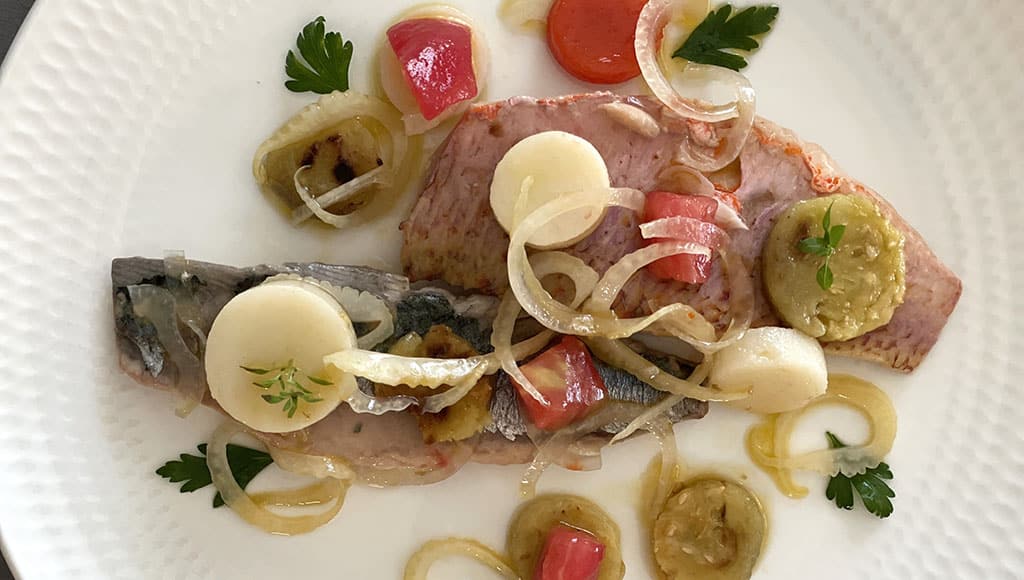
The Portuguese mackerel eating tradition is deeply connected to the country’s maritime culture and Atlantic coastal abundance. Integral to the regions of the Algarve and Setúbal, mackerel is featured in traditional dishes like “cavala grelhada” (grilled mackerel) or “cavala em escabeche” (marinated mackerel).
As a major fish canning producer, Portugal also loves canned mackerel, be it in olive oil or tomato sauce. Locals differentiate between sarda and cavala, which technically describes the different species of mackerel. Whilst this language precision is part of a long-standing local tradition to precisely identify and name the catch, it can be somewhat confusing for the consumers.
The confusion persists in many languages too, and it even goes beyond linguistic challenges. To start, the origins of the term “mackerel” are unclear. Some suggest that it might originate from the Old French maque that means “pimp or procurer”, which would relate to the fish’s shiny appearance to a pimp’s flashy and morally dubious character.
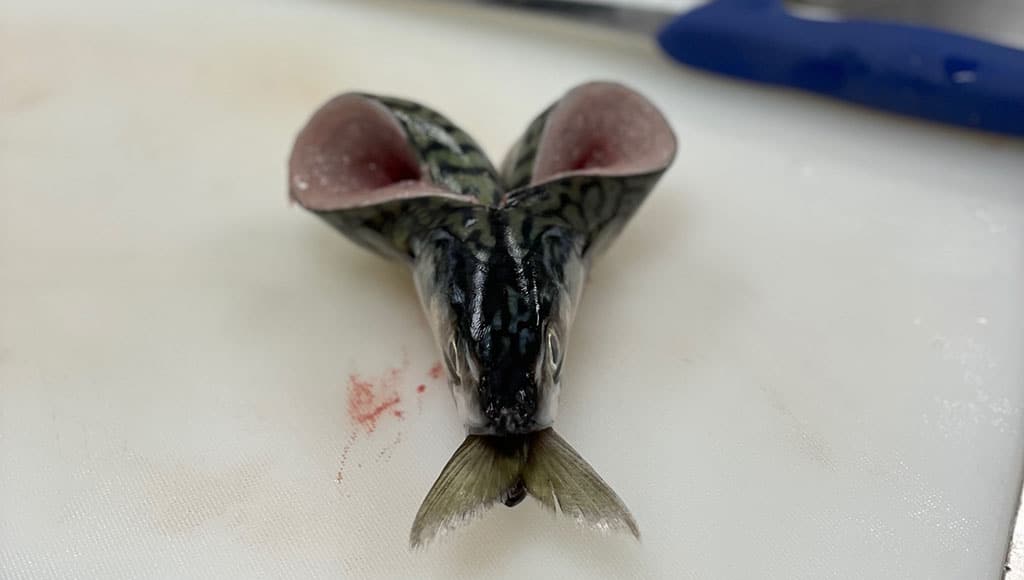
On the other hand, it might have come from an Old High German term makk, meaning a mark or a spot. Regardless of the story one chooses to believe with regards to the name, there are over 30 species in the Scombridae family that can be referred to as mackerel!
At the same time, there seems to be an agreement that, within this family, the true mackerels belong to the Scombrinitribe, which contains seven species, whilst all others are Scomberomorini, the cousins to the real mackerels.
Both Portuguese varieties belong to the real gang. Sarda is the Atlantic mackerel (Scomber scombrus) and cavala is the Atlantic chub mackerel (Scomber colias). The former lives in the North Sea and is less abundant in local waters.
In terms of its flavour, it resembles the tuna and due to the fat content, it requires cooking to be easily digestible. The latter, however, is more abundant in local waters and delicate in terms of flavour. It can be consumed raw or in a ceviche-style dish, but it can also be cooked as a substitute to the beloved sardines.
Both species, alongside many of their mackerel brothers, represent a diminishing population due to overfishing. Therefore, they must be fished and consumed with great responsibility.