Welcome to the January night sky. This winter has been cold and snowy over much of Europe, but fortunately here in southern Portugal it hasn’t been so cold, just wet.
The month of December was very cloudy but at least we had a clear night for the Geminid meteor shower and I managed to see a few bright ones.
On January 3 there was the Quadrant meteor Shower which should be reasonable this year although not as good as the Geminids. On the same day, our Earth was at its closest point in its orbit to the Sun, in fact 3.4% closer than in July.
This means that our northern winters are a little warmer than they could be otherwise but, on the other hand, our summers are cooler and our planet receives around 5% less heat from the Sun during the northern hemisphere summer.
This is an interesting fact and it is important because the most likely thing to cause a new ice age is a succession of bad summers where the snow from the previous winter does not melt fully, so during the next winter it can snow on top of snow and the cumulative effect quickly adds up. This may happen with as little as 10 bad summers.
If you are an early riser you will be able to see the planet Venus high above the south eastern horizon in the constellations of Sagittarius and Scorpios.
This planet is the brightest star-like object in the night-time sky and on the 29th the Moon will be close to it.
Soon after sunset over in the west, the gas giant planet Jupiter is still visible in the constellation of Pisces and on the 10th the crescent Moon will be close.
By midnight the ringed planet Saturn will be visible in the constellation of Virgo.
The brightest star in the night-time sky is Sirius and it is well visible in January due south in the late evenings.
This star is pure white in colour but may sparkle all the colours of the rainbow due to our atmosphere acting like a prism and breaking the white light up into a spectrum.
The second brightest star in the night sky is Canopus and it too is a white star in the constellation of Carina the Keel.
This star is very low in the sky and only visible for a few minutes right on the southern horizon as seen from the Algarve area.
It is approximately due south of Sirius and appears very red due to the same atmospheric effect that makes the Sun turn red at sunset.
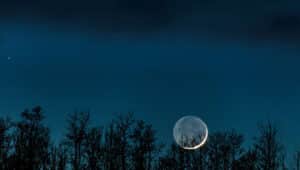
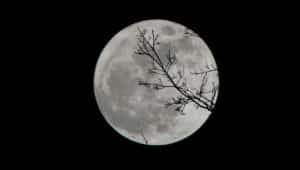
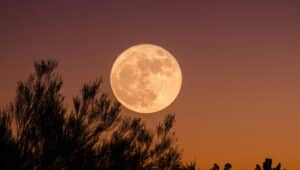
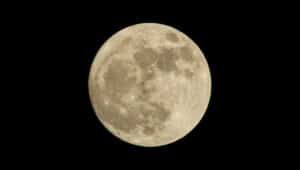
The Moon is new on the 4th, first quarter on the 12th, full on the 19th and last quarter on the 26th.
Clive Jackson is the director of the Astronomical Observatory of Tavira (Sitio do Malhão, Tavira), specialising in education and public outreach and the Camera Obscura (next to the Castle in Tavira). Call 281 321 754, Fax: 281 324 688, email: cdepa@mail.telepac.pt or visit www.cdepa.pt