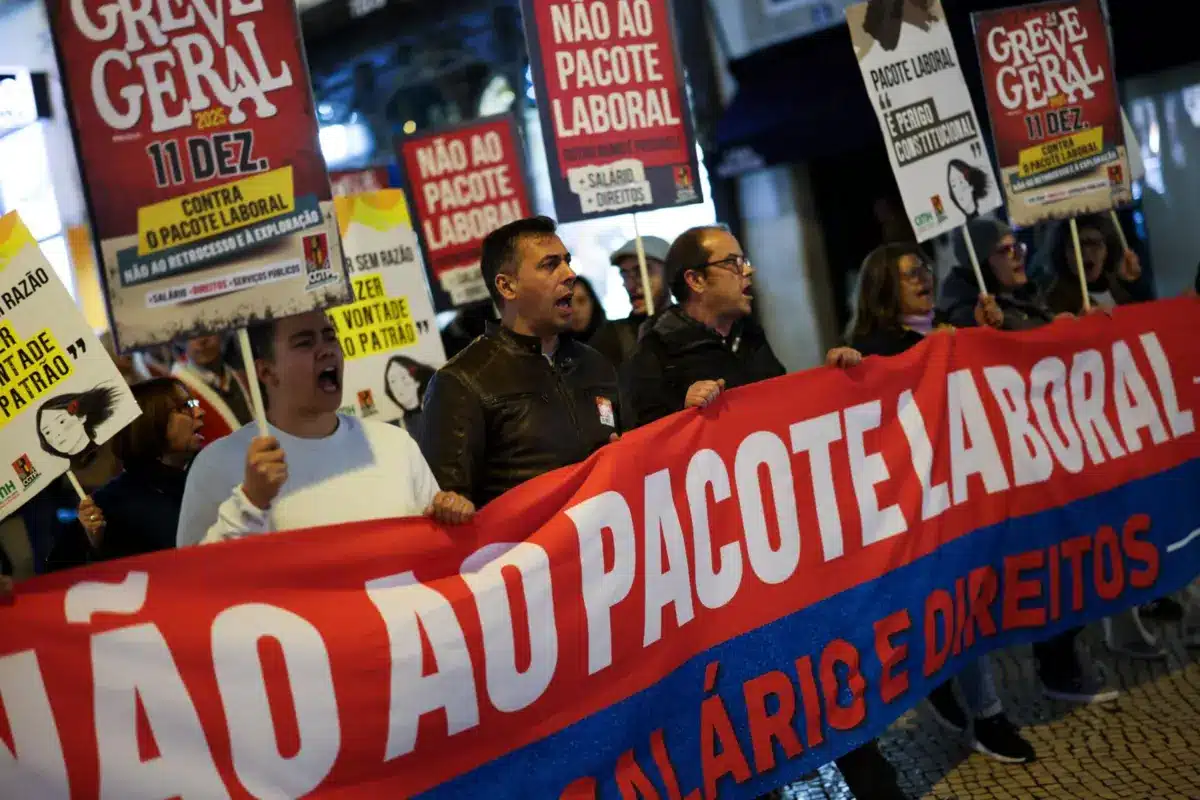
Lisbon yesterday saw a street demonstration in the historic centre which underscored all the warnings of simmering social unrest behind the looming general strike.
No matter what the government says about the strike ‘not being necessary’, unions are having none of it.
Yesterday’s was the moment for the Lisbon Trade Union Confederation to show how it feels about the draft labour reform that has prompted the country’s largest unions to convene a general strike next Thursday (December 11).
Marching between Chiado and Rossio, protestors stressed they will be out in force next week because the reforms the government is pushing will “deepen precariousness, unemployment, and the perpetuation of low wages”.
The gathering began at 5:30pm and saw many taking part dressed as Santa Claus or Christmas presents. But the slogans they were shouting were far from festive: “Poverty wages, rising rents. The people can’t take it anymore, it’s time to act” and “The cost of living is increasing, the people can’t take it anymore.“
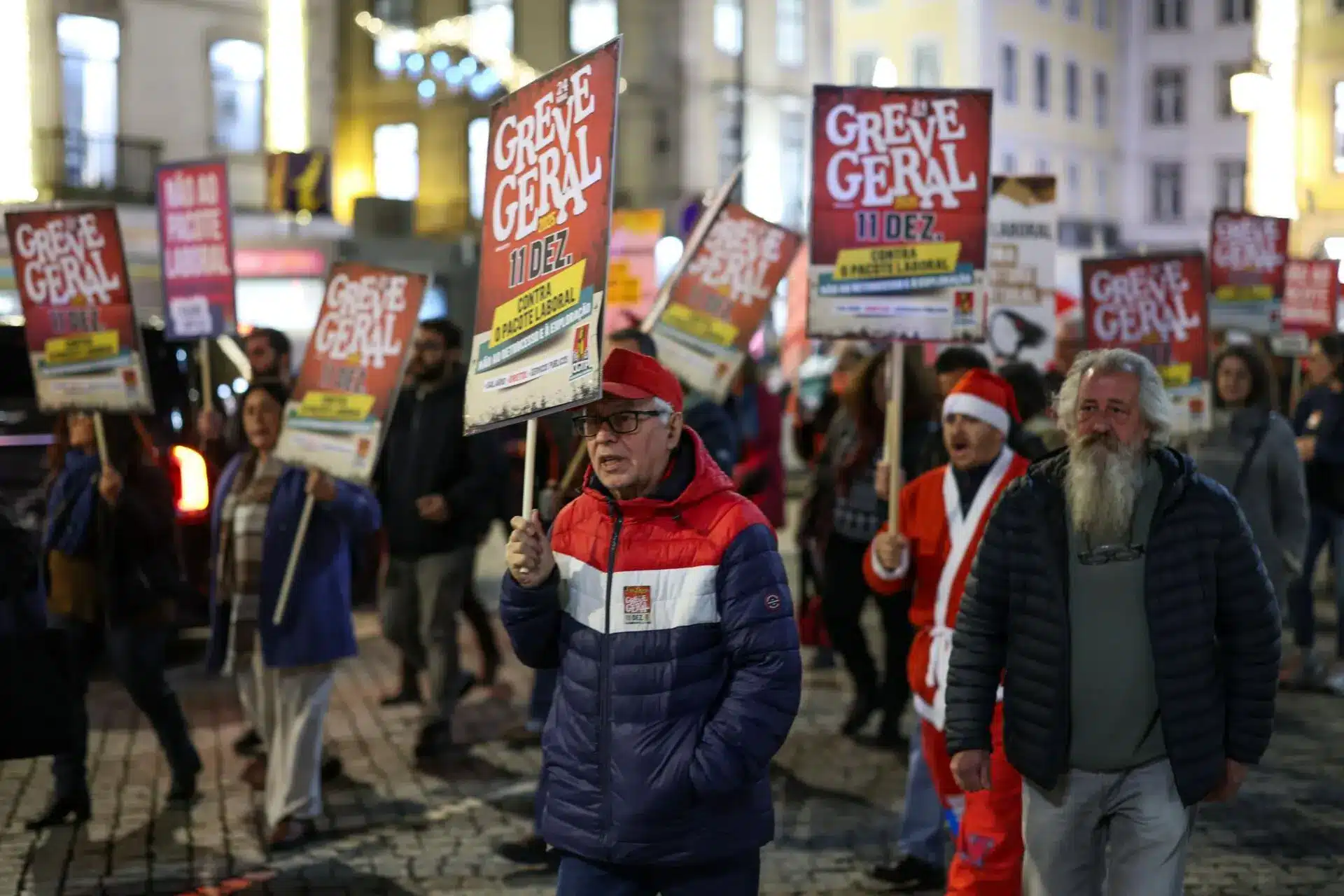
Image: MIguel A Lopes/ Lusa
Says Lusa, the union’s coordinator João Coelho explained that workers are “fed up with low wages, precarious employment, and being exploited” – and that the strike “is not at all inopportune,” as it was described by Minister of Labour, Maria do Rosário Palma Ramalho, (who inconveniently in this context is one of the richest people in government, with combined assets of over €5 million).
Thus the ‘district level initiative’ was aimed at showing up social “inequalities and injustices” of Greater Lisbon.
According to the unions, this region is the second most unequal in the country, behind the Azores, with the richest 10% earning nine times more than the poorest 10%.
Just as presidential candidate Luís Marques Mendes warned last month, the government is running the risk of ‘losing social peace’ with its position on labour reform.
That is not to say the executive hasn’t tried changing tack: after the announcement of the general strike, the Ministry of Labor delivered a new proposal to the UGT (General Union of Workers – usually more sympathetic with centre right administrations), with some changes to the preliminary draft presented back in July. But the union considered there was not enough in the form of concessions to call off the strike.
In the document, the government conceded on issues such as simplifying dismissals in medium-sized companies and reducing the number of mandatory training hours in micro-enterprises. It opened the door to reinstating three days of vacation linked to attendance abolished during the ‘troika’ period. But other measures that have been heavily criticised by unions remained on the table, explains Lusa, “such as the return of the individual time bank or the repeal of the rule that provides for restrictions on ‘outsourcing’ in case of dismissal.”
Maria do Rosário Palma Ramalho has said that she expects minimum services to be maintained during the general strike, adding that the most affected will be “workers, families, children, and those who need to go to medical appointments” – but in a month with so many ‘days off’ (December 1/8/24/25 and 31), it could be argued that people will probably take one more in their strides.
Nonetheless, minister Ramalho told Lusa this week that she feels this strike is “particularly serious” and “inopportune” because the government is (still) negotiating with its partners.
Source material: LUSA