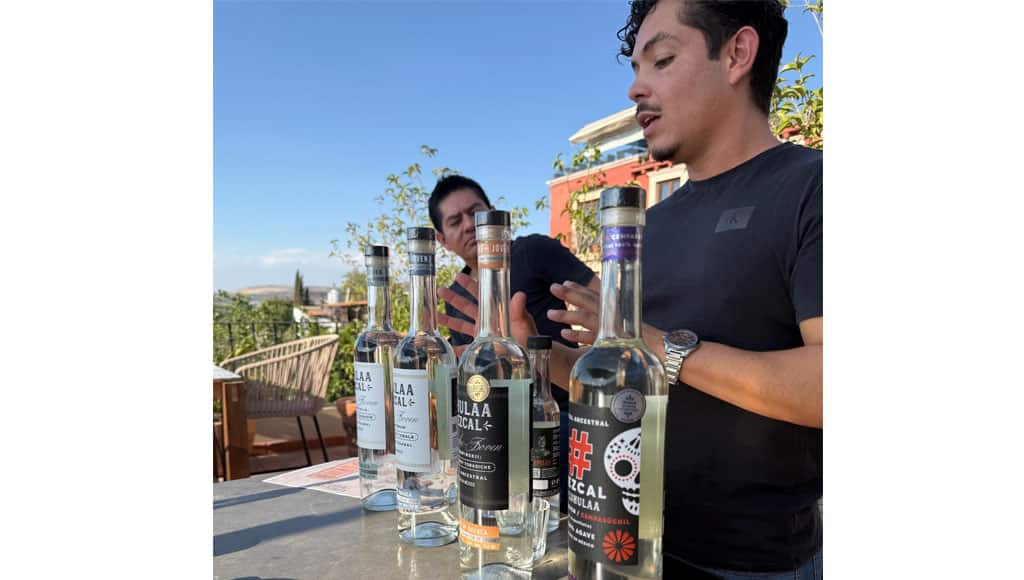
Each maestro mezcalero adheres to his/her unique style of producing mezcal, but the process must include at least the following four steps: cooking, milling, fermentation, and distillation. The level of orthodoxy and adherence to traditions in production practices results in either ancestral, artisanal or industrial mezcal.
They all begin in the wild where piñas are collected. When piñas arrive at the ancestral distillery, they are cooked in a towering earth pit with the gentle underground fire. To extract the juice, they are then crushed using a wooden mallet or a tahona, a large stone wheel pulled usually by a donkey. Fermentation must take place in either a clay pot, or a wooden or animal skin container, and is followed by a clay pot distillation.
The artisanal method is similar to the ancestral with some allowances around tools and techniques. For instance, it is possible to use masonry ovens to cook agave; mechanical grinders are allowed to mill the piñas; fermentation can take place in stone, copper, wooden or stainless-steel barrels; and distillation can use copper stills.
Lastly, the industrial method is usually geared towards quantity, and maximises the use of machines such as milling strands, mechanical grinders, stainless-steel vats and others. The type of handling is reflected on the label that signals that inside there is either mezcal ancestral, mezcal artisanal or mezcal. The label can also give additional clues such as joven, a young mezcal bottle shortly after distillation; reposado – aged in oak barrels; abocado – infused with fruits, herbs and flowers.
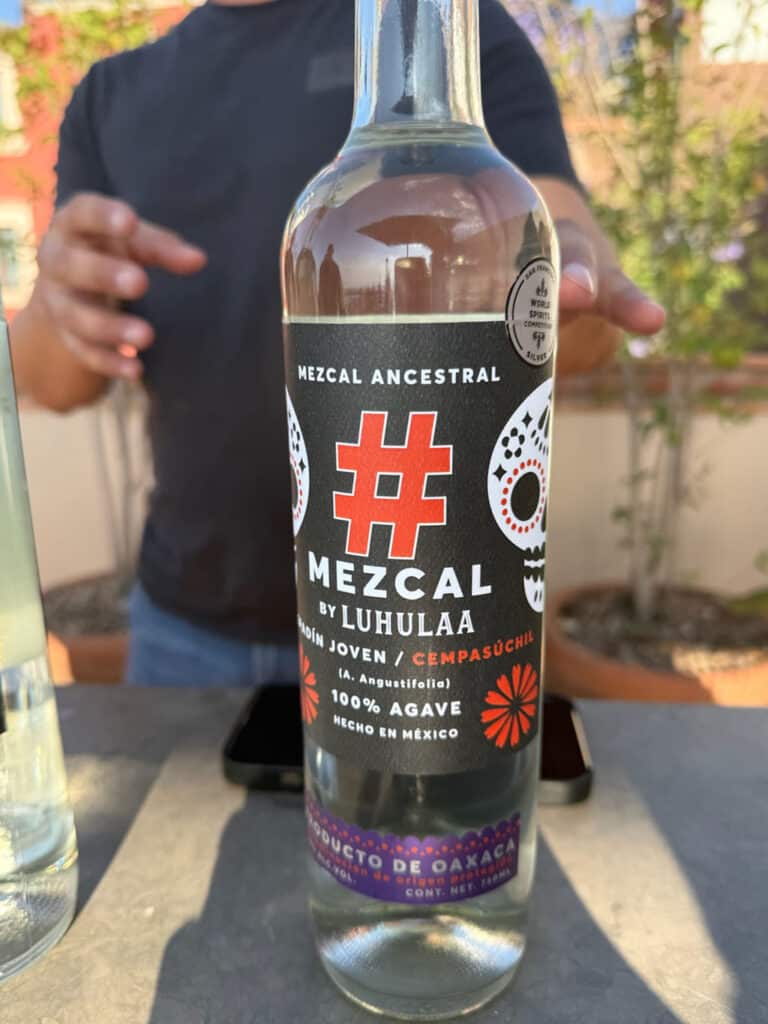
Mezcal is a drink of no haste. It involves all of the senses. To the sight, the liquid is smooth, silky and clear. The nose can capture smoky, grassy, herbaceous and chocolate notes. It can be pleasantly creamy on the tongue with a touch of sweetness. A single sip fills the entire dome of the mouth, gently swaying side to side. Swallowing should be slow, allowing the drink to rest on the tongue and reveal all its flavours. As it travels down the throat, mezcal leaves a pleasant, warm sensation that slowly spreads upwards and downwards, and eventually fills the entire body. Like a good cheese or wine, mezcal tastes of the land it comes from reflecting the variety of plants, terroirs, and hands that made it possible.
Having gone through the labour of love, mezcal is enjoyed neat and traditionally is never added to cocktails. It is often used to celebrate special occasions like weddings or harvests, and is served in small cups called copitas. Some suggest serving it with a slice of orange and sal de gusano, a mix of salt, chilli and toasted and ground agave worms. But for others, the enthralling tale behind the worm, i.e. gusano, found in mezcal bottles is nothing more than a marketing gimmick that is not founded on tradition.
Leaving this debate aside, mezcal’s spirit is that of a rugged poet, who roams across Oaxaca and beyond, and recites poetry in the depth of the night. Its vibe is a gift to the world, and it can be savoured in almost every bar in Oaxaca city, or by visiting palenques, the distilleries. My window into mezcal was opened by the two young gentlemen from Luhulaa Mezcal, who were passionate and knowledgeable about this fine Mexican treasure. I am forever grateful to them for their stories, as well as the pictures that made this publication possible. Muchas gracias, amigos!