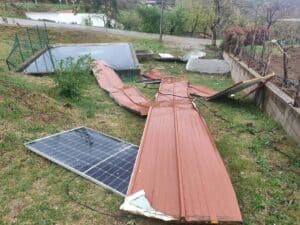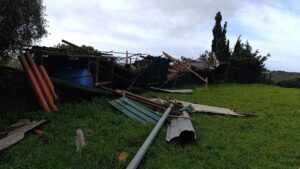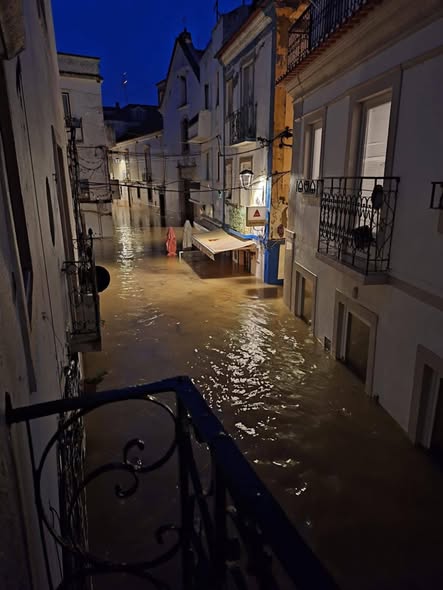
Flooding in Alcácer do Sal (Alentejo) has reached ‘unseen proportions’ (according to those who live there) and remains – in the eyes of authorities – one of the most worrying cases in terms of flood management.
As this text went up online, reports were just coming through of 89 people who have had to be ‘rescued’ from flooding in the ancient town.
On the Sado river, Alcácer has always been prone to seasonal floods – but nothing like extremes seen since Storm Kristin hit the country last week.
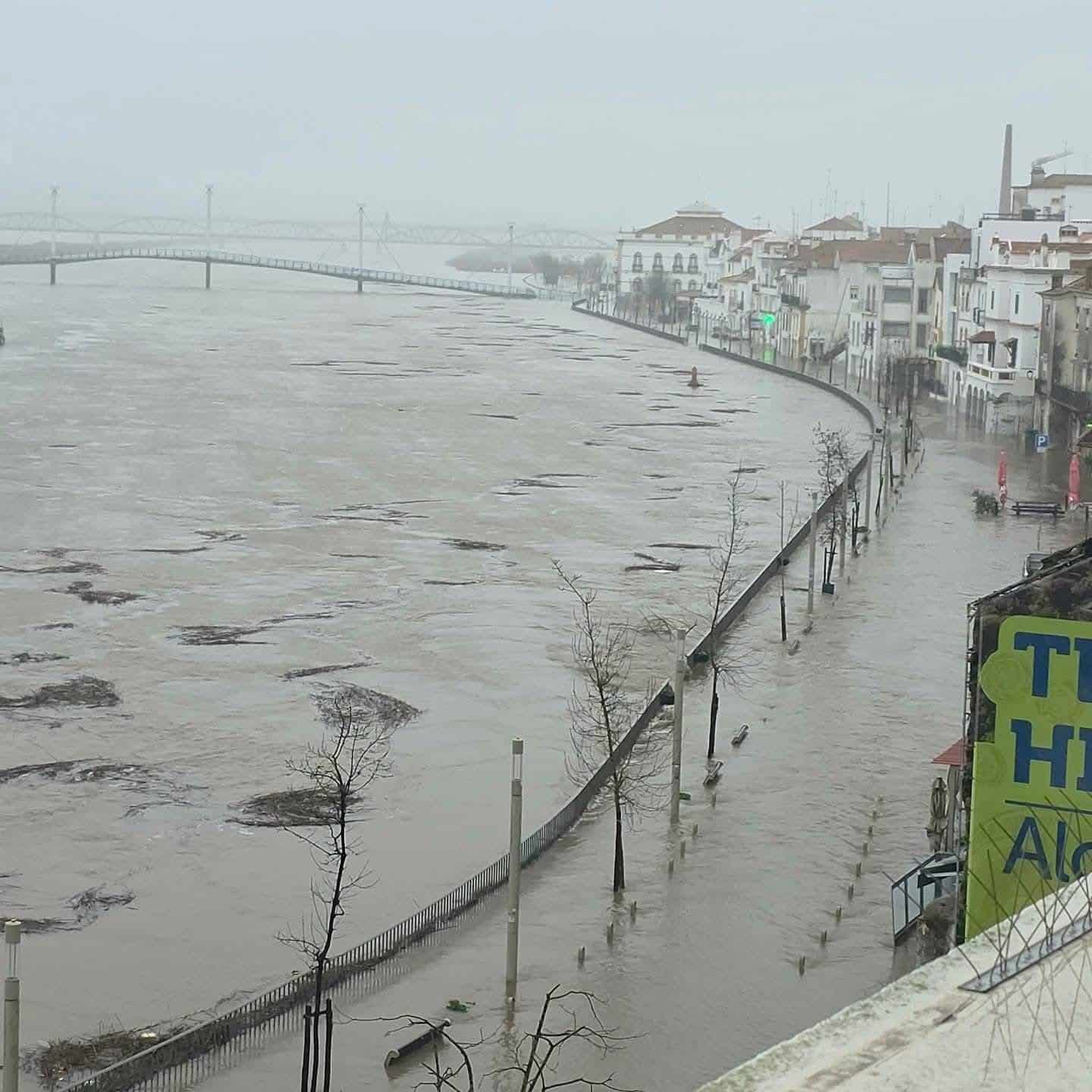
Alcácer riverside. Image circulating on Facebook
In certain places, floodwaters have reached a depth of two metres – inundating homes and businesses. Schools have been closed until next week as the situation has simply become too precarious.
In a meeting yesterday to try and present a round-up of situations, and discuss their handling/ prognosis for the next few hours and days, APA president Pimenta Machado admitted Alcácer is “one of the most worrying cases” that authorities are faced with.
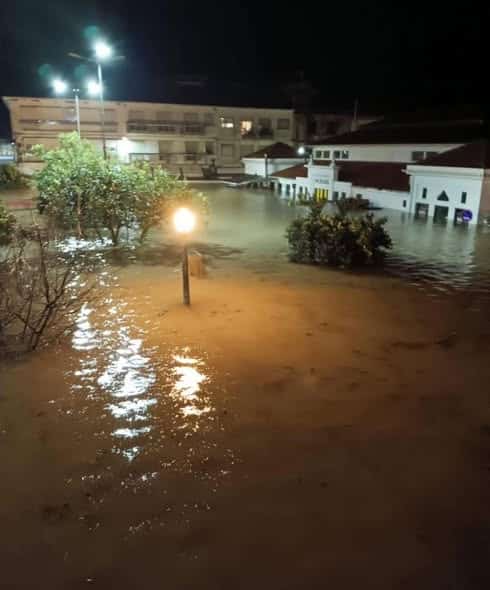
Inside the town last night (Wednesday)
At the meeting, attended by environment minister Maria da Graça Carvalho, Machado outlined the national picture since the arrival of Storm Leonardo: dams throughout the Algarve are now having to discharge water (even Bravura dam, set back behind Odiaxere, which in the recent past has struggled with pitifully low water levels). The Guadiana, he added, is reaching “very high levels as a result of the discharges coming from Spain”.
At the meeting, Maria Felisbina Quadrado – director of APA’s department of water resources – pointed to this (Thursday) morning being critical, particularly for the north and centre of the country.
As well as alerting to levels of water courses in the eastern Algarve and the Sado river, she highlighted the dangers posed by the Tejo, Mondego and Douro rivers – all of them posing high flooding risks for areas, including Albergaria-a-Velha, Aveiro, Estarreja, Ílhavo, Mira, Murtosa, Ovar, Vagos and Cantanhede, while in Águeda, the town of Águeda could also be affected.
Mondego river’s flooding risk has been high on the minds of authorities there for well over a week – and the prognosis remains that areas of Coimbra, Condeixa-a-Nova, Figueira da Foz, Miranda do Corvo, Montemor-o-Velho and Soure could all find themselves suffering inundations over the next hours and days.
In the Tejo, increased flow could affect Abrantes, Almeirim, Alpiarça, Azambuja, Benavente, Cartaxo, Chamusca, Constância, Coruche, Entroncamento, Gavião, Golegã, Salvaterra de Magos, Santarém, Vila Franca de Xira and Vila Nova da Barquinha, while water from the Sorraia river could flow into some areas of Benavente.
Yesterday’s meeting also heard that the towns of Arcos de Valdevez, Ponte da Barca and Ponte de Lima on the Lima River, and Braga, Bracelos, Vila Verde and Esposende on the Cávado River are at high risk of flooding.
On River Ave, there may be flooding in Santo Tirso, Trofa, and Vila Nova de Famalicão, and on the Douro there is the risk of flooding in Gondomar, Porto, Vila Nova de Gaia, Lamego, and Peso da Régua.
These risks are all adding to the extraordinary pressure facing the country where hundreds of thousands are living in homes damaged by over a week of bad weather, and businesses and factories in countless areas are struggling to cope.
The current depression (Leonardo) is expected to continue causing problems until the weekend, after which rain is still forecast but at nothing like the rate that it has been falling recently.
By the middle of February, Portugal should be emerging from the ‘nightmare’ of the last few weeks – although it will take weeks for the damages and destruction to be repaired.
Source material: LUSA/ Facebook photos