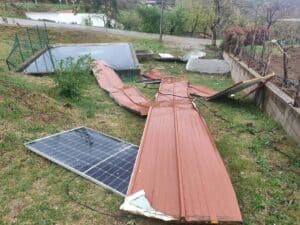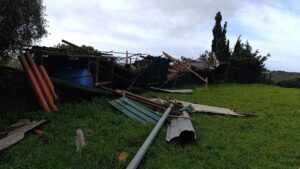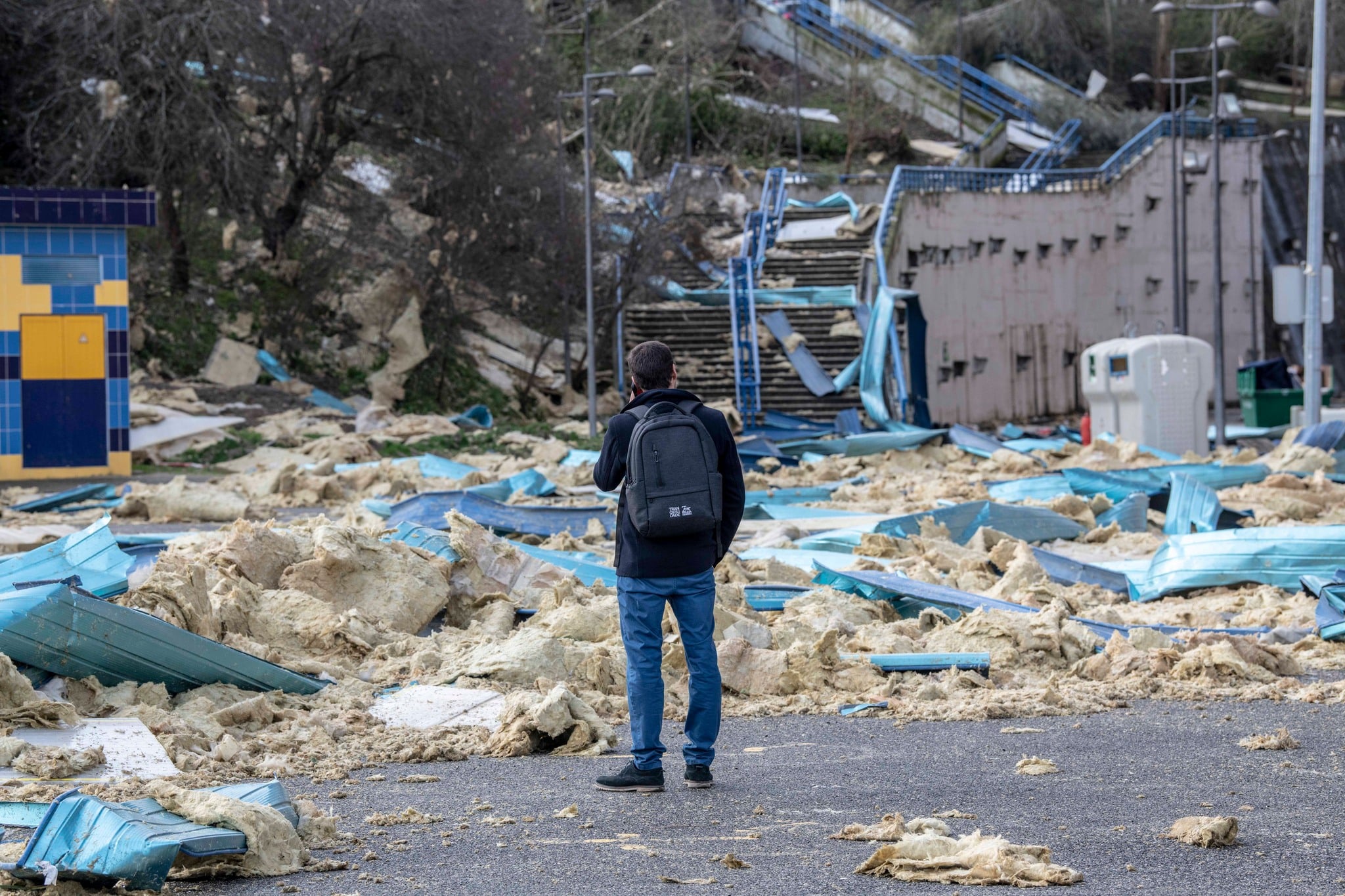
A full 24-hours since the ‘weather bomb’ of Depression Kristin hit Portugal, the country is nowhere near recovering from its effects. In fact, it is only slowly understanding the depth of damage – beyond the tragic deaths of citizens simply caught in the wrong place at the wrong time.
Leiria mayor Gonçalo Lopes is still waiting for an answer to his call for a declaration of calamity in the city where the majority of fatalities have been reported, and where this morning over 450,000 households were still without electricity.
Leiria, like Coimbra, has been described as ‘looking like a war zone’. The trail of destruction is likely to take weeks to fix. Damages to power lines and telephone cables are just the tip of the city’s problems, but they are also responsible for leaving so many people in a miserable state of limbo.
Coimbra too was indelibly battered. Mayor Ana Abrunhosa has been describing damages to local businesses, like the Bissaya Barretto Aerodrome where buildings and planes were destroyed. Just in that one situation, damages are described as ‘over a million euros’.
Coimbra is also struggling without power in many areas, the mayor told Antena 1 radio this morning; schools remain closed, as they are in a number of other regions, while one of today’s real concerns are the rising levels of rivers, swelling due to continued rain, and the fear that these will start bursting their banks and causing flooding.
Yesterday, the prime minister did give a statement, flanked by ministers (it was just possible to spot the Minister for Interior Administration, who otherwise has been notably absent) but there is a sense that the government has not really ‘empathised’ with the problems on the ground. This morning, the mayor of Figueiro dos Vinhos (Leiria district) joined Gonçalo Lopes in the calls for a declaration of calamity, saying his municipality “is living one of the worst moments of its history”.
“We need much more solidarity from the government”, Carlos Lopes told reporters this morning – stressing that he was in contact with them via the satellite communications used by the local fire station “because we don’t have communications. No mobile network is working here. We have no way of talking to the outside world – and we are asking for help”, he appealed. “We are completely desperate, and we do not know what we can do.”
Figueiró dos Vinhos “has no energy”, water is failing; there are “huge difficulties in maintaining the old people’s homes (…) We are completely isolated. We consider we are isolated from the rest of the district, the region and from the country,” he said – exhorting the government to “look at this territory and try, in some way, to find the possibility to decree a state of calamity.”
Carlos Lopes’ sense of despair was palpable: he described families that will need rehousing “as their homes no longer have roofs (…) We need a lot of solidarity from the government; we need a lot of solidarity from public entities; we need a lot of response for a population that is living, in just a few years, the second tragedy of recent decades…” (he was referring here to the devastation his municipality suffered in the killer fires of 2017).
A column in Correio da Manhã today has equally pushed the point that regions devastated by Kristin are looking to the government now for “urgency in the solution to problems”.
For a government that focuses a great deal on making ‘statements’, today is perhaps a much worse day than yesterday as everyone is looking at it now and asking for tangible help.
Farmers too are describing “crops that have been completely destroyed”.
With rising river levels, and all the concerns these entail, today promises to be every bit as awful as yesterday.
As for Civil Protection’s latest tally of ‘incidents called in’, we are now at well over 5,000, and rising.
And as we completed this text, the government has finally declared the Situation of Calamity regions have been clamouring for.
sources: RTP/ Correio da Manhã/ Antena 1