To read from the start click here.
Igreja do Hospital de Santo Espírito is also known as Igreja de São José. The hospital was founded in 1425 to care for returning casualties from the continuing wars in Morocco and, in 1454, the adjacent church was begun under royal patronage to provide hospital inmates with spiritual solace.
The church suffered major damage during the Great Earthquake of 1755 and master mason Diogo Tavares de Ataíde undertook the reconstruction works. He was sued by the Misericórdia for slow work, and financially ruined. The rebuild was completed in 1768, sometime after his death. Its irregular octagonal nave is unusual, and the magnificent stonework of the main entrance proclaims its royal patronage.
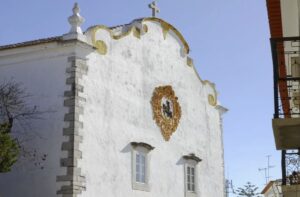
Ermida de São Brás in its eponymous square to the north of the river looks forlorn. Constructed before 1513, it was remodelled in the Baroque style in the mid-18th century. In the formerly flourishing northern suburb, this hermitage appears to have lost its purpose. St Blaise is patron of sufferers of throat complaints, and features on certain packets of eucalyptus sweets.
The origins of Igreja da Misericórdia lie in the lengthy stay in the town of D João II in 1489 as he supervised the latest military expedition to Morocco. During his stay, Queen D Leonor was influenced to found the institution of the Misericórdia. Based at first in Convento de São Francisco until 1505, and in Hospital do Espírito Santo until 1536, the wealthy Tavira brotherhood of the Misericórdia built their own church and offices (1541-1551), creating the most noteworthy Renaissance building in the Algarve, featuring its imposing eastern doorway in particular.
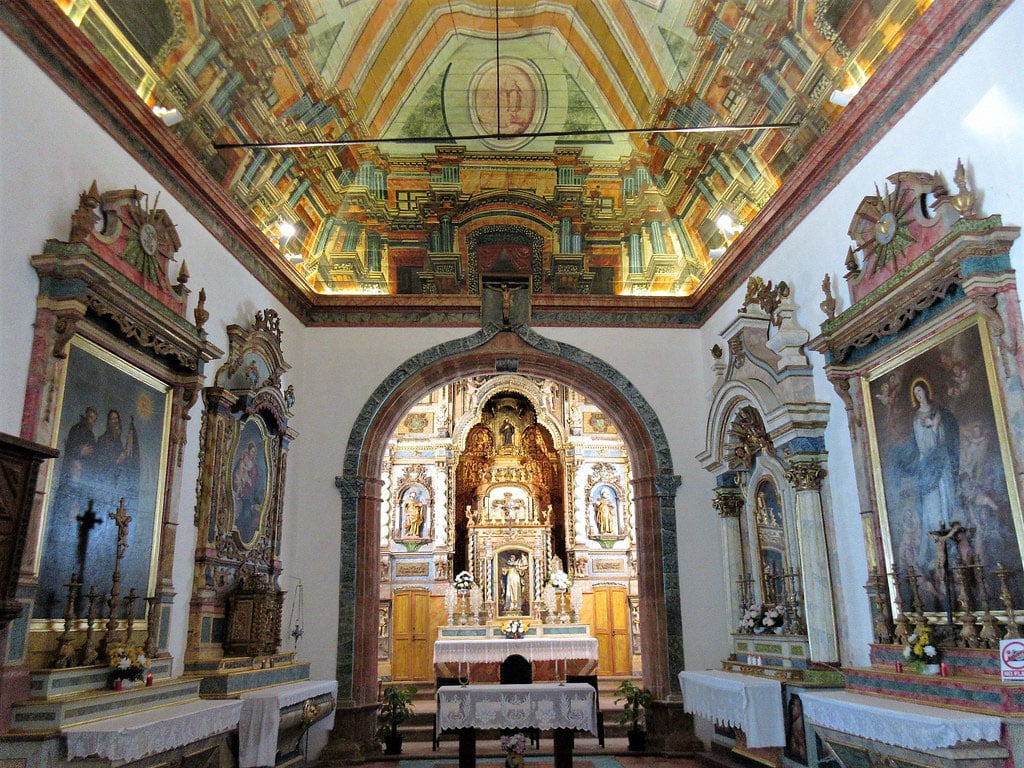
In contrast to the nearby parish churches, the Misericórdia emerged from the Great Earthquake relatively unscathed, and for half a century it became the substitute parish church of Santa Maria. The organ was purchased in 1834 from the local Recolhimento de São João Baptista after its suppression. The 18th-century azulejos and the painted decoration of the interior complete this church as one of the most beautiful in the Algarve.
Another beautifully painted interior displayed in Igreja de Nossa Senhora das Ondas in the commercial heart of the town probably dates from the 15th century. This church belonged to the Compromisso Marítimo, a type of medieval assurance society for seafarers and fishermen, which gave access to the services of doctor, surgeon, pharmacist and bleeder. Although the first surviving regulations of the Compromisso date from 1552, they also refer to an earlier set.
On the walls inside the church, we see examples of ex-votos, small paintings which commemorate the deliverance from various disasters at sea through the intervention of Our Lady. One of the alternative names for this church is São Pedro Gonçalves Telmo, a saint who is credited by fishermen with many miracles.
This church sustained extensive damage during the Great Earthquake. It was rebuilt By Diogo Tavares de Ataíde in 1756, and the great external doorway with the royal arms is evidence of royal patronage. The external western wall displays an example of the personal device of D Manuel I (1495-1521), demonstrating an ancient royal interest in this building. Architects discovered in 2012 that the roof was on the point of collapsing, and extensive restoration work was completed five years later.
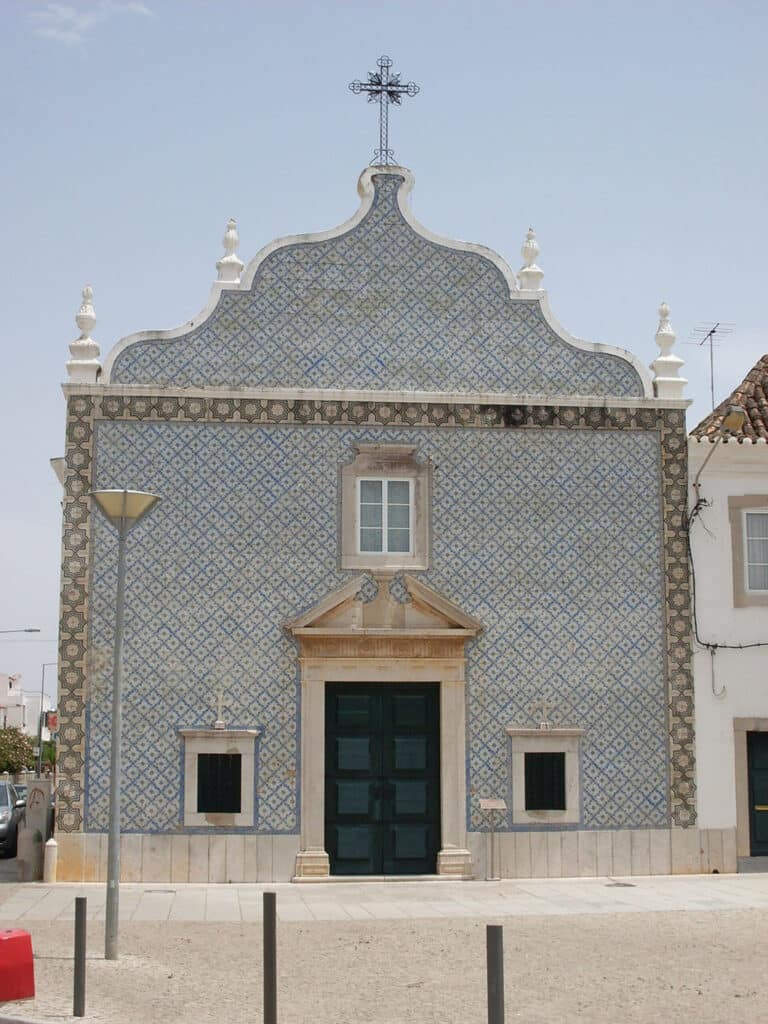
Capela de São Lázaro is also known as Nossa Senhora do Livramento. The chapel was originally founded around 1500 at the extreme eastern boundary of the town, possibly in a leper colony, but no contemporary evidence supports this idea. From 1698, this chapel was refounded by the seafaring community, and its walls also display ex-votos. The façade dates from the 18th century and was remodelled and faced with azulejos around 1900. This type of decoration is very unusual in an Algarvian church. At one side is the sacristy and the Casa do Despacho, the offices of the brotherhood. The two small windows on either side of the main door are protected with metal bars. These windows remained open even when the chapel was closed and locked, so that individuals at prayer might contemplate Our Lady as they invoked her protection for their menfolk at sea. The chapel has recently been reclaimed by the Brotherhood of São Lázaro.
Capela de Nossa Senhora da Consolação stands on the other side of the road from the Post Office, which in turn stands on the site of the old prison, demolished in 1918. Nossa Senhora da Consolação dates from 1648 and was built by the Confraria de Nossa Senhora dos Presos to provide spiritual support to those being held in the prison. The interior is plain apart from polychromatic tiles around the lower part of the walls. The small vestry was sold after 1911 to make room for the hostel next door.
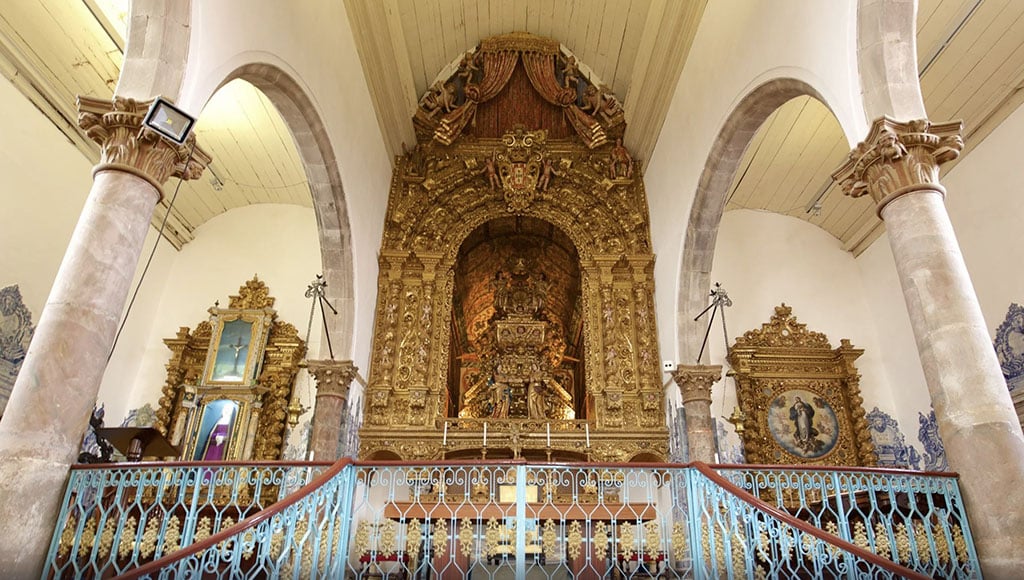
Igreja da Ordem Terceira de Nossa Senhora do Carmo was begun in 1747, and completed in 1789. Its rococo decoration is among the most sumptuous not only in Tavira but in the whole of the Algarve. The chancel ceiling, painted in trompe l’oeil, shows Our Lady handing a scapular to St Simon Stock. The six gilded side altars in the nave add to the rich effect of the two transept retables. This church is well supported financially by the Third Order, and it is consequently in a fine state of repair, and the building is now used often for concerts, especially at Christmas, as well as for religious services.
Capela de Nossa Senhora da Piedade was built in 1758, while much reconstruction was happening after the Earthquake. It was built at the ancient main entrance through the medieval walls in the street now known as Gonçalo Velho. The chapel was the creation of the now extinct Confraria de Nossa Senhora da Piedade and belongs to Igreja Matriz de Santa Maria. The stone carving is similar in style to that on Convento da Graça, and it is probable that same masons worked on both sites. The interior is plain and unremarkable.
Adding these eight churches and chapels to the five previously described, we reach a provisional total of 13 consecrated buildings (with three deconsecrated) making 16 so far.
Our next instalment will describe six further still consecrated churches and chapels and begin to describe the many other deconsecrated chapels in the united parishes.
To read part 8 click here.
Read more from Peter Booker about Tavira – a dog’s eye view or Three women, Tavira and the Carnation Revolution.