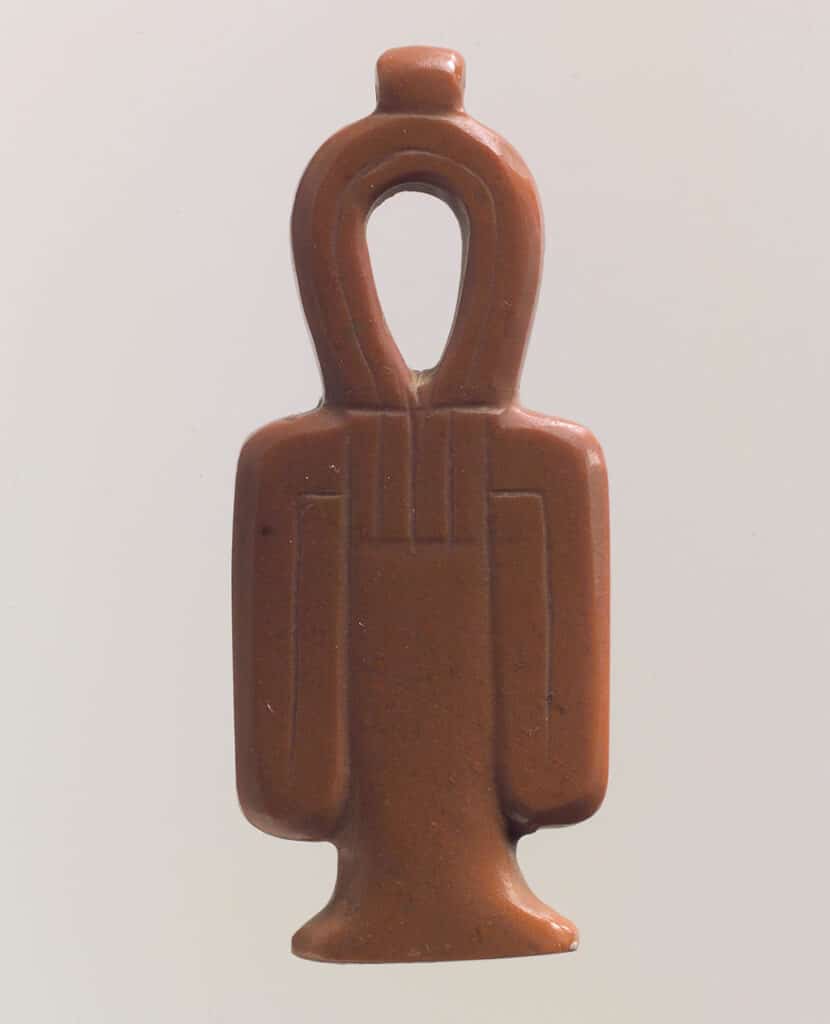
The tie’s roots reach back to ancient Egypt. Around 1550 BC, mummies were buried with a Tyet amulet, also called the Knot of Isis, placed at their necks. Knots held deep meaning in ancient Egyptian culture. They were believed to carry magical strength, binding together both the physical and the spiritual.
The Tyet, in particular, invoked the protection of the goddess Isis, ensuring safe passage of the dead to the afterlife. Though not a tie in the modern sense, since such amulets were often made of red jasper and other similar materials, the custom showed an early desire to protect and decorate the neck with knots.
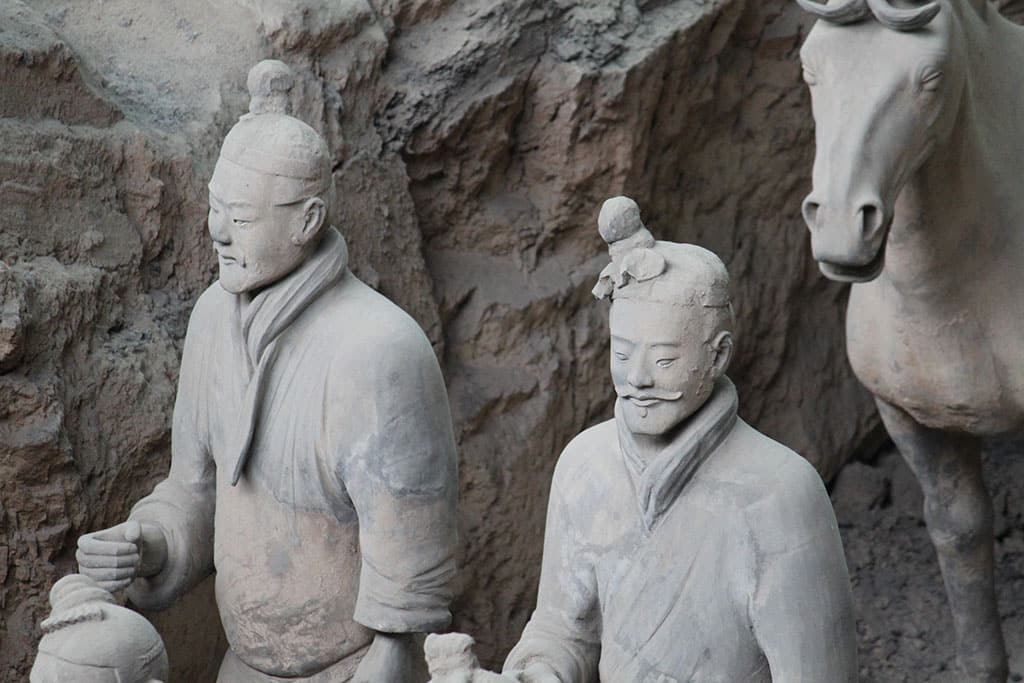
Further east, in China, the First Emperor Qin Shi Huang was entombed in 210 BC with an army of more than 8,000 life-sized Terracotta soldiers. These statues served a similar purpose to the Egyptian Tyet: to guard and protect the emperor in the afterlife. Many of them are shown wearing cloth bands tied around their necks, likely serving as markers of rank.
The Romans, ever pragmatic, took a more functional approach. Roman legionaries and orators alike wore the focale or sudarium – a strip of wool or linen tied around their neck. For soldiers, it prevented chafing from metal armour and kept the neck warm in the winter. This shows how neckwear began to serve a dual purpose, both practical and symbolic.
Still, the modern tie’s most direct ancestor appeared not in the temples of Egypt or the camps of Rome, but on the battlefields of 17th-century Europe.
Between 1618 and 1648, Central Europe was torn apart by the Thirty Years’ War. What began as a religious conflict between Catholics and Protestants grew into a vast struggle for political dominance. France, Spain, Sweden, and many German states were drawn in and, by the war’s end, millions died from combat, famine, and disease. Some German regions reported losing more than half their population.
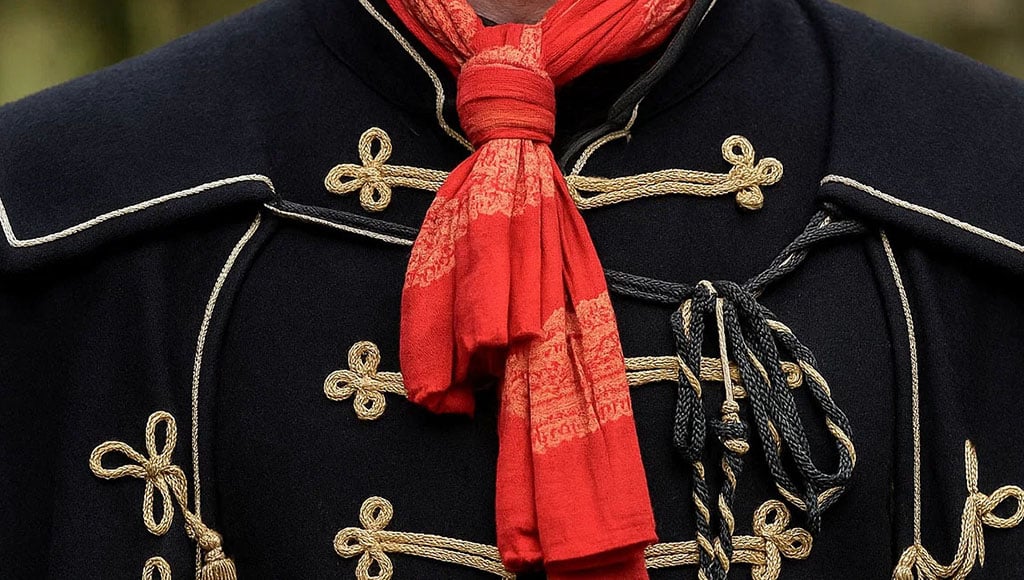
During this war, King Louis XIII of France employed Croatian mercenaries. These soldiers wore cloths tied around their necks to fasten their jackets – a simple, functional style that stood out amid the elaborate lace ruffs of the French court. Louis admired the look and soon adopted it himself. He called it la cravate, derived from the French word for Croats, Les Croates.
What had been a soldier’s accessory now became a courtly one. The cravat was both practical and elegant, and it offered a welcome alternative to the stiff collars of the time. From France, it spread rapidly across Europe, reshaping men’s fashion.
In England, King Charles II popularised the cravat after returning from exile in France in 1660. He had spent nearly a decade abroad following the execution of his father and the temporary abolition of the monarchy during the English Civil War. Political instability eventually allowed his return and the Restoration of the monarchy, bringing French fashions, including the cravat, into English courts.
By the 18th century, the cravat was fully embedded in European fashion. Men experimented with fabrics ranging from simple linen to luxurious silks and lace. The way a cravat was tied became an art form and entire manuals were published on proper folds and knots, each variation suited to a particular occasion. A carefully tied cravat was considered a sign of refinement, and subtle differences in style could reflect class or taste.
As Europe industrialised, the ornate cravat was replaced by simpler and more practical styles. Men working in offices, banks, and trading floors needed something quick, practical, and compatible with tailored jackets and waistcoats. Out of this need, the modern necktie was born.
This was also the period when the bow tie emerged, evolving from shorter versions of the cravat. Both forms – the long tie and the bow tie – began to grow in popularity, with the long tie becoming the standard for everyday business dress.
The following centuries cemented the tie’s role as a central part of men’s wardrobes. It became a symbol of professionalism and respectability. Patterns, widths, and fabrics changed with the times, yet the essential form remained the same – a length of cloth tied at the neck, descended from the Croatian soldiers of the 17th century.