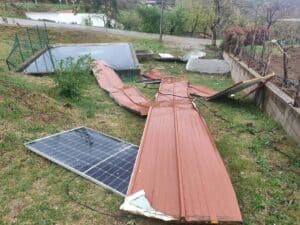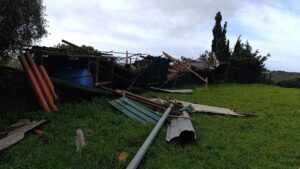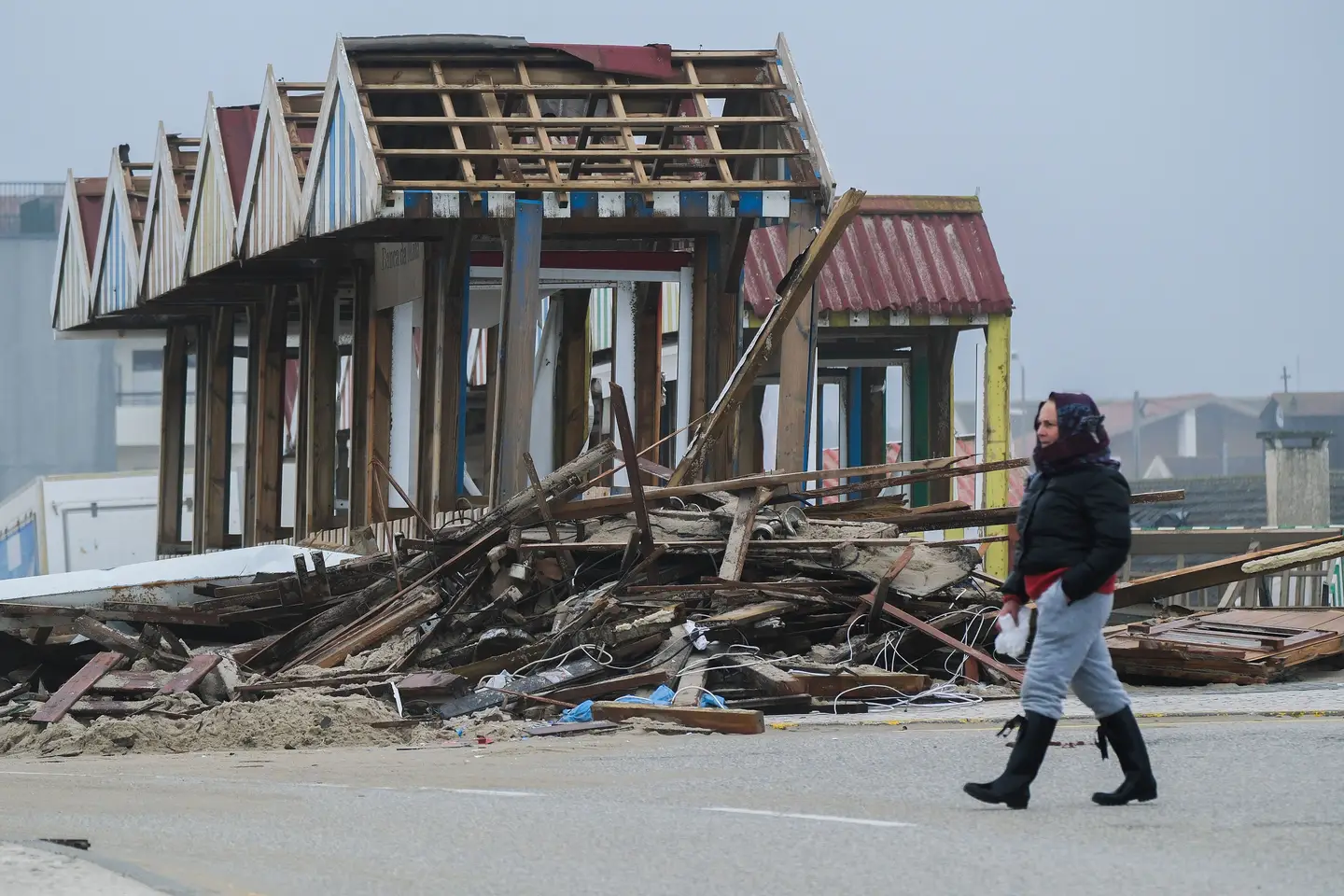
Portugal’s government has announced programmes involving over €150 million to make good some of the damage caused by winter weather and storms between October and February.
A total of €40 million is being offered to help landowners clear forests of combustible material ahead of the looming fire season, while €111 million is earmarked for investments to areas of coastline, of which €15 million is to be applied before the summer.
Even so, there are beaches where dangers are so obvious that authorities will be introducing blanket ‘unsafe for bathing’ notices. One of these is Praia da Calada, in Mafra.
Presenting a report in Porto on situations along the coast nationally, José Pimenta Machado, president of Portugal’s environment agency APA, said there are “no conditions” for Calada to be open to the public this year, and that other beaches in the municipality are equally ‘marked’ by the same ‘cliff instability’, albeit efforts are underway to ‘recover and minimise damages’.
For now there are no other beaches to be considered ‘off limits’ – but Pimenta Machado did not rule out further decisions in this regard before the summer as erosion in some areas has been as much as 20 metres.
As to work planned to shore-up the most vulnerable areas of coastline, aside from the €15 million being spent ahead of the summer (the bulk of it involving sand replenishment operations between Albufeira and Quarteira), interventions involving another €12 million are planned before the end of this year, with €31 million earmarked for investment to the end of 2027 and another €53 due to be spent in 2028.
The investments aim to respond to the ‘significant impacts’ to the coast resulting from the effects of the storms in January and February, namely ‘Ingrid’, ‘Joseph’, ‘Kristin’, “Leonardo” and ‘Marta’, including damage to infrastructure, coastal protection structures, coastal retreat and changes in beach morphology, explains APA’s report.
“Almost all of the mainland’s beaches have seen a significant reduction in their sediment content in the emerged domain,” reads the text, which highlights a total of 571 instances of damage in 749 reported occurrences.
Most of the incidents were recorded in the centre of the country (257), and more than a third relate to coastal erosion (36.7%), followed by instability in cliffs (30.6%).
As for damages caused by the storms, almost half (43.3%) is related to access ways, followed by damage to adjacent structures (21.7%), such as sea walls, walls and/ or rockfill, and 204 of the 571 were reported in Ovar (district of Aveiro).
The APA report also warns that the recovery of the nation’s beaches will be ‘slow and gradual’, and may be delayed by further bad weather in the spring.
As for the investment to be made into forest clearing, this is considered vital to avoid even further risks during the fire season.
In Leiria district yesterday, the minister for agriculture and fisheries José Manuel Fernandes admitted it “will be impossible to remove all trees that blew down (in the storms) this year but in the critical areas we want this to happen – and there is a great deal of work to be done.”
Just in Leiria district, millions of trees were lost during the February ‘carousel of storms’.
Minister Fernandes stressed that work ahead of the fire season should focus on an area of around 30,000 hectares, in which landowners will be offered ‘incentives’ to clear combustible material to the tune of €1,000 per hectare.
Objectives are to clear all forest ‘roads’ before the summer – and in this regard the government is delivering up to 18 bulldozers to intermunicipal communities. “My appeal is that all existing machines be used for this purpose,” said the minister.
As extraordinary as it might sound, there are still many kms of forest roads ‘impassable’ since the storms. In the municipality of Pombal alone, the passage of storm Kristin (January 28) left 2,400 kms of roads and forest tracks blocked, writes Lusa – with (only) around 500 kms since cleared.
According to Minister Fernandes, 250 members of ICNF forestry teams work daily in the central region to clear forest roads, although in the days following the storm there were 900 operatives on the ground.
The most severely affected municipalities during the January/ February storms were Pombal, Leiria, Marinha Grande and Batalha – all of them in the Leiria region.
Source material: LUSA