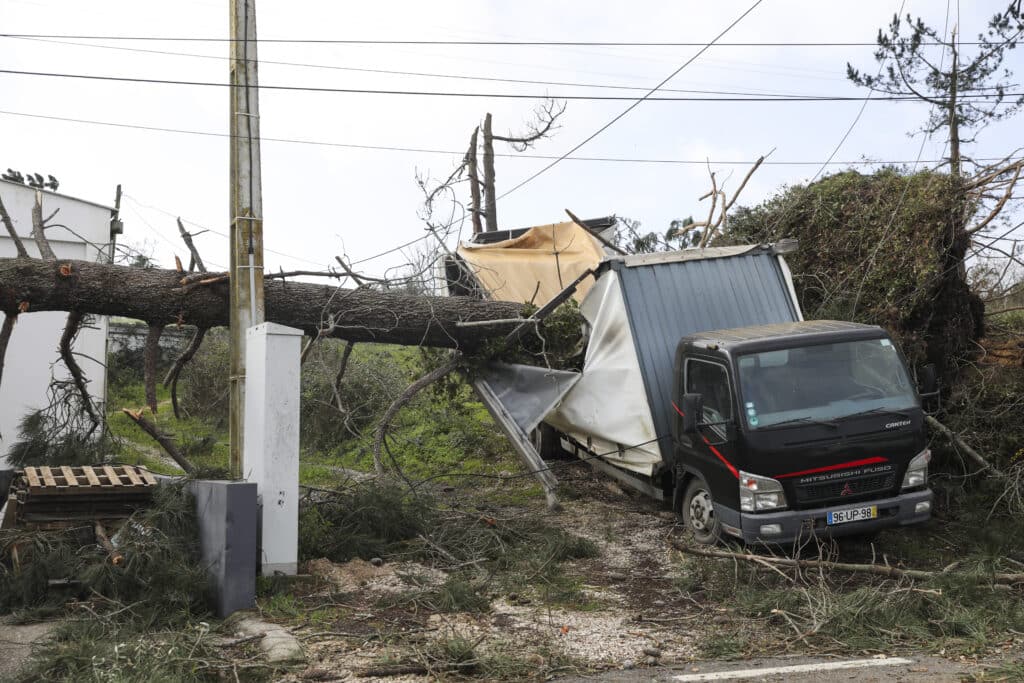
The death count as a result of what has been described as a ‘weather bomb’ (more scientifically an ‘explosive cyclogenesis’) continues to rise. On Tuesday morning, a 10th fatality was being reported – an elderly man who fell from a roof in Porto de Mós (Leiria district), trying to replace tiles that had been ripped off by Depression Kristin, which battered the centre and parts of the north of the country in the early hours of last Wednesday morning.
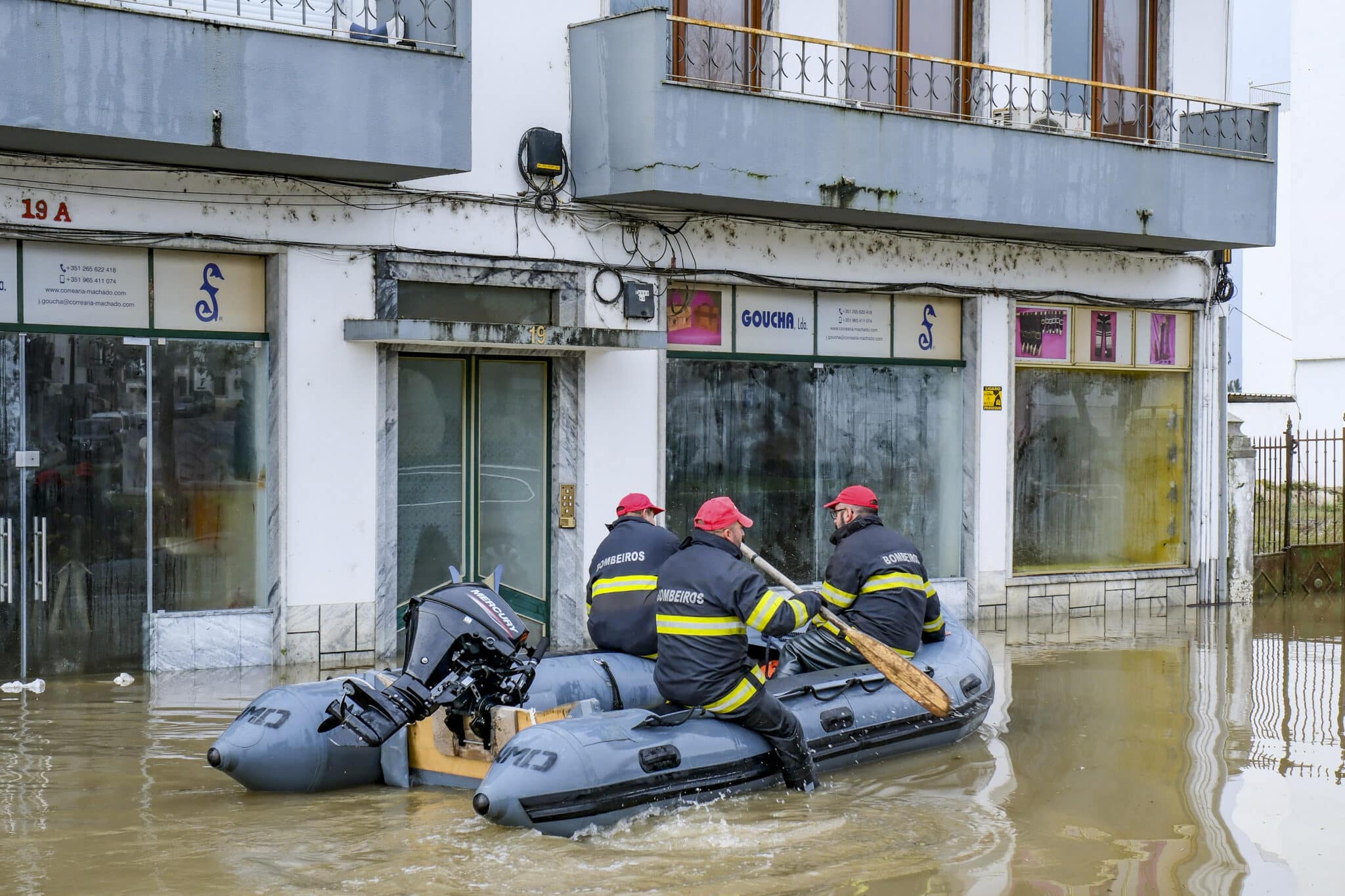
Kristin tore through communities with a force that terrified. Wind gusts reached well into the hundreds of kilometers per hour. There was even talk of one gust, in the Coimbra district, recorded at a speed of over 200 km/h. But the net result is what has been so much more dramatic: scores of municipalities (towns and villages over around 68 municipalities) left without electricity, without water, without any form of communication – some even as we write this text, meaning over 100,000 households a week on from the battering of Kristin, were still ‘in limbo’: many of them suffering multiple leaks in the almost non-stop assault by the elements.
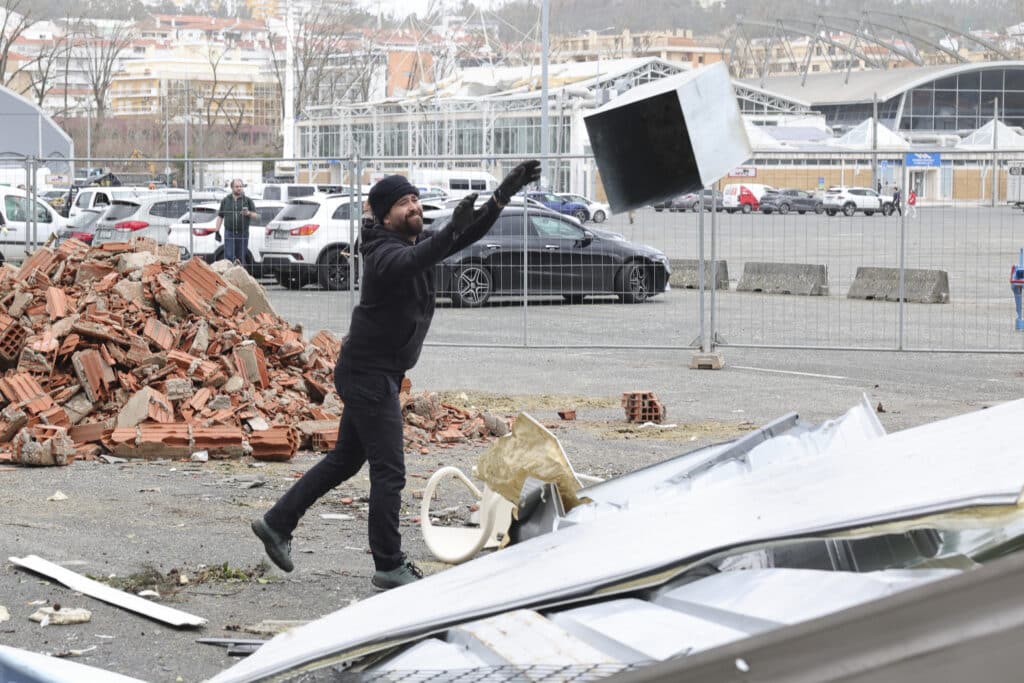
Just as bad – arguably even worse for the national economy – has been the situation of countless businesses. Kristin’s force was such that entire factories and business parks were left looking as if they had been caught up in a tornado: workforces unable to return to them in the short, possibly even medium-term.
The government has announced a series of measures, by way of support to populations – but they have not gone far enough for businesses, who warn they do not want to take on the debt of credit lines when they simply have no idea when they will be in a good enough state to resume functions.
Criticism of the way in which political leaders have dealt with this latest drama began quickly. Correio da Manhã’s deputy editorial director Armando Esteves Pereira considered that in the speech in which measures were presented to mitigate damages suffered by people and businesses, “the prime minister used a phrase that was, at the very least, unfortunate, expressing condolences to the families of people who died, describing them as: those who did not avoid the tragic consequences of losing their lives”.
Words, stresses Pereira, have huge importance. “The number of victims in this tragedy could still increase because there are many who have been seriously wounded. Respect for the dead is one of the elementary principles of any civilization. Just as is good sense.”
The performance of the Minister of Interior Administration has also been seen to have fallen short. A woman who has managed to look startled throughout her tenure, her initial comments (three days after Kristin hit) that “we are all in a process of collective learning” failed to hit any marks on the scale of empathy. Since then, she has willingly admitted that ‘things did not go right’, but that she didn’t know exactly what those things were…
Thus, the government’s performance is already under fire – with a ‘Situation of Calamity’ initially decreed for a period of only a few days. This has since been extended to February 8 (Sunday), but no one imagines there will be any tangible improvement in the bigger picture by then.
PS Socialists have already called for the situation of calamity to be extended by at least three months, possibly six – and for help to businesses to be ‘non-refundable’.
Compounding all the dramas – extending from Leiria to Marinha Grande, Figueiró dos Vinhos to Castelo Branco and up to Coimbra – is the fact that bad weather continues, and the country is still in the ‘grips’ of the race for the presidency: two candidates are vying for the position of President of the Republic on Sunday, as the centre of the country is in varying states of chaos.
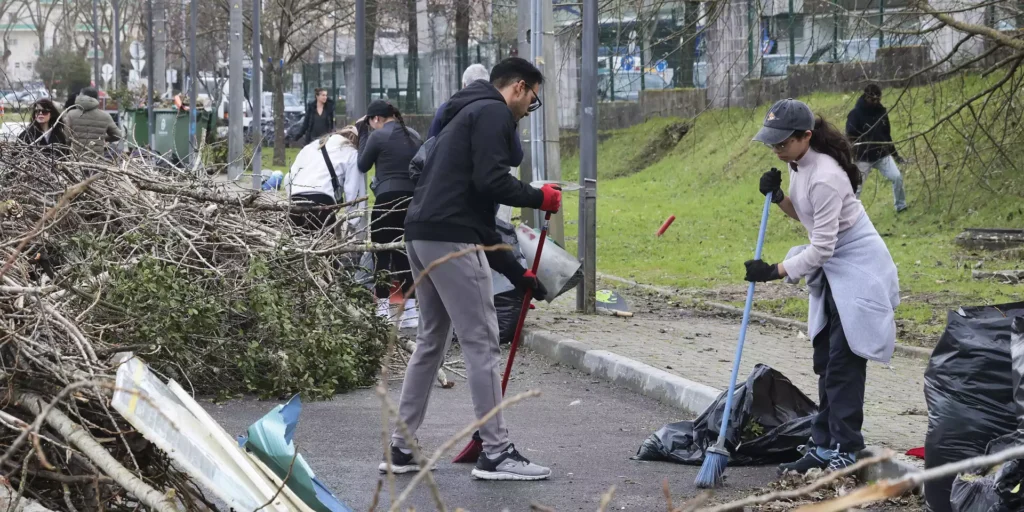
CHEGA’s candidate, André Ventura, is all for wiping out tax dues for people and businesses faced with repair bills. The more moderate candidate – Socialist António José Seguro – visited the business park of Proença-a-Nova on Tuesday, which has been left looking like a war zone. He learnt firsthand just how devastating Kristin has been for businesses that need ‘response quickly’, and have already had a week in which almost nothing has been done to even clear up the detritus.
Seguro’s comments show he too is perplexed at how electricity and communications could be ‘cut off’ for so many days in a supposedly well-developed European country. A country which, as the prime minister said only a couple of weeks ago, “is in fashion”.
This is one of the many ‘cruxes’ of the last week: how is it that so many (more than 450) high-tension power lines came crashing down? How is it that so many school buildings lost parts of their roofs? In Leiria, for example, mayor Gonçalo Lopes described 150 school buildings with ‘serious damage’. Is the country building ‘to last’, or just to ‘make do’?
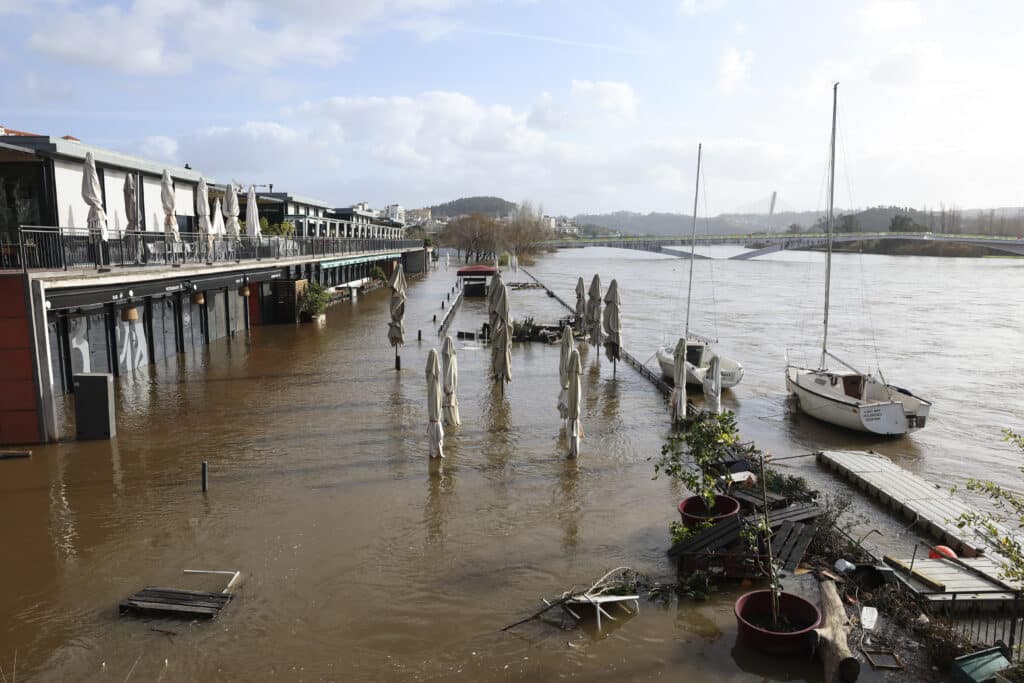
And within all these questions comes the added stress of rising river levels, threats of flooding to residential areas from Alcácer do Sal to Coimbra, Soure and Montemor-o-Velho – and more rain.
Depression Leonardo has arrived and will stay battering national territory until at least Saturday. Even areas that did not bear the brunt of Kristin are suffering from the weeks of heavy rain. In Aljezur, for example, a number of hillsides have seen rocks and trees fall into roads. On Monday, the Aljezur-Marmelete stretch was closed to heavy traffic by the municipality as a large section of hillside gave way onto the ER267.
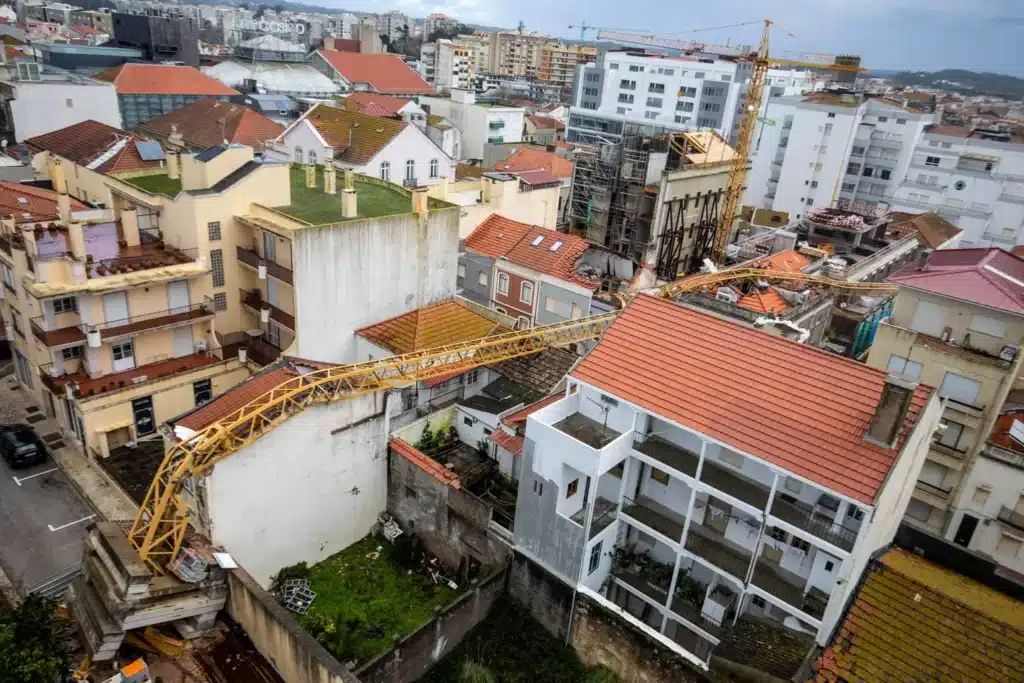
In Figueira da Foz on Monday, the combination of high winds and bad weather saw a large crane crash down onto six properties over three streets . The level of precariousness of structures, their strength to withstand bad weather, is all becoming horribly clear.
Early this week, a report by the McKinsey Global Institute, an independent body that presents data to aid decision-making, concluded that a quarter of the country is currently ‘exposed to climate risks’, namely floods, forest fires and drought – and that the government will need to invest double the amount it currently spends on climate resilience.
According to the report, Portugal already spends a little over €170 million per year on measures to adapt to climate change – yet even so, Depression Kristin exposed abject failings.
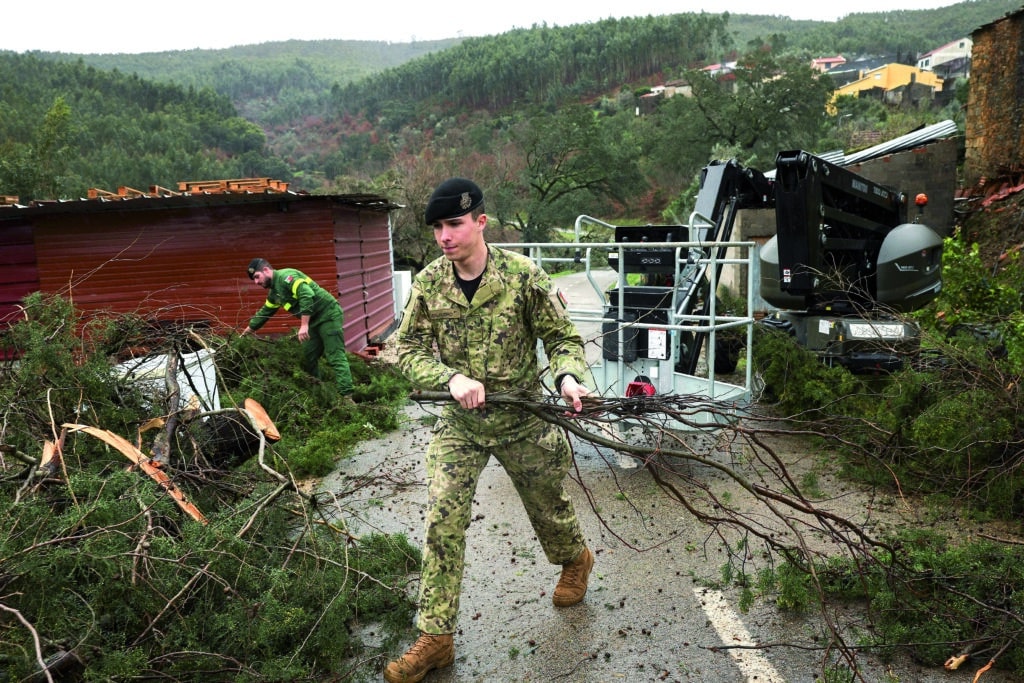
As Civil Protection authorities, volunteers, and soldiers from the Armed Forces continue to try and shore up the devastation of last week’s ‘weather bomb’, the reality is another storm is on the way, and this country has shown itself to be struggling to cope.
Also read:
Minister announces €40 million support package for storm-hit farmers
“Nearly full” Bravura dam to release water, authorities warn
Storm train “rare”, but Portugal must prepare for more extreme weather – expert