JANUARY
Word of 2025
The year began with Prime Minister Luís Montenegro (still unaware that he would shortly be facing a new electoral challenge) choosing the word of the year: “The key words are ‘investment, investment, investment’. Realise public investment. Stimulating domestic, private and business investment. Attracting foreign investment that seeks predictability and security,” he wrote in an article published in Jornal de Notícias. Mr Montenegro pipped President Marcelo to the post by publishing his New Year’s message before that of the President of the Republic, stressing that “only with more investment will Portugal be able to continue to save the welfare state”.
Read more: PM chooses “investment” as key word of 2025
American dream
Helped along by the arrival of Donald Trump in the White House, a study for the United States Tour Operators Association places Portugal as the second most popular destination for American travellers in 2025. The study put Italy at the top, with Greece coming in third place – and saw the observation among travellers that they are interested in the country not just as a holiday destination but also as a place to live. Between 2022 and 2024, the number of US residents in this country ‘soared’ by over 44%, seeing roughly 14,000 living here mid-2024.
Read more: Portugal ranks as second ‘hot destination’ for American travellers in 2025
Slashing bureaucracy
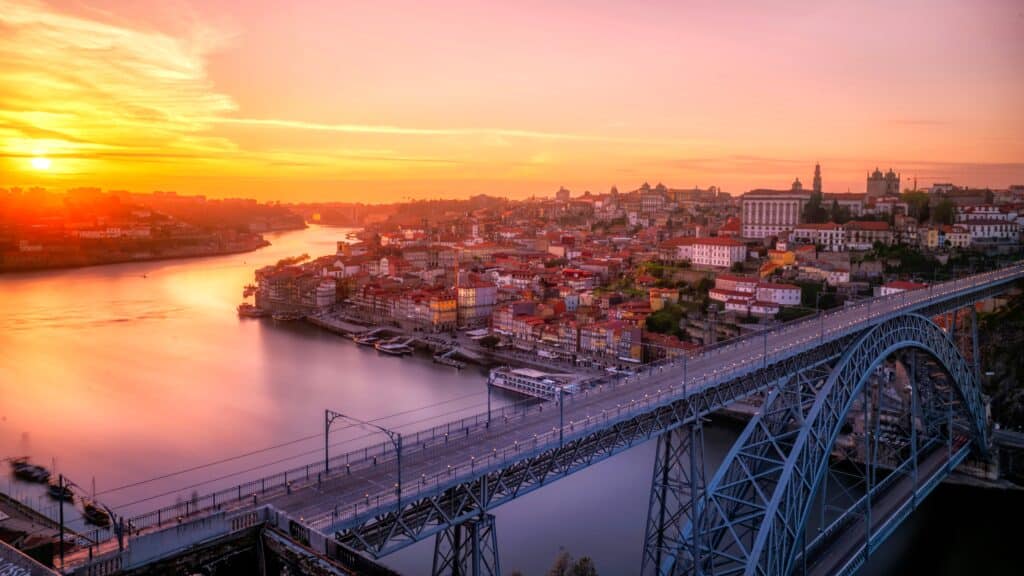
The government approves a set of 30 tax simplification measures, the vast majority of which focuses on reducing bureaucracy and costs to the state. These include changes to the payment of Stamp Duty in the case of donations or inheritances and a review of the IES (Simplified Business Information) form. Economy Minister of the time, Pedro Reis, says: “What companies can see is more transparency, more agility, a reduction in friction, costs and time that this implies for companies. Less waste so that they can focus on what is essential, which is their growth.”
Read more: Government presents 30 measures to reduce Portugal’s fiscal bureaucracy
Gantries must go!
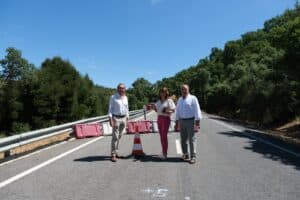
The Algarve’s A22 Via do Infante motorway finally becomes ‘free’ to all users after a 14-year period where governments insisted on charging tolls (even though the European Commission said this was illegal as the money used to build the transAlgarve highway was not given for Portugal to start charging for its use). However, campaigners CUVI (standing for the Commission of Road Users of Via do Infante) insist the threat of a government ‘returning to tolls’ in future when it needs to raise money will always be here unless the gantries are taken down. “We must keep fighting,” said CUVI spokesman João Vasconcelos.
Read more: Algarve tolls: fight isn’t over. “Gantries have to go too!”
FEBRUARY
Fishermen against windfarms
In what was to be a rare ‘win’ for the environmentally-conscious in 2025, “various alterations” (in this case meaning ‘reductions’) are made to offshore wind farm concessions in the areas of Ericeira and Viana do Castelo as a result of insistent lobbying by the fishing sector, which argued that the enormous swathes of coastline earmarked for wind farms spelt ‘death’ to coastal fishing and marine fauna. Even the environmental impact assessment conceded that the plan, as it was, would require “the scrapping of fishing vessels and reduced fishing, with negative impacts to local economies”.
Read more: Offshore wind farm areas ‘reduced’ following campaign by fishing sector
Iberian Miracle
Spanish newspaper El Economista kicked off the ‘positive economic soundbites’ about Portugal this year by describing the “Iberian Miracle” that had saved Europe from recession. With the normally robust economies of France and Germany in the doldrums, Spain and Portugal were responsible in the last quarter of 2024 for 50% of the eurozone’s growth. As experts agree: “Probably never before has the Iberian Peninsula been so important in keeping the euro economy afloat.” The good news continues through the year, in spite of opposition parties (particularly those of the left) rarely seeing anything positive about the AD centre-right government.
Read more: “The Iberian Miracle”: Saving Europe from recession
Albufeira’s Code of Conduct
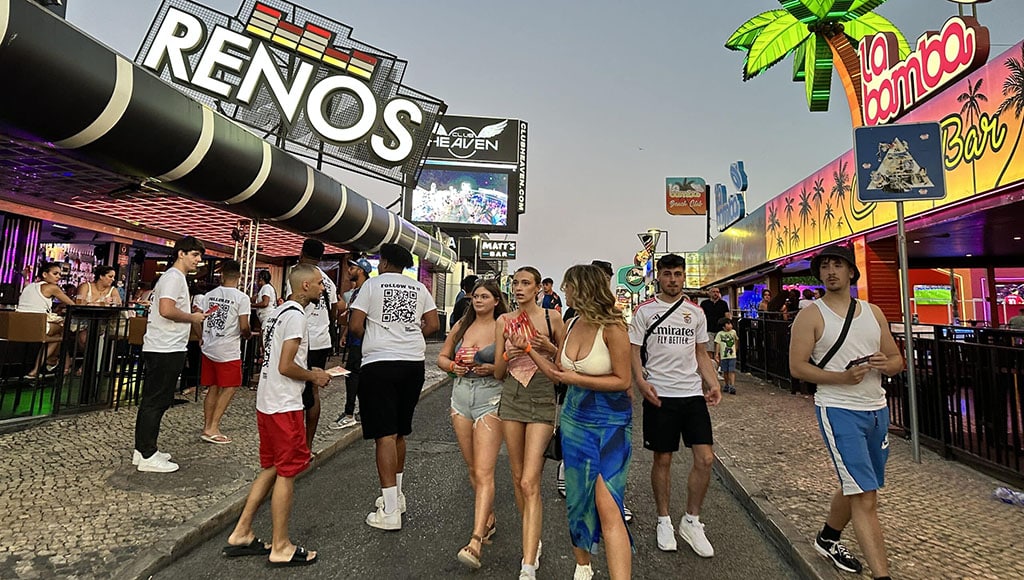
In a bid to tackle “excessive behaviour” that has dealt a broadside to Albufeira’s image as an upstanding ‘family holiday destination’ in recent years, the council announce a Code of Conduct banning the use of bikinis and swimwear in public places and creating fines, ranging from €300 to €1,500, for various levels of misbehaviour in the streets (including drinking alcohol, simulating sex acts and camping and/or sleeping in unauthorised places). The goal is to “restore Albufeira’s good image”, says then Mayor José Carlos Rolo.
Read more: Albufeira to ban use of bikinis and swimwear on public streets
US relations quandary
In the wake of the quite stunning narrative coming from US president Donald Trump, particularly with regard to the Ukraine conflict, Portugal’s politicians debate what was presented as “the threats of the Trump administration, and the reaction of the Portuguese government in the European context”. The general consensus is that the centuries-old relationship with the United States is important but not irreplaceable. PS Socialists, for example, describe the relationship as ‘important’, but one that should be evaluated on a ‘day-to-day basis’. The debate was prompted by President Trump’s remark that Ukraine’s President Zelenskyy was a “dictator who has no place remaining in power”.
Read more: Portugal’s relations with US come under ‘urgent debate’ in parliament
MARCH
Government in crisis
A ‘crisis’ very much pushed by the media (questioning the prime minister’s involvement in family company Spinumviva) ends with the PM lodging a motion of confidence in his minority centre-right government which falls. As a result, elections are earmarked for May, with the danger being that yet further legislative elections could return a similar result: a minority government that seems incapable of ‘making lasting friends’ with any of the parties of the opposition. At this point, there is a lot of talk of the government ‘switching horses’, and fighting the elections with a new leader – but this does not happen.
Read more: Election likely between May 11-18 – president
Rain, rain, rain
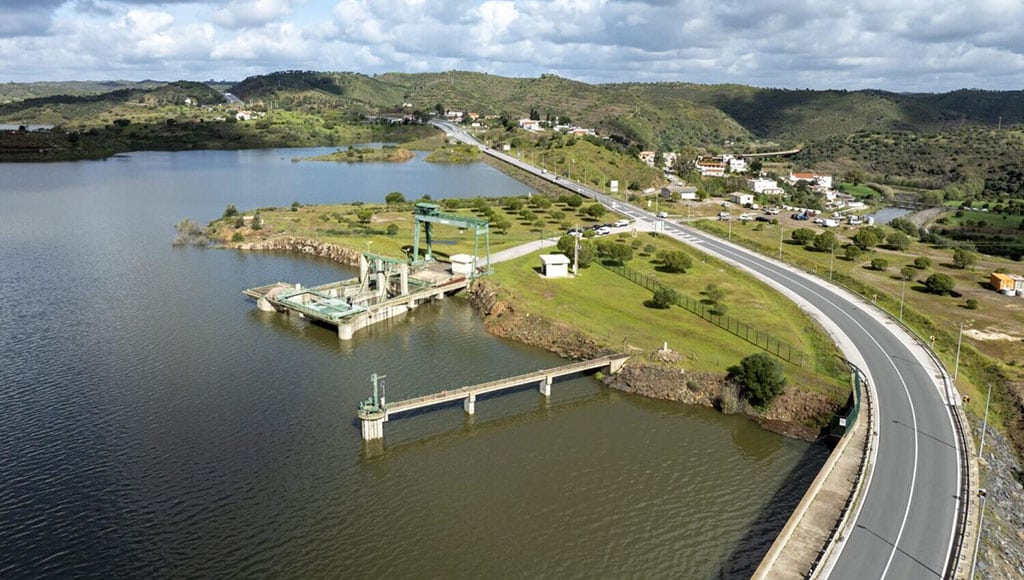
The wettest March in decades ‘saves the Algarve’, seeing dams that only months previously were at ‘record low levels’ suddenly so high that they are actually releasing water into the Guadiana River. Alqueva, the massive artificial dam that feeds Portugal and Spain, is so full that there is only half a metre left of all-round capacity. This is a month of celebration for farmers throughout the southern region – albeit they could have done without the violent battering from Storm Martinho which caused a swathe of damages throughout urban areas.
Read more: Wettest March for decades saves Algarve! | “Historic moment” as Odeleite and Beliche dams release water following heavy rainfall | Gigantic Alqueva dam “half a metre” from full storage level | Depression Martinho cuts violent swathe across Portugal
CHEGA billboards
PM Luís Montenegro files a lawsuit calling for CHEGA to remove all billboards associating him with former PS Socialist leader José Sócrates… and corruption. The suit, in the form of an injunction with Lisbon Administrative Court, considers the billboards to be defamatory. The PM says he ‘wants them removed in five days’. CHEGA leader André Ventura says his party has no intention of removing them, suggesting Mr Montenegro has a problem with democracy and freedom of expression. The hoardings also feature PS Socialist leader Pedro Nuno Santos in a similar form, yet he does not retaliate against them.
Read more: PM takes out lawsuit against CHEGA’s offending billboards
Illegal immigrants
The AD government, now preparing to fight a new general election, lets drop that it will be ‘seeking to accelerate the deportation of illegal/undocumented migrants’ if it is returned to office. The plans are presented as a way of ‘bringing justice to those who comply with the rules’. Minister of the Presidency António Leitão Amaro says Portugal is not contemplating an aggressive deportations policy – rather one that “is balanced and works”. “It is important to realise that Portugal is one of the three countries in Europe that executes the fewest deportations of people ordered to leave for violating the rules,” he adds.
Read more: Government wants to accelerate deportation of illegal migrants
APRIL
Deep sea mining
Portugal officially becomes the first country in the world to ban deep-sea mining in its waters. The moratorium, enshrined in law, ensures the protection of marine ecosystems from the potentially devastating effects of underwater resource extraction until 2050. Tiago Pitta Cunha, president of the executive commission of the Oceano Azul Foundation, stresses the importance of the decision as it can only be overturned by the passing of a new law – and this may not pass through parliament considering all parties voted in favour of this law, bar CHEGA and Iniciativa Liberal.
Read more: Portugal makes history as first country to ban deep-sea mining
House prices skyrocket (again!)
INE Statistics Portugal reports that the average price of homes sold nationally increased by 10.3% in 2024 compared to the previous year, standing at €1,777 per square metre (m2). Media stories note that prices for residential property in Portugal have “already increased three times more than anywhere else in Europe”. Areas most expensive are Greater Lisbon, the Algarve, Madeira, the Setúbal peninsula and Porto Metropolitan Area. The number of dwelling transactions made in the first quarter of 2024 also increases by 34.2% compared to the same quarter in 2023.
Read more: House prices in Portugal rise 10.3% in 2024
US rejects Portuguese wines
With every day bringing a new slant on the reciprocal tariffs threatened by US president Donald Trump, the greatest damage so far has been done to Portuguese (and wider European) wine producers who say they have seen all their orders stopped, even though the tariffs have not yet been brought in. Paulo Amorim, president of ANCEVE, the national association of traders and exporters of wines and spirits, puts it bluntly: “We are unable to sell (…) We are facing a terrible problem (…) wine carries the name of Portugal far and wide”.
Read more: US pulls plug on Portuguese wines
Iberian Blackout
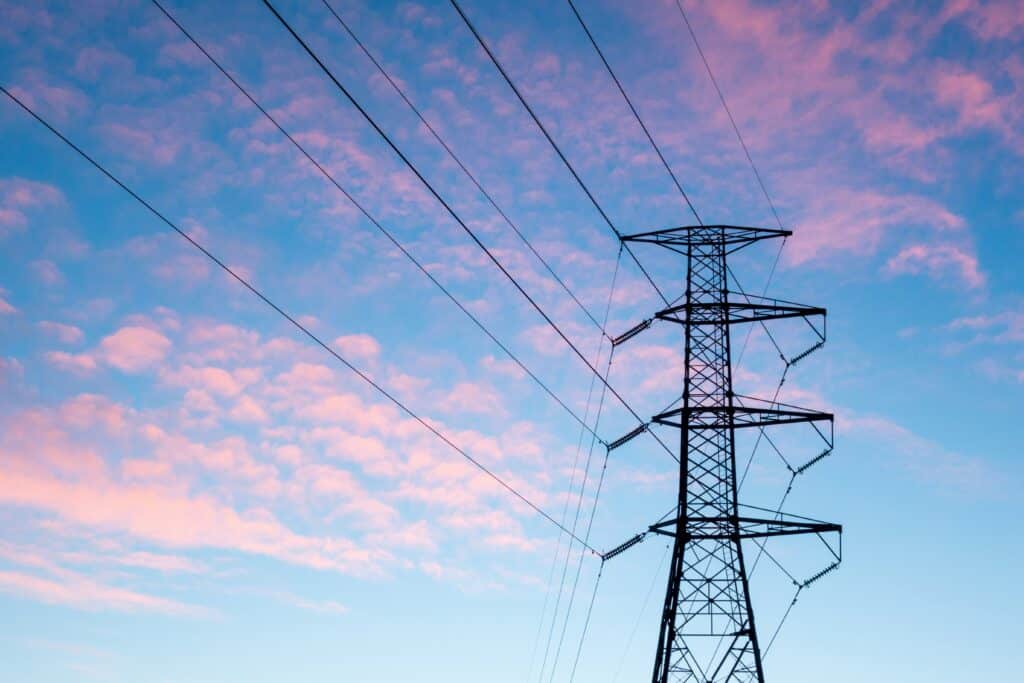
Portugal is stopped in its tracks at 11.33am on April 28 with an Iberian-wide power outage that ends up lasting for the best part of 10 hours. The government comes under considerable criticism for failing to explain anything to the country – but it slowly becomes clear that the drama rests on the fact that the country only has two generators capable of reacting in situations such as these (the terminology is ‘black start’ meaning powering up from scratch). The fault lay in instability within the Spanish grid (connected to Portugal). The outage affected millions of households and countless businesses over the whole peninsula.
Read more: Power almost fully restored throughout country by midnight; water supply still patchy
MAY
Immigrants told to leave country
News that tens of thousands of immigrants are to start being notified to leave the country by AIMA – the Agency for Integration, Migration and Asylum – creates a political outcry. Left-wingers accuse the AD coalition (PSD/CDS-PP) – focused on securing a stronger mandate from the country on May 18 (election day) – of ‘using’ immigrants to score political points (particularly to attract voters who might be tempted by the policies of far-right party CHEGA), and then there are the accusations that the announcement is pitched to draw attention away from lacklustre economic results for the first quarter of the year.
PM’s gamble pays off
The gamble by Prime Minister Luís Montenegro to ‘let the people decide’ whether the drama made about his family firm Spinumviva was really worth bringing down a government pays off: AD ‘wins’ the election on May 18 albeit without a working majority – and PS Socialists are sent into third position (for the first time in Portugal’s democracy) behind CHEGA. AD appears ‘delighted’ with its win, but this is yet another government that is beholden to opposition support – and CHEGA leader André Ventura makes no bones about the fact that his main goal is to be Portugal’s next prime minister.
Read more: PM’s gamble pays off: AD stays in driving seat
Algarve links with USA
The launch of the first direct air link between the Algarve and the United States is celebrated with the landing of the first United Airlines plane at Faro Airport. The Boeing 757 touches down on runway 28, marking the beginning of a seasonal route connecting the Algarve to Newark International Airport. The airline operates four flights per week throughout the IATA summer season. United Airlines European spokesperson, Guido Araújo says the route “is part of a very deliberate and sustainable expansion strategy. We started modestly in 1997 with seasonal flights from Lisbon to New York. Today, we celebrate seven routes to Portugal across five destinations.”
Read more: United Airlines lands in Faro, linking Algarve to USA for first time
Frontier controls leave thousands fuming
May 20 was the day “the entry of foreigners into the country became more rigorous”. “A new era of border management” is how SSI (Portugal’s Internal Security System) frames the European plan for digital transformation of frontier control “fundamental to guaranteeing that Portugal is prepared to operate with state-of-the-art European systems with the highest standards of security and service to the citizen”. Sadly, it didn’t play out this way: enormous queues formed within hours, and these have characterised the entry of non-EU travellers into international airports almost ever since. No one was prepared for this fiasco…
Read more: “Rigorous new frontier controls” leave hundreds fuming in Lisbon
JUNE
Global Peace accolade
Portugal holds on to its 7th slot ranking in the Global Peace Index. The Institute for Economics and Peace stresses that the world is undergoing a “fundamental reshaping of the global order” and, as such, global peace levels have deteriorated since last year. But Portugal retains its high position – in spite of the shootings and stabbings, mainly in the Greater Lisbon area, that have peppered the news. Six years ago, the country reached 3rd position in this ranking. It is still way ahead of countries like the US (position 128 out of 163 countries) and the UK (3Oth place).
Read more: Portugal holds on to 7th place in global peace index, as levels worldwide deteriorate
Portuguese in Air India tragedy
Seven ‘Portuguese’ are among victims of the devastating Boeing 787 Dreamliner plane crash seconds after it left the Indian city of Ahmedabad bound for Gatwick. Almost everyone on board dies in this crash (there is only one ‘miracle’ survivor), but it serves to highlight the ‘trade’ in Portuguese nationality that has seen the government crack down so hard. Reports reveal that not one of the seven Portuguese citizens had ever set foot in Portugal. They all lived in the UK and appear to have acquired their Portuguese residencies via channels that have since been shut down.
Read more: None of Portuguese nationals killed in Air India disaster lived in Portugal
Foreign millionaires flock to Portugal
The Private Wealth Migration Report compiled by British consultancy Henley & Partners puts Portugal among the 10 most attractive destinations for the world’s super-rich. Only Italy and Switzerland are expected to receive more super-rich this year, while Portugal stands to welcome 1,400 more high-net-worth individuals in 2025. These new residents bring with them an estimated total of 8.1 billion dollars in wealth, suggests the report. This phenomenon confirms a trend that has been consolidating over the last decade. Between 2014 and 2024, the number of foreign millionaires settling in Portugal increased by 38%, reports Jornal de Negócios.
Read more: Foreign millionaires “flock to Portugal” – 2025 wealth migration report
Mora swelters under 46.6ºC
Torrid temperatures cannot be totally blamed on climate change. Portugal has always had heatwaves and hot summers – particularly when they are followed by wet winters/springs (which we had this year). According to meteorological institute IPMA, June’s stultifying temperatures reached a crescendo in the little town of Mora, in the district of Évora: a hellish 46.6ºC. As reports concede, “one has to go back to August 1, 2003, to find a value close to this absolute maximum in the country – 47.3ºC in Amareleja, Beja district”. In other words, over 20 years ago, there were summers that brought similarly poleaxing heatwaves…
Read more: Hottest region in Portugal registered 46.6º on Saturday
JULY
Football star Diogo Jota dies in car crash
Portugal wakes up to the tragic news on July 3 that Diogo Jota, the 28-year-old footballing star playing for Liverpool and the national football team, has died in a car accident in Spain, alongside his brother André Silva – also a footballer, playing for Penafiel. The pair were on their way to Santander, in Spain, to catch a ferry back to England where Diogo was due to rejoin his squad. The only reason the brothers were going by car was because Diogo had recently had surgery for a collapsed lung, and his medical team had advised him against flying.
Read more: Portugal, Liverpool star Diogo Jota dies in car accident in Spain
Ryanair back on attack
The chaos at border controls ‘tightened according to EU rules’ sees Ryanair go on the attack, demanding “immediate action” from Portugal’s government. It’s the height of the summer, and Ryanair claims this has seen delays in processing people in and out of the country run to well over an hour and a half. It’s “madness” and there is nothing to suggest things will get any better unless the government adopts contingency measures. But it soon becomes clear that this is a problem that can only be fixed with more staff at the airports.
Read more: Airline passengers “missing flights because of Portugal’s border control hold ups”
Brown algae blight
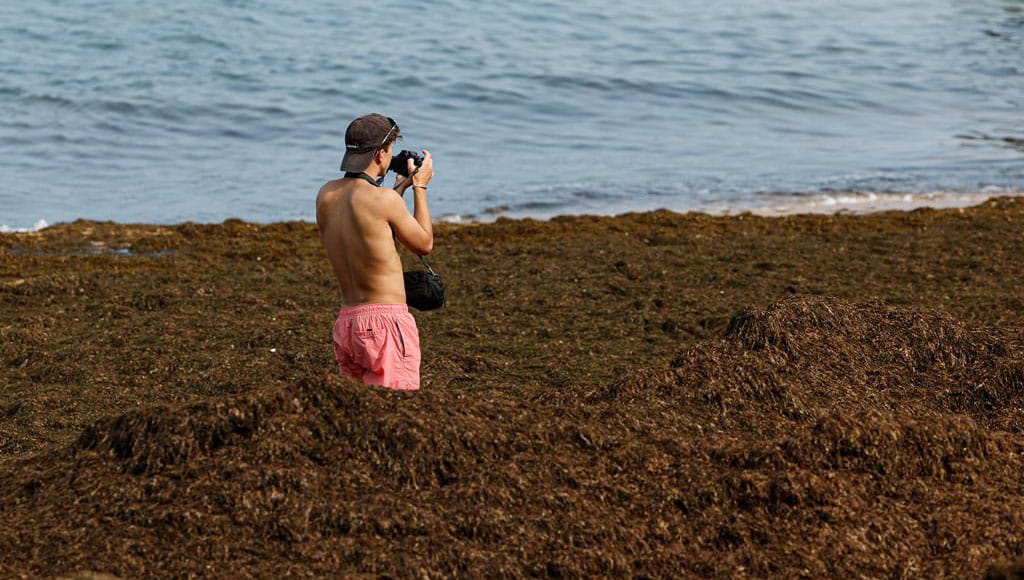
A new ‘scourge’ of thick, brown algae washing onto south coast beaches has authorities in despair, as there appears to be no way of controlling it. A study carried out by Cascais municipality suggests there are uses in the pharmaceutical industry for the invasive ‘fuzz’ (which stinks when dry) – so now the plan is to investigate these with the idea of turning an unsightly, smelly problem to ‘good use’. For now, this ‘exotic species’ of macroalgae (Rugulopteryx okamurae, of Asian origin) has been spreading at an alarming rate since it was first detected in Portugal in 2019.
Read more: Brown algae blighting Portugal’s beaches ‘here to stay’
Nicole Kidman applies for Portuguese residency
As hundreds of thousands ‘wait in line’ for Portuguese residency, one applicant unlikely to face too many problems is Hollywood actress Nicole Kidman who arrived in Portugal to put the finishing touches to the purchase of a property on the Alentejo coastal strip so popular with celebrities. According to SIC Notícias, Ms Kidman already owns property in Portugal. Expresso refers to an apartment that she bought with musician husband Keith Urban in Lisbon’s Parque das Nações, and now she is buying a larger property in the exclusive Costa Terra Golf & Ocean Club, where celebrity Paris Hilton also has a home.
Read more: Nicole Kidman joins hundreds of thousands requesting residency in Portugal
AUGUST
Wildfires ravage north and centre
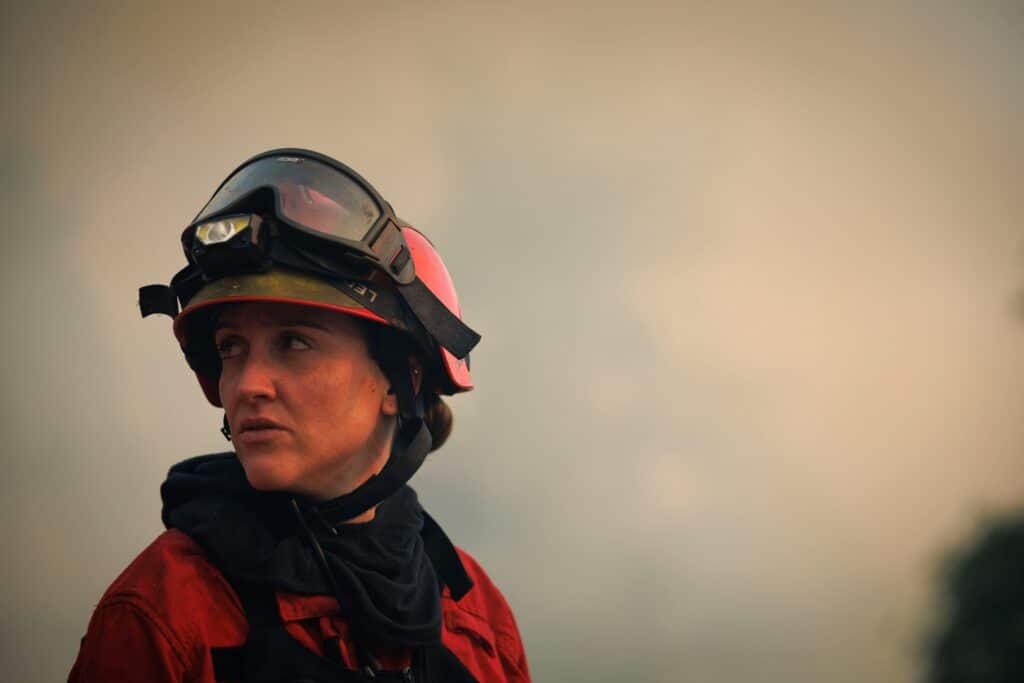
Hundreds of firefighters are working flat out as August arrives, with the scale and intensity of wildfires in the north and centre being beamed constantly over the nation’s television channels. Thousands of hectares are burnt black in multiple municipalities as stultifying heat and high winds thwart all attempts at forward planning. This has been a summer characterised by criticism of decision-making by firefighting command – and once the fires are extinguished, the League of Portuguese Firefighters presents the President of the Republic with its ideas of how firefighting must be handled in future.
Read more: Hundreds of firefighters continue through north and centre
Albufeira bans alcohol sales
Scrambling to restore Albufeira’s good name after so much bad press, the popular tourist destination’s town council has brought in a new ‘prohibition’, on top of all the prohibitions imposed by the Code of Conduct. This one requires the support of sales outlets that habitually sell alcohol to drunken holidaymakers through the night. From now, until October 31, any establishment caught selling alcohol to people ‘circulating through the town’ between the hours of 11pm to 8am runs the risk of prosecution for the crime of disobedience. As reports explain, the new rule covers establishments located in all habitual ‘party districts’.
Read more: Albufeira bans sale of alcohol for consumption in street between 11pm and 8am
Portugal’s first ‘street birth’
With all the ‘uproar’ over the number of newborns delivered by ambulance crew haring to find a functioning maternity unit, Portugal ‘celebrates’ its first ‘street birth’: a woman with a high risk pregnancy (due to having only one kidney) who calls the 24-hour helpline (as per current rules), and was told to travel by car to the nearest available hospital. The baby could not wait and was delivered with the help of family on the pavement in Carregado (Alenquer municipality). Understandably, the family of 28-year-old new mother Soraia are ‘disgusted’. They are further infuriated when the ambulance that finally turns up suffers a flat tyre.
Read more: Portugal celebrates its first ‘open air street birth’
Moroccans claim asylum
As the government sets about changing the law regulating the arrival and stay of foreigners on national territory, a rickety boat full of Moroccans pulls into an Algarve beach. No one on board shows any sign of wanting to be returned to Morocco – and when they are handed expulsion orders, they all ‘appeal’, claiming asylum. The 38 men, women and children go on to be held for the statutory 60 days – and then because their asylum claims have not been processed, they are simply ‘released’. It is understood that they all made their way across the border into Spain.
Read more: Majority of Moroccans arriving by boat in Algarve now claiming asylum
SEPTEMBER
Lisbon funicular tragedy
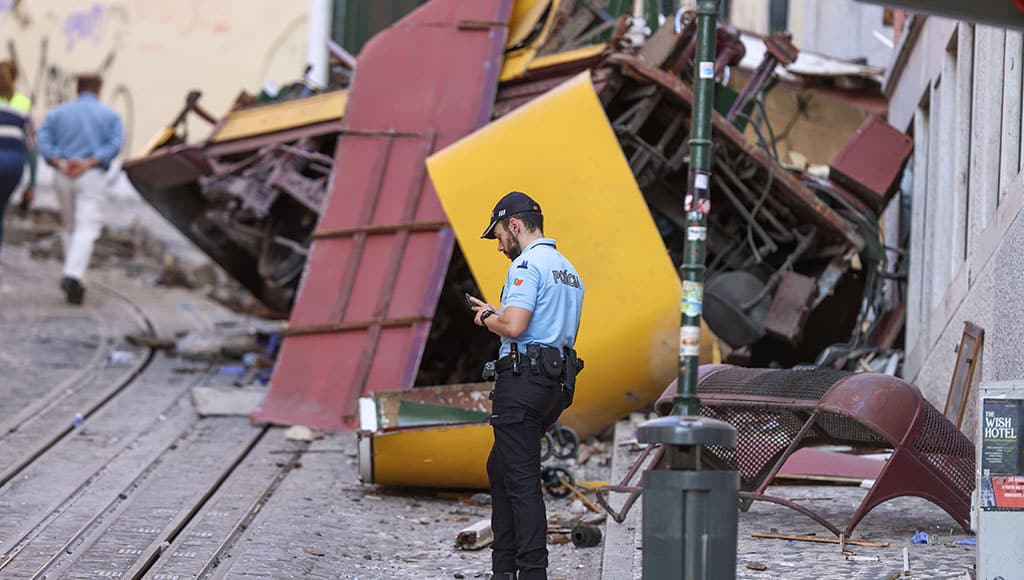
September had barely begun before Lisbon suffers the worst tragedy in living memory: 16 people dead, many others injured, as a popular ‘cable lift’, known as the Glória funicular, and used daily by tourists and locals alike, derails and careers downhill before crashing into a building. In the confusion of the first hours, reports were already coming through of poor maintenance and repeated warnings by council transport staff that were never heeded. This is a crash that reverberates around the world due to the multiple nationalities affected. An initial report has since established that the main cable ‘snapped’. Compensation claims are still ongoing.
Read more: 15 dead as Lisbon’s iconic funicular crashes into building “breaking up like cardboard box”
Brussels pushes for lithium mining
Portugal is once again in the crosshairs of the European ‘race to harness lithium’ for electric mobility. President of the European Commission, Ursula von der Leyen, calls for the “removal of obstacles” delaying progress, just as one of the projects granted a European ‘fast-track permit’ for open-pit mining in northern Portugal announces that there is “much more lithium” in its Barroso prospecting area than originally estimated. Locals intent on fighting the plan have cited all the negative effects of mining on the environment – much of it UNESCO World Agricultural Heritage landscape.
Read more: Portugal on spot in race to harness lithium
Iberian wildfires threaten air quality
Raging wildfires that ravaged northern and central Portugal during the summer – and parts of Spain – caused such a high level of emissions that chief scientist of the World Meteorological Organisation, Lorenzo Labrador, says they will almost certainly worsen air quality across the European continent. Labrador’s warning comes as a study concludes that climate change caused by human activity has increased the risk of heatwaves of the kind Portugal experienced this summer by 40 times. And before the month is out, the Costa Vicentina region of Aljezur is hit by a massive forest fire.
Read more: Emissions from Portugal and Spain’s wildfires threaten Europe’s air quality
Foreigners Law approved in parliament
The hotly-contested Foreigners Law has been approved for the second time in parliament – again by parties of the right, with votes against by political groupings of the left. This time, the feeling is that the new measures will ‘satisfy’ reservations voiced by President Marcelo the first time, and upheld by the majority of judges of the Constitutional Court. For immigrants still queuing in large numbers for all kinds of documentation outside AIMA (Agency for Integration, Migration and Asylum), this new law will stand as another impediment to sorting out their lives in Portugal.
Read more: Foreigners Law approved in parliament by parties of the right
OCTOBER
Lisbon ‘happiest place on earth’
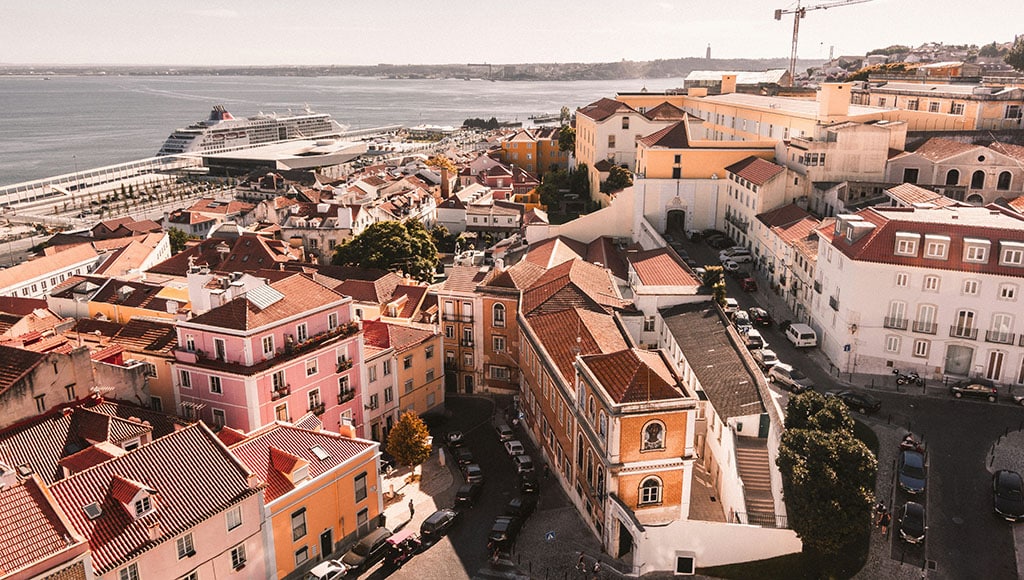
A new study names Lisbon the “World’s Happiest Holiday Destination”. Conducted by BookRetreats and published in People magazine, the study saw the company partner with Harvard psychologist and holistic happiness expert Dr. Natalie Dattilo-Ryan to analyse 47 travel destinations based on five “feel-good” factors: sunlight, quality sleep, a healthy diet, time in nature and physical exercise. Lisbon came out on top because it “excels” in multiple categories, particularly its food scene. “Nearly 10% of Lisbon’s restaurants are considered healthy (…) From market-fresh seafood to traditional tascas, eating well here is both accessible and affordable.”
Read more: Lisbon hailed “happiest place on Earth for travellers”
Municipal elections return ‘two-party system’
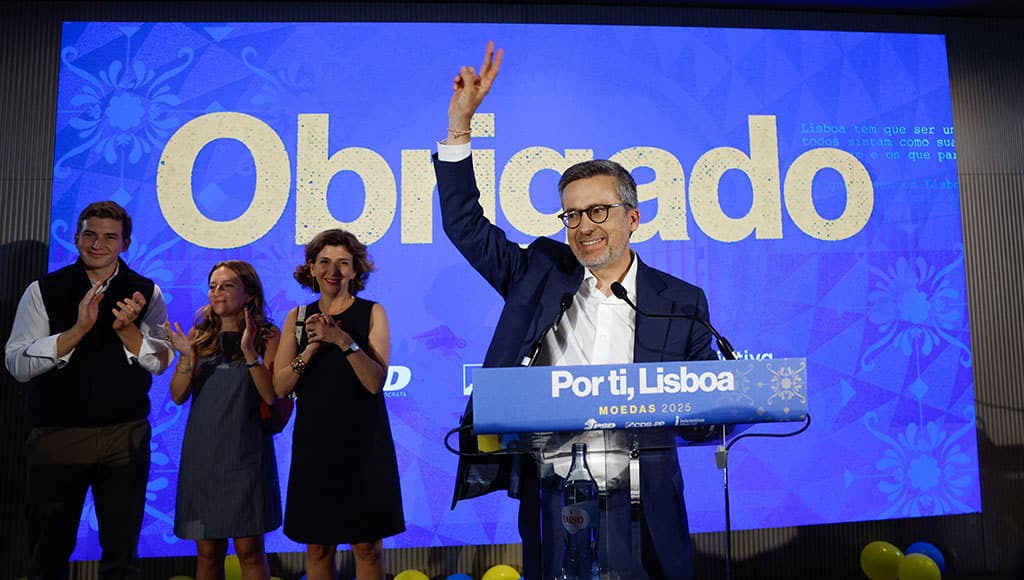
After the ‘shock’ of CHEGA becoming the country’s second political force in legislative elections in May, municipal elections show that, locally, people are still more comfortable with the parties ‘they know’: PSD and PS – both of which end the election evening delighted with their results. CHEGA’s forecast of ‘taking the Algarve by storm’ (and much else in between) was precipitous. Indeed, even though the Algarve voted largely CHEGA in the legislative elections, the only municipality that the party won is Albufeira. For PSD, the cities of Porto and Lisbon are the ‘glittering trophies’.
Read more: PSD and PS celebrate ‘brilliant night’ – both winning significant local trophies
Burqa ban in public places
Parliament approves, in general terms, a ban on the wearing of ‘clothing designed to conceal the face in public spaces’ in Portugal, such as the burqa/niqab and full-face balaclavas. It is a decision that will now go on to be “improved in detail” in the ‘speciality’ phase of debate, and which sees PSD, CDS, Initiative Liberal and CHEGA all vote in favour. The proposal was put forward by CHEGA, whose leader André Ventura has since written over social media: “Today is a historic day for our democracy and for the safeguarding of our values, our identity and women’s rights.”
Read more: MPs approve ban on wearing of ‘burqa’ in public spaces
Algarve marina voted best in southern Europe
Portimão Marina is named ‘Best Marina in Southern Europe’ at the World Luxury Travel Awards 2025. The distinction is the result of a public vote and the assessment of an international panel of experts, recognising the marina’s “excellence of service, attention to detail, quality of infrastructure, style and design, efficiency, customer feedback, marketing, diversity, location and reputation”. Located next to the Arade estuary, Portimão Marina has the capacity for 620 boats, including super yachts of up to 50 metres, and prides itself on offering a comprehensive and personalised service.
Read more: Portimão Marina voted “Best in Southern Europe” at World Luxury Travel Awards
NOVEMBER
Alentejo elephant sanctuary
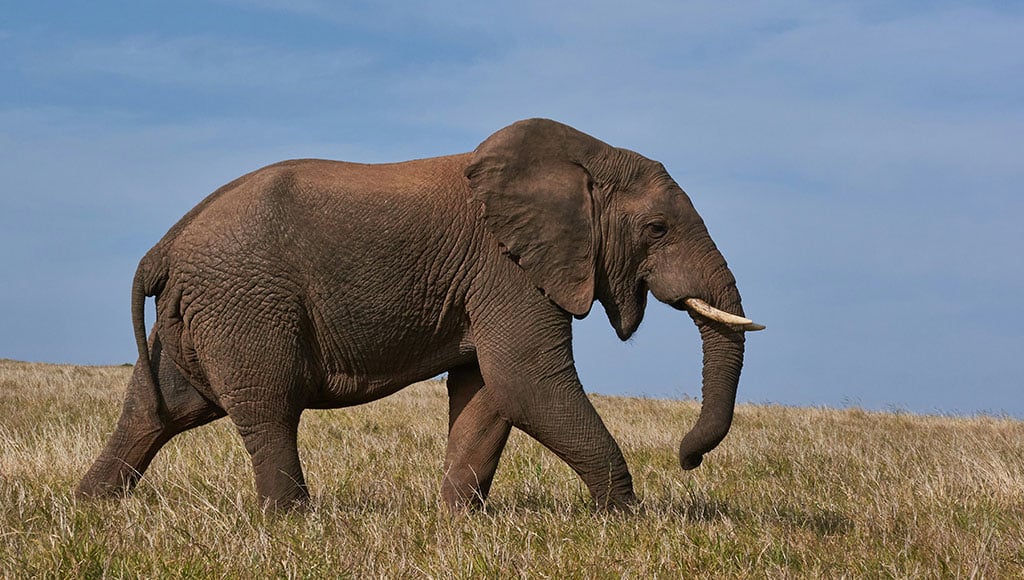
A project for a sanctuary in the Alentejo for captive elephants has been moving quietly along to the point that it is almost ready for its first guests. Set across 402 hectares between Vila Viçosa and Alandroal, the vast refuge, led by the Pangea non-profit organisation, will eventually become the home of up to 30 elephants either retired from circuses no longer using live animals, or from zoos which no longer want to keep their elephants in the conditions that they have. The Alentejo location was chosen from a range of possibilities throughout Europe for its topography, gentle hills and diverse habitat.
Read more: Europe’s first captive elephant sanctuary to open in Alentejo
Algarve on world equestrian stage
The Algarve is set to take a leading role in the global equestrian scene with the reopening of the renovated Vilamoura Equestrian Centre, now in its final development phase and gearing up for a busy 2026 season of international events, starting with the Vilamoura Classic Tour in February. The project results from a partnership between GRANDPRIX Events and the Arrow Global Group, owner of the Vilamoura complex, and several local tourism infrastructures. Its stated goal is to turn Vilamoura into a global reference point for equestrian sport by combining high-quality facilities with the Algarve’s distinctive lifestyle and climate.
Read more: New-look Vilamoura Equestrian Centre to put Algarve on world stage
Saudis ‘very interested’ in Portugal
With a Portuguese business delegation visiting Saudi Arabia, the president of the Saudi Arabia-Portugal Business Council has told Lusa that the Saudi economy is booming, and this represents opportunities for Portuguese companies. “Saudi businesspeople are very interested and want to find the right way to invest in Portugal,” said Alwalid Albaltan in Riyadh, during a two-day visit by the Minister of Economy and Territorial Cohesion, Manuel Castro Almeida, and sundry businesspeople. According to Alwalid Albaltan, Saudi interest takes in sectors such as tourism, industry, agriculture and energy.
Read more: Saudis ‘very interested’ in investing in Portugal
Outrage over Israeli coins
NGOs and political parties are outraged by claims that ‘Casa da Moeda’, the Portuguese Mint, is to start manufacturing coins for Israel. According to employees of Casa da Moeda, the Mint is poised to seal a deal to produce two million coins for Israel. This prompts a demonstration outside the building, with protestors blaming Portugal for being complicit in the ‘genocide’ that Israel is seen to have been waging against the Palestinian people. The interesting thing about this protest is that it appears to have fallen into complete silence. No sources either confirmed or denied the deal with the Israelis to mint coins.
Read more: Outrage over alleged minting of Israeli coins in Portugal
DECEMBER
Border controls may be lifted for Christmas
After all the talk of how important (for national security) strict new European border controls for non-EU citizens travelling in and out of Portugal are,Portugal’s Internal Security System (SSI) has said they may be suspended through the Christmas period“to avoid queues at airports”. Queues have characterised the implementation of the Entry/Exit System (EES). Authorisation to suspend the system if/when queues become unmanageable over the holidays has come from Brussels. Swinging in with a curved ball unfortunately comes the news from ground handlers that they will be ‘on strike’ at all Portuguese airports over December 31/January 1.
Read more: Airports’ ‘rigorous, state-of-art’ border controls may be shelved for Christmas
Portugal leading economy of 2025
This is honestly the best way for Portugal’s minority AD government to ‘end the year’: Portugal is named “Economy of the Year” by Britain’s prestigious magazine The Economist, days before the country is hit with its first general strike in nearly 13 years. The recognition is received with delight by the prime minister, who goes on to describe Portugal “at the top of Europe and the world!” The economy minister puts the situation into a more measured perspective: “There are still many people living below what we consider to be an acceptable standard of living.”
Read more: PM delights in “exceptional international recognition”
General strike
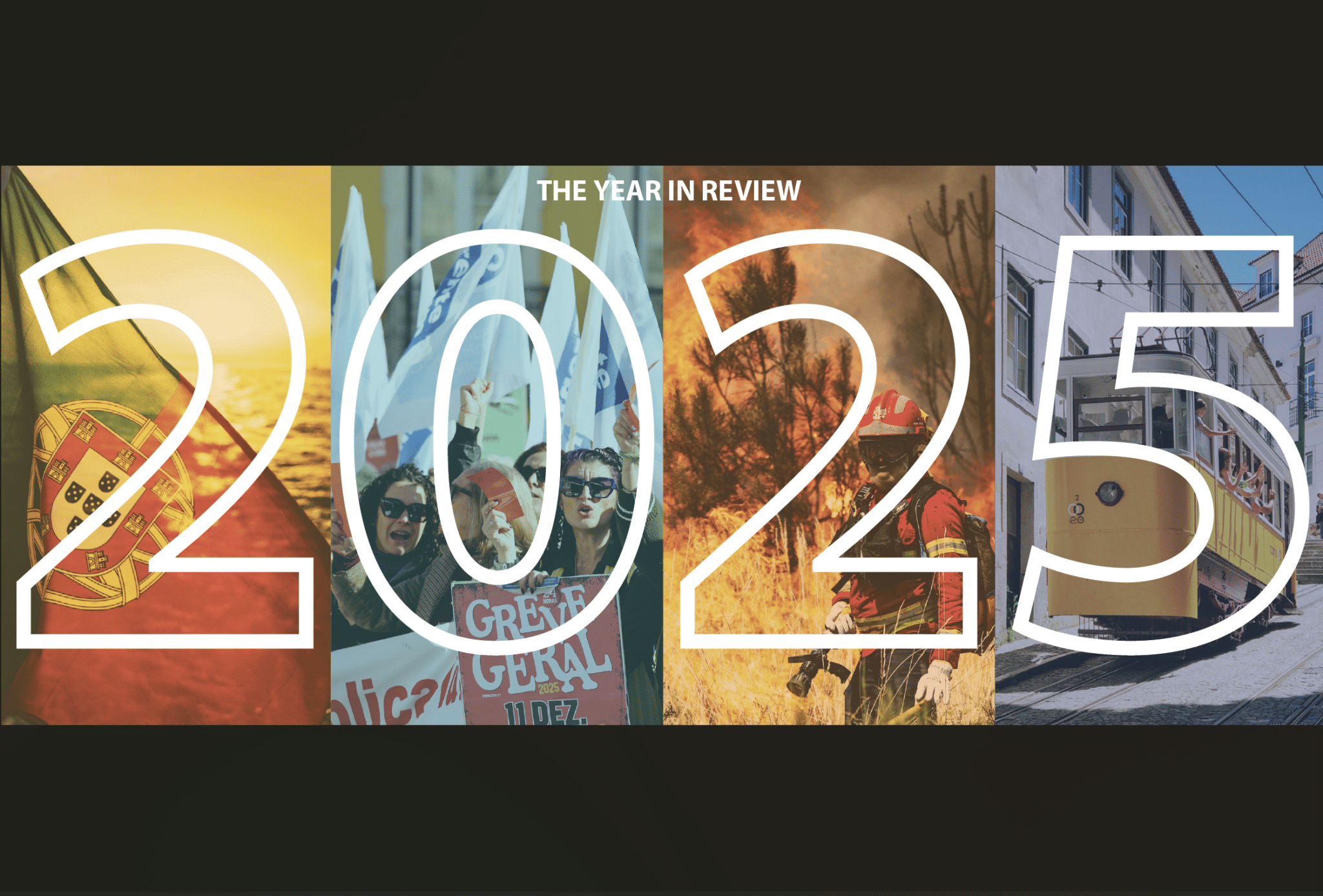
What unions claim is the ‘greatest general strike in living memory’ arrives on December 11 closing schools, hammering public transport, reducing hospital activity and affecting production in heavily-unionised businesses, including Volkswagen’s AutoEuropa plant in Palmela. Pilot unions claim that as many as 400 flights are cancelled. But the government insists adherence to the cause (protesting against its plan for labour reforms) is “inexpressive (…) The country chose to work”, says Minister for the Presidency António Leitão Amaro. As the dust settles, the government schedules new negotiations with the UGT union (the only union it considers could be open to a deal).
Read more: “Inexpressive” general strike spills over to public sector for Friday
Police threaten more protest actions
The government hears that police syndicates are having none of AD’s ideas of negotiation (which is essentially just to present unions, bit by bit, with ‘the pay increases to expect from January 1’). Union leaders stress they want to negotiate salary scales as a whole, not in bite-sized chunks referring to different subsidies – and unless this happens, they will be back waging protests from the new year. Unions already have a vigil scheduled for outside the prime minister’s official residence today (Thursday, December 18).
Read more: Police vow further protests in New Year as government ‘fudges’ salary scales